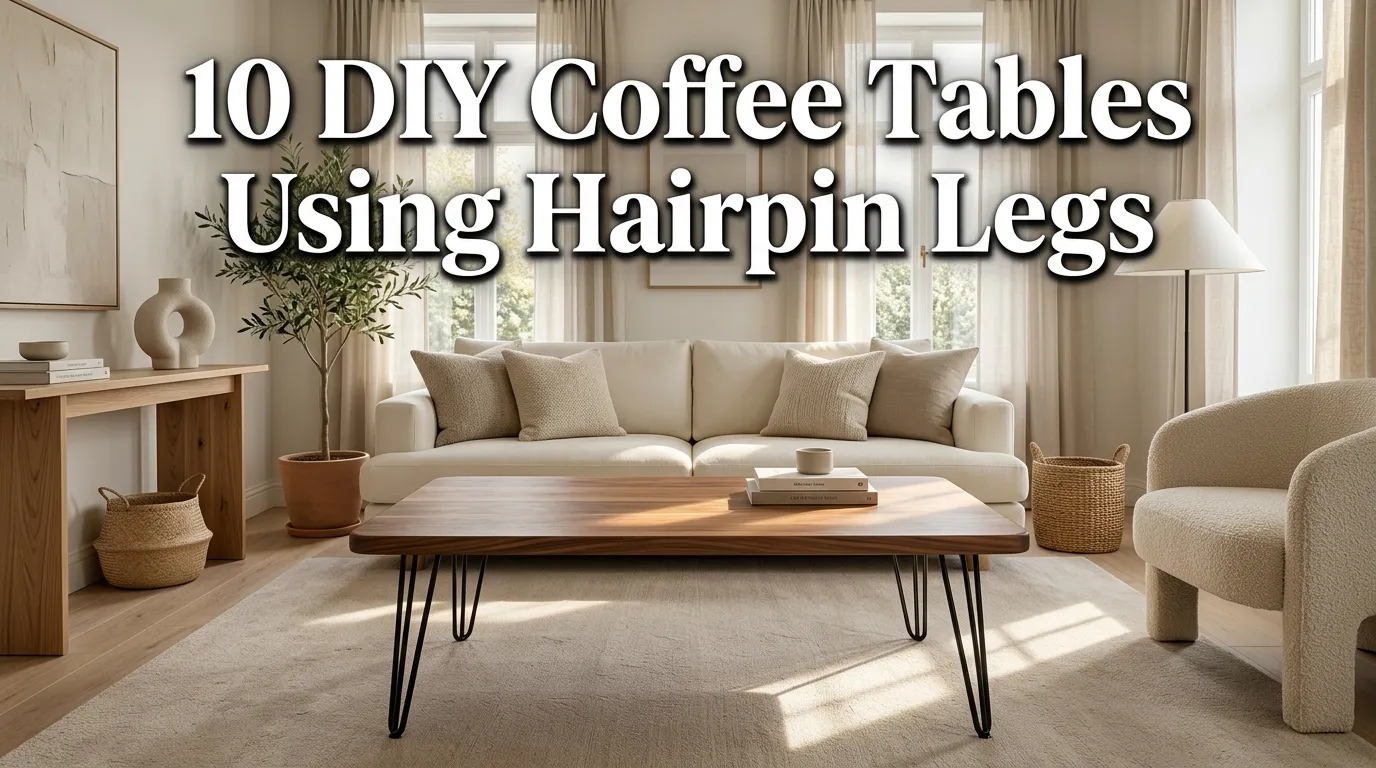
10 DIY Coffee Tables Using Hairpin Legs
A coffee table can become the centerpiece of a living room, but buying the perfect one isn’t always easy. The right size, shape, finish, and price can be surprisingly difficult to find. That’s where a DIY coffee table comes in.
Hairpin legs are particularly useful for DIY furniture because they create a clean, modern silhouette while keeping the construction relatively simple. Pairing them with a wood tabletop can produce anything from a rustic farmhouse-inspired table to a sleek contemporary centerpiece.
In my experience, the biggest advantage of hairpin legs is their visual lightness. Because the legs are thin and open, more of the floor remains visible underneath the table, which can make a small living room feel less crowded.
The tabletop is where you can really personalize the design. Reclaimed wood, plywood, butcher-block material, live-edge slabs, painted boards, or stained panels can all create different looks.
Before building, carefully measure the seating area and choose a tabletop size that leaves comfortable walking space around it. Use properly rated hardware and follow the manufacturer’s instructions for the hairpin legs and any tools or finishes.
These ideas are designed to inspire practical, attractive coffee tables that beginners and experienced DIYers can customize to fit their homes.
Table of Contents
- Rustic Wood Coffee Table
- Minimalist Square Table
- Round Hairpin Table
- Reclaimed Wood Table
- Two-Tone Coffee Table
- Live-Edge Coffee Table
- Painted Wood Table
- Storage Coffee Table
- Nesting Coffee Tables
- Modern Slatted Table
1. Rustic Wood Coffee Table
Quick Benefits
- Simple construction
- Warm appearance
- Affordable materials
- Easy to customize
- Works with many styles
Why It Works
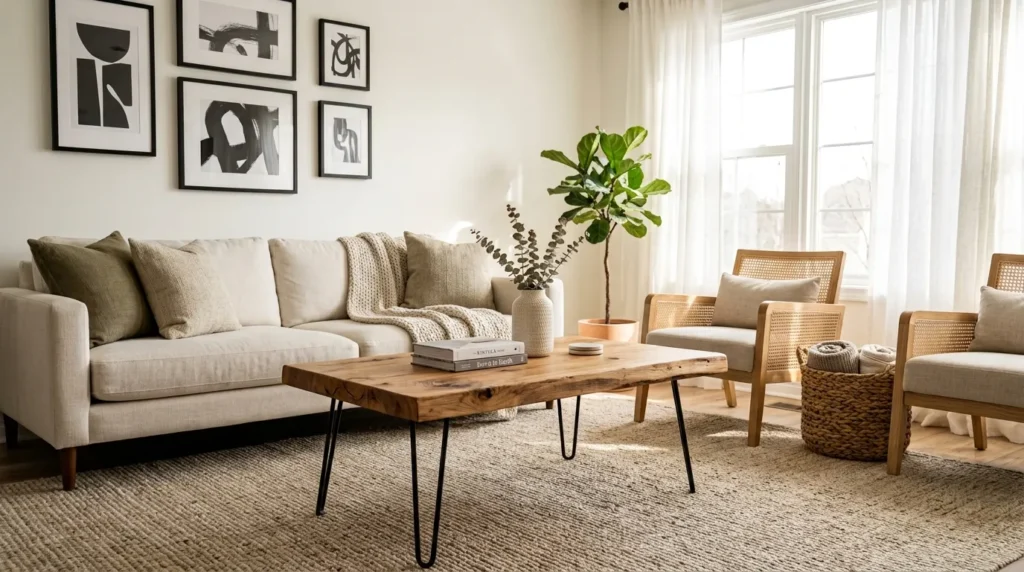
A rustic wood tabletop paired with hairpin legs creates an appealing combination of natural texture and modern structure.
The wood brings warmth to the room while the thin metal legs keep the design from looking heavy.
I’ve found that this style works particularly well when the rest of the living room includes neutral upholstery and natural materials.
How To Style It
Choose a sturdy wood panel or properly prepared boards for the tabletop.
Sand the surface thoroughly and apply an appropriate finish. Pair the table with a simple tray, coffee table books, or a small decorative arrangement.
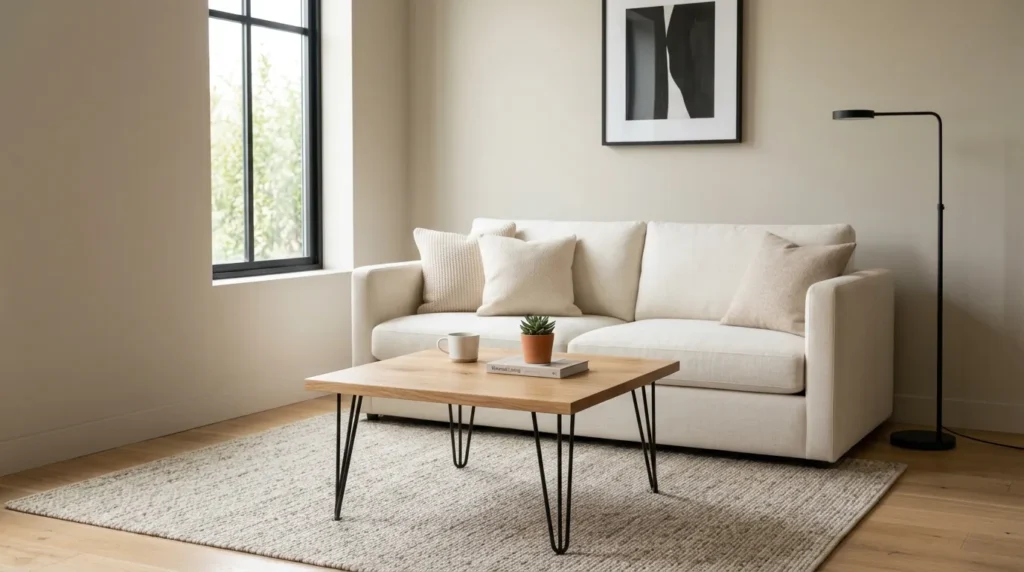
2. Minimalist Square Table
Quick Benefits
- Clean silhouette
- Easy to customize
- Works in modern rooms
- Compact footprint
- Beginner-friendly
Why It Works
A square tabletop gives a DIY coffee table a structured, contemporary appearance. The simple geometry pairs naturally with the clean lines of hairpin legs.
This design can work especially well in smaller seating arrangements where a compact table is more practical.
I’ve found that a restrained finish helps the shape become the main design feature.
How To Style It
Choose a smooth wood panel and a simple stain or clear finish.
Keep the tabletop décor minimal with one tray, vase, or small stack of books so the clean design remains visible.
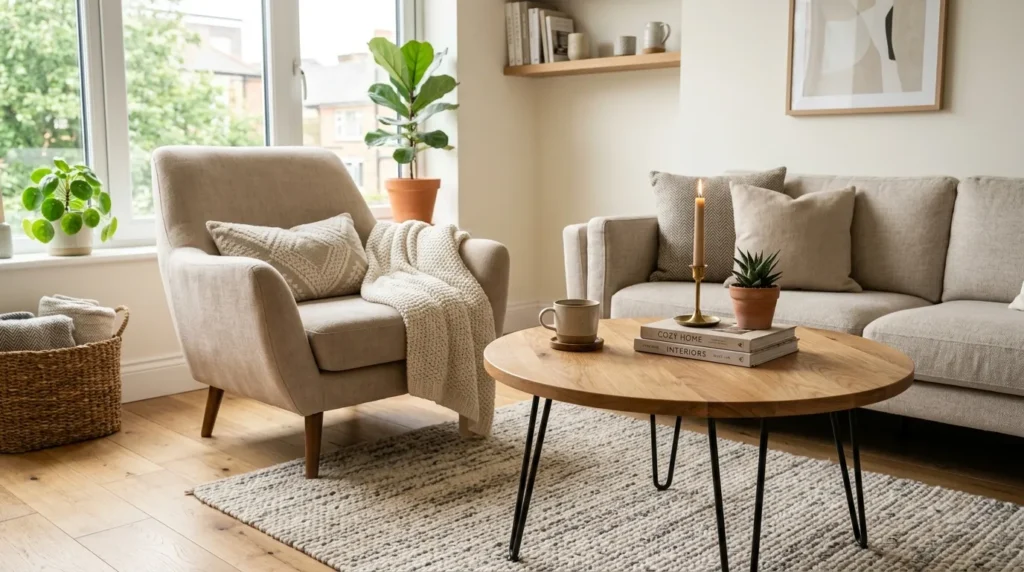
3. Round Hairpin Table
Quick Benefits
- Softens sharp lines
- Improves traffic flow
- Adds visual interest
- Works in compact rooms
- Creates a modern look
Why It Works
A round tabletop can make a living room feel more fluid because there are no sharp corners interrupting the circulation path.
The curved shape also creates an interesting contrast against angular sofas and chairs.
I’ve found that round coffee tables are particularly useful when seating is arranged closely together.
How To Style It
Choose a properly supported round tabletop and position the legs evenly for stability.
Keep the center relatively open so the shape remains visually clear.
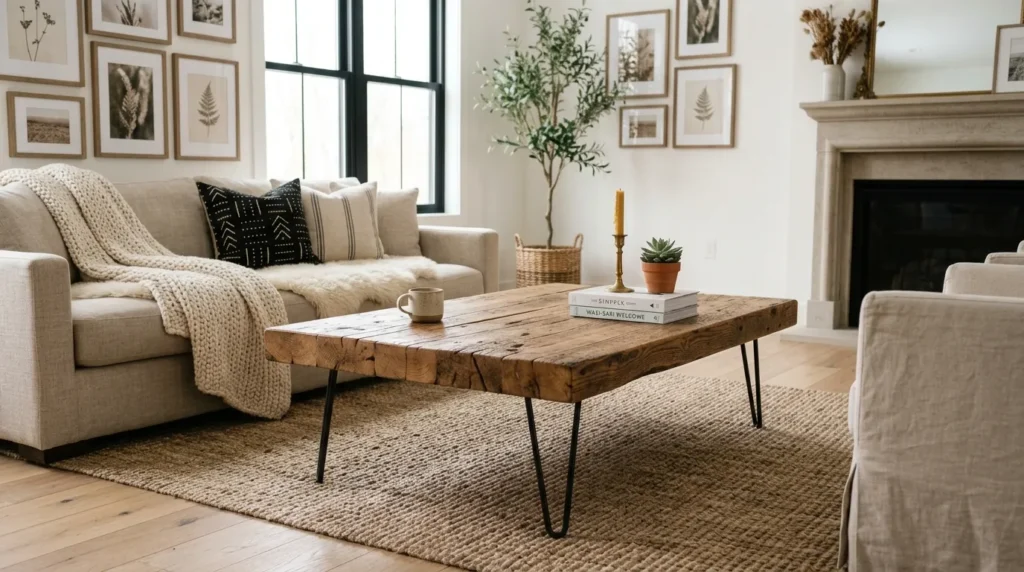
4. Reclaimed Wood Table
Quick Benefits
- Adds character
- Uses unique materials
- Creates texture
- Eco-conscious option
- Every piece looks different
Why It Works
Reclaimed wood can give a DIY coffee table an authentic, collected appearance. Natural knots, grain variation, and subtle imperfections become part of the design.
Hairpin legs balance that rustic character with a cleaner modern element.
I’ve found that this combination works beautifully in industrial, farmhouse, and modern organic interiors.
How To Style It
Use properly prepared reclaimed wood and make sure the surface is structurally sound.
Seal the tabletop appropriately and pair it with simple décor so the natural character remains visible.
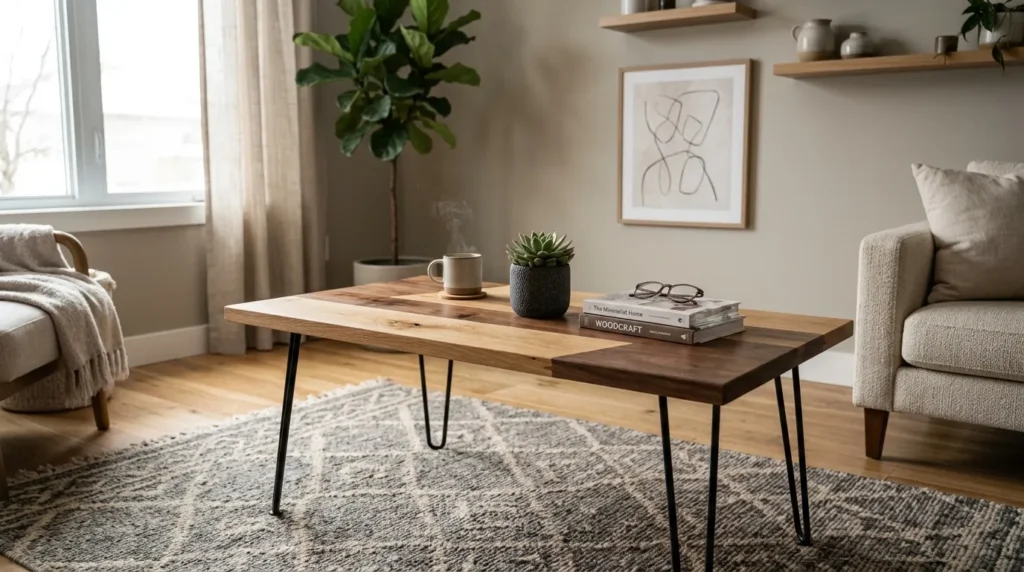
5. Two-Tone Coffee Table
Quick Benefits
- Adds contrast
- Creates visual interest
- Easy to customize
- Works with modern décor
- Personalizes the design
Why It Works
A two-tone tabletop can create a custom furniture look without requiring complicated construction.
You can combine two wood tones, wood and paint, or a natural top with a darker accent edge.
I’ve found that repeating one of the colors elsewhere in the room helps the table feel integrated rather than random.
How To Style It
Choose two complementary finishes and keep the overall design simple.
Repeat one finish through nearby furniture, picture frames, baskets, or decorative accessories.
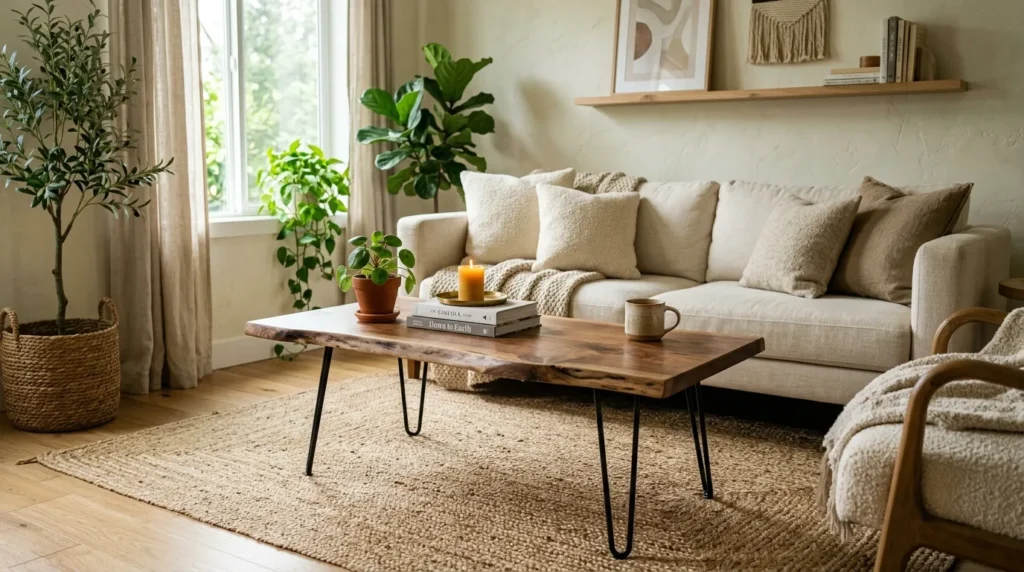
6. Live-Edge Coffee Table
Quick Benefits
- Adds natural character
- Creates a focal point
- Every table feels unique
- Works with modern interiors
- Easy to personalize
Why It Works
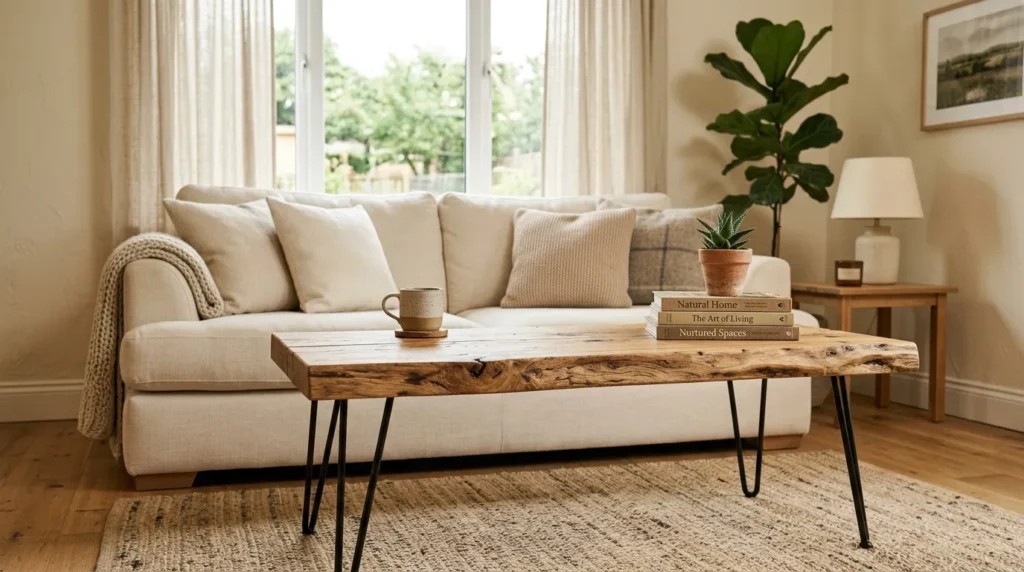
A live-edge tabletop brings organic movement into the living room. The naturally irregular edge creates contrast against the clean geometric shape of hairpin legs.
This combination works especially well when you want furniture that feels handmade without looking overly rustic.
I’ve found that the natural edge becomes the strongest feature, so the rest of the table can remain relatively simple.
How To Style It
Choose a properly dried and prepared slab with a stable structure. Sand and finish the surface appropriately for indoor furniture.
Keep accessories minimal so the natural wood grain and edge remain visible.
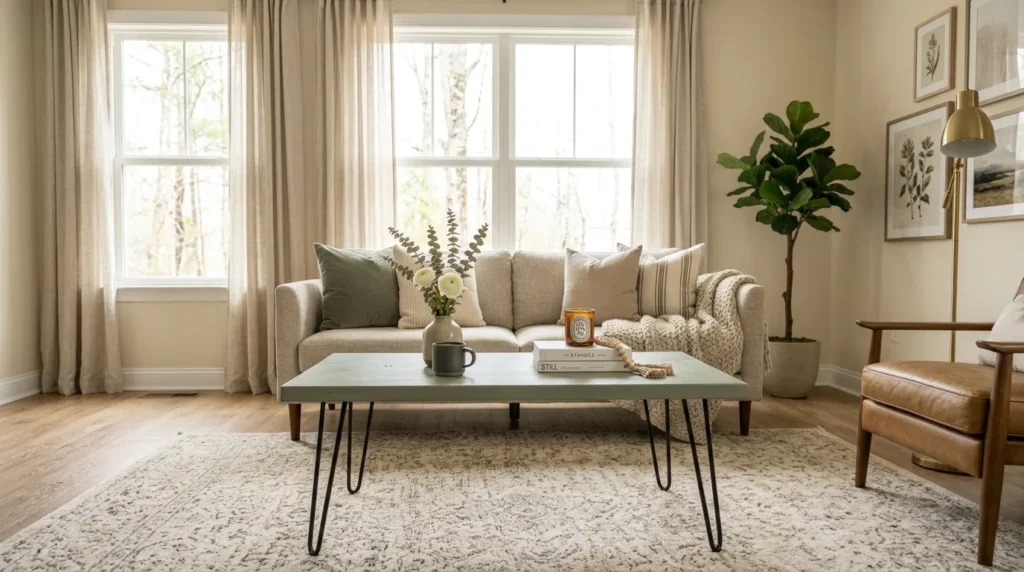
7. Painted Wood Table
Quick Benefits
- Easy to customize
- Works with colorful interiors
- Refreshes inexpensive materials
- Creates a polished finish
- Beginner-friendly
Why It Works
Paint allows you to customize a DIY coffee table to match almost any living room palette. A soft neutral can create a calm look, while a deeper shade can turn the table into a statement piece.
Hairpin legs provide contrast and keep the overall design modern.
I’ve found that muted colors often work best when you want the finished table to feel sophisticated rather than overly bold.
How To Style It
Prepare the wood properly before painting and use a finish appropriate for furniture.
Coordinate the tabletop color with cushions, artwork, rugs, or other accents in the living room.
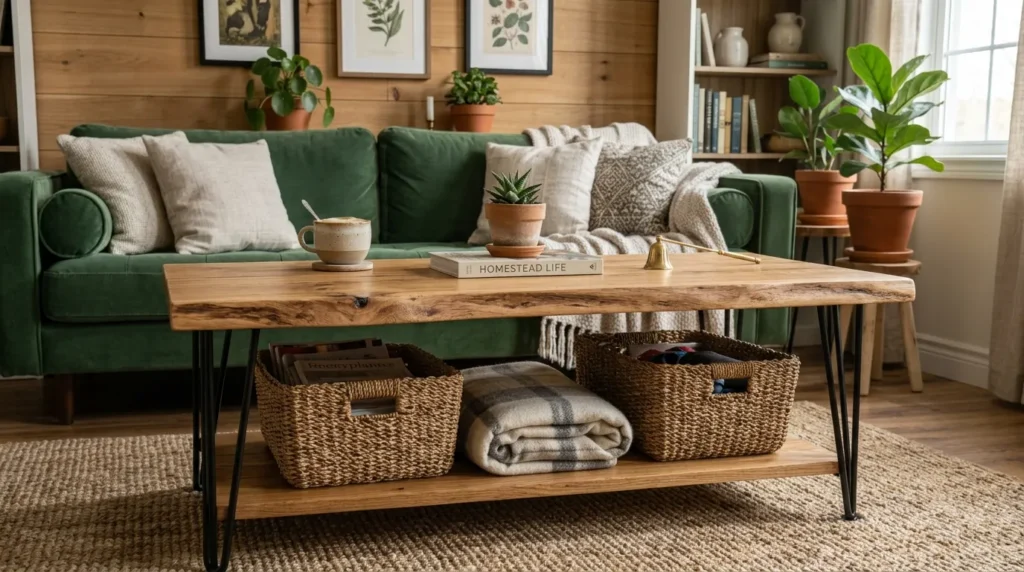
8. Storage Coffee Table
Quick Benefits
- Adds hidden storage
- Reduces living room clutter
- Combines style and function
- Saves space
- Keeps essentials nearby
Why It Works
A coffee table with storage can be especially useful in smaller living rooms. A simple tabletop can be combined with a lower shelf, baskets, or another suitable storage feature.
Hairpin legs keep the lower area visually open, preventing the table from looking overly bulky.
I’ve found that this approach works well for storing blankets, books, remotes, or other living room essentials.
How To Style It
Add a lower shelf or use appropriately sized baskets beneath the tabletop.
Keep the upper surface relatively uncluttered so the table remains functional and easy to use.
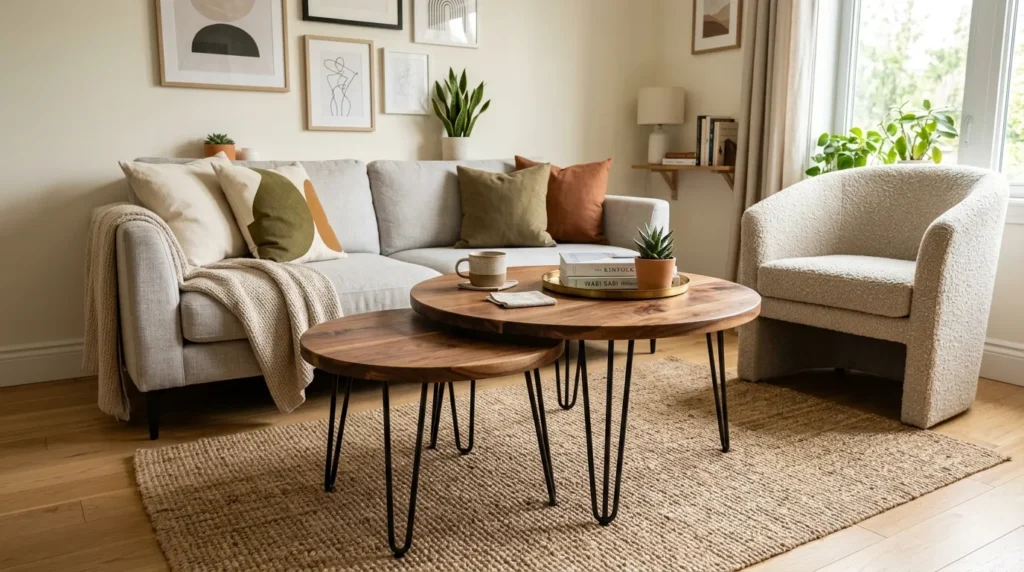
9. Nesting Coffee Tables
Quick Benefits
- Flexible arrangement
- Saves space
- Adds visual interest
- Easy to separate
- Great for entertaining
Why It Works
Nesting tables provide multiple surfaces while allowing the smaller table to slide beneath the larger one when not needed.
This makes the concept particularly useful for compact living rooms where flexibility matters.
I’ve found that nesting designs are also practical when guests need additional table space.
How To Style It
Use complementary tabletop finishes or slightly different sizes.
Keep the smaller table tucked beneath the larger one for everyday use and pull it out when extra surfaces are needed.
10. Modern Slatted Table
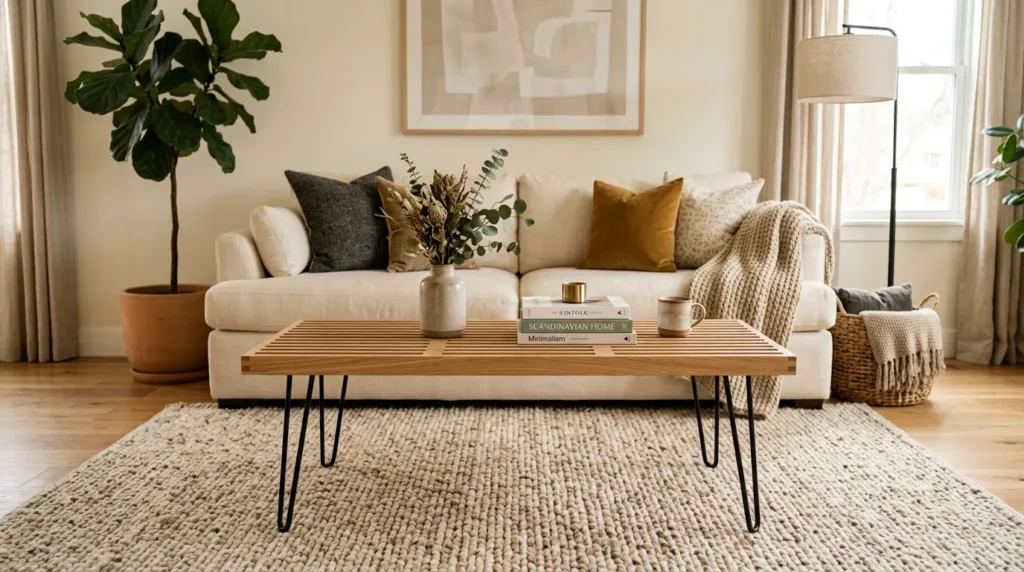
Quick Benefits
- Adds texture
- Creates a contemporary look
- Allows airflow and light
- Customizable
- Works with natural wood
Why It Works
Slatted wood can create an interesting tabletop or lower shelf while adding rhythm and texture to the design.
Combined with hairpin legs, it creates a modern handmade appearance that feels lighter than many solid furniture designs.
I’ve found that natural wood slats look particularly attractive in modern organic and Scandinavian-inspired rooms.
How To Style It
Keep the spacing between slats consistent and sand all surfaces thoroughly.
Pair the finished table with neutral upholstery, woven textures, and simple décor to highlight the craftsmanship.
Frequently Asked Questions
Are hairpin legs strong enough for a coffee table?
Properly rated hairpin legs can work well for coffee tables when they are correctly sized, securely attached, and paired with a structurally suitable tabletop.
What wood is best for a DIY coffee table?
Hardwoods, properly prepared reclaimed wood, butcher-block material, and suitable furniture-grade panels can all work depending on the design and desired finish.
How tall should a DIY coffee table be?
A coffee table is generally most comfortable when its height relates closely to the seating around it. Measure your sofa and chairs before choosing the final leg height.
Can beginners build a coffee table with hairpin legs?
Yes. A simple tabletop with pre-made hairpin legs can be one of the more approachable DIY furniture projects, provided the builder uses suitable materials and follows safe tool practices.
How do I make a DIY coffee table look expensive?
Use carefully finished wood, clean proportions, quality-looking hardware, consistent sanding, and a restrained design. Good finishing work can make a simple construction look much more polished.
Are round coffee tables good for small living rooms?
They can be. A round table eliminates sharp corners and can make movement around the seating area easier, depending on the room’s layout.
Conclusion
DIY coffee tables using hairpin legs offer an excellent combination of simplicity, flexibility, and modern style. The thin metal legs create a lightweight appearance, while the tabletop gives you almost unlimited opportunities to customize the design.
Whether you prefer reclaimed wood, a painted finish, a live edge, storage, or a minimalist square shape, the basic concept can be adapted to suit your living room.
Before building, focus on measurements, stability, appropriate materials, and comfortable circulation around the table. Then personalize the finish to complement your existing décor.
A simple tabletop and a well-designed set of hairpin legs can become a stylish centerpiece that looks custom-made without requiring an overly complicated build.