
10 Aesthetic Bedroom Ideas Using Neutral Colors
A neutral bedroom can feel anything but boring when the right colors, textures, lighting, and materials are layered thoughtfully. Shades of ivory, cream, beige, taupe, warm gray, soft brown, and muted greige can create a peaceful foundation while leaving plenty of room for personality.
The secret is not simply covering everything in beige. A beautiful neutral bedroom depends on contrast and texture. Smooth walls can be paired with woven baskets, linen bedding, natural wood, plush rugs, ceramic accessories, and soft fabrics to create visual depth.
In my experience, the most successful neutral bedrooms also avoid making every element the exact same shade. Slight variations between warm and cool neutrals can give the room a more collected appearance.
Lighting matters, too. Soft bedside lamps, warm bulbs, candles, and natural daylight can make neutral colors feel especially inviting.
Whether your style leans modern, organic, minimalist, Scandinavian, or cozy, a neutral palette can adapt beautifully.
These ideas will help you create an aesthetic bedroom that feels calm, sophisticated, comfortable, and easy to live in.
Table of Contents
- Layer Cream Bedding
- Add Natural Wood
- Mix Neutral Textures
- Create Soft Lighting
- Use an Area Rug
- Add Organic Greenery
- Style a Neutral Gallery Wall
- Choose Minimal Furniture
- Add Warm Metallic Accents
- Create a Cozy Reading Corner
1. Layer Cream Bedding
Quick Benefits
- Creates a calm foundation
- Adds softness
- Looks timeless
- Makes layering easy
- Brightens the room
Why It Works
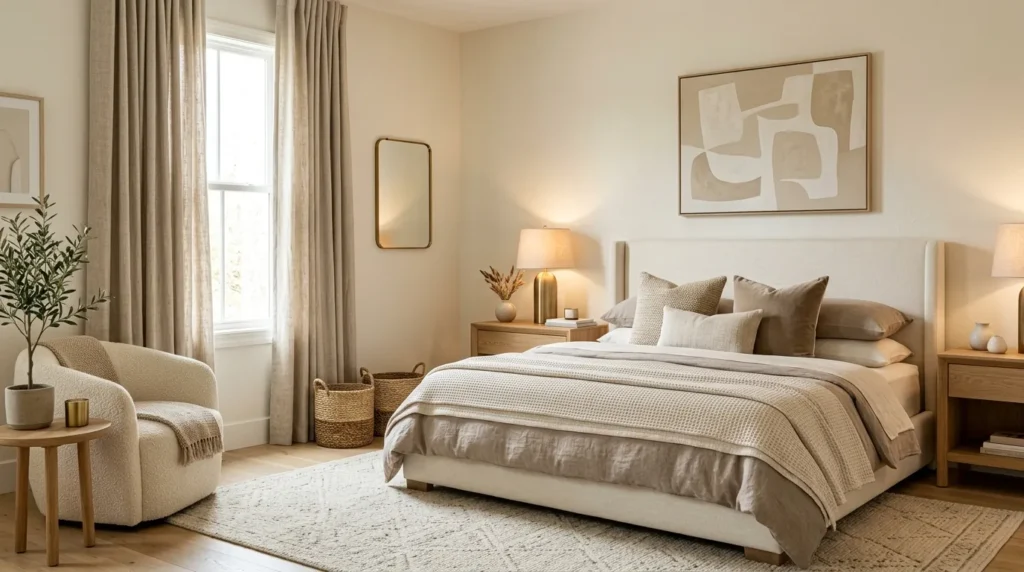
Cream and ivory bedding can instantly create a peaceful bedroom foundation. Unlike stark white, warmer neutrals tend to feel softer and more inviting.
Layering different bedding materials prevents the bed from looking flat. A duvet, quilt, textured throw, and several pillows can create depth while staying within a restrained color palette.
I’ve found that mixing slightly different neutral shades makes an all-neutral bed feel much more interesting.
How To Style It
Combine ivory, cream, beige, and soft taupe rather than choosing one exact shade.
Add a textured throw across the bottom of the bed and use pillows in several complementary fabrics.
2. Add Natural Wood
Quick Benefits
- Adds warmth
- Creates contrast
- Introduces organic texture
- Works with many styles
- Prevents neutrals from feeling flat
Why It Works
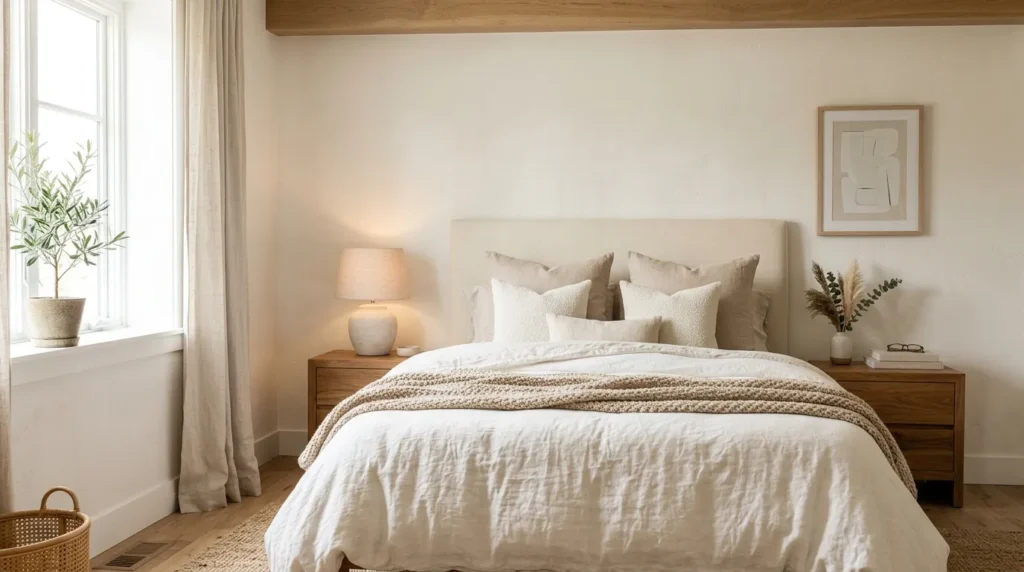
Natural wood adds warmth to neutral bedrooms without introducing strong color. A wooden bed frame, nightstand, bench, or dresser can create subtle contrast against cream walls and bedding.
The natural variation in wood grain also provides visual interest.
I’ve found that even one substantial wood element can make a neutral bedroom feel more grounded and welcoming.
How To Style It
Choose one primary wood tone and repeat it through smaller pieces where appropriate.
Pair warm wood with cream textiles, woven baskets, ceramic accessories, and soft lighting.
3. Mix Neutral Textures
Quick Benefits
- Adds visual depth
- Creates a luxurious feeling
- Prevents monotony
- Makes the room cozy
- Adds personality without color
Why It Works
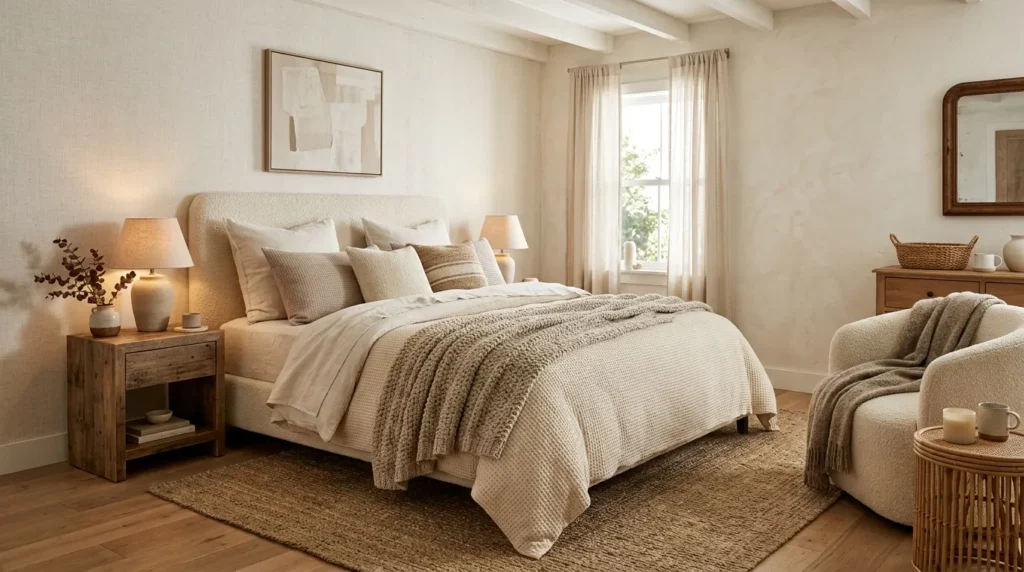
Texture is essential when working with neutral colors. Without texture, an all-neutral room can appear flat.
Linen, boucle, wool, cotton, velvet, rattan, wood, stone, and ceramic surfaces can all create subtle differences.
In my experience, texture allows a neutral bedroom to feel visually rich while remaining calm.
How To Style It
Choose several different materials instead of repeating the same fabric.
For example, combine linen bedding with a wool rug, woven basket, wooden furniture, and ceramic décor.
4. Create Soft Lighting
Quick Benefits
- Makes the room cozy
- Enhances neutral colors
- Creates ambiance
- Adds visual warmth
- Supports relaxation
Why It Works
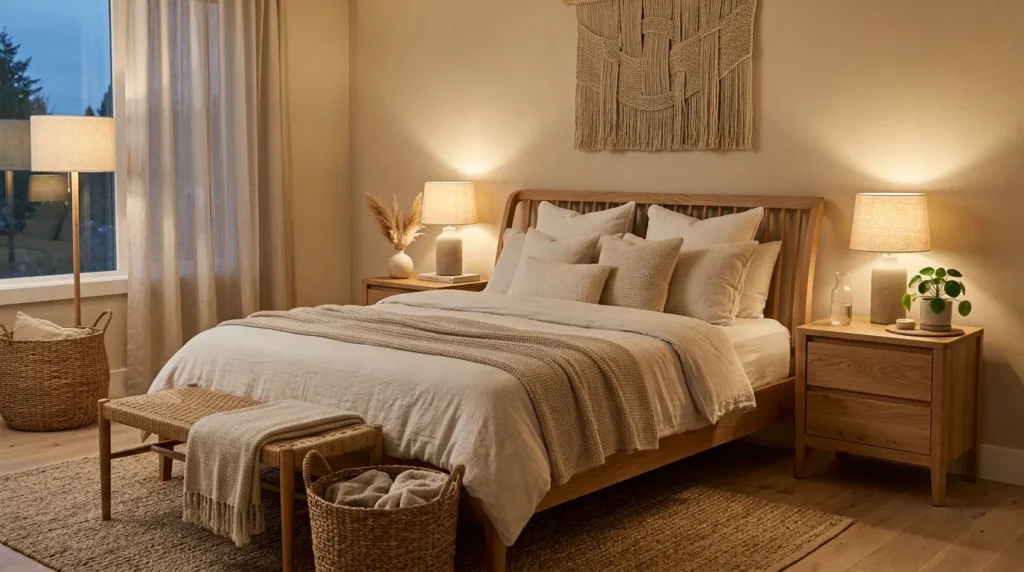
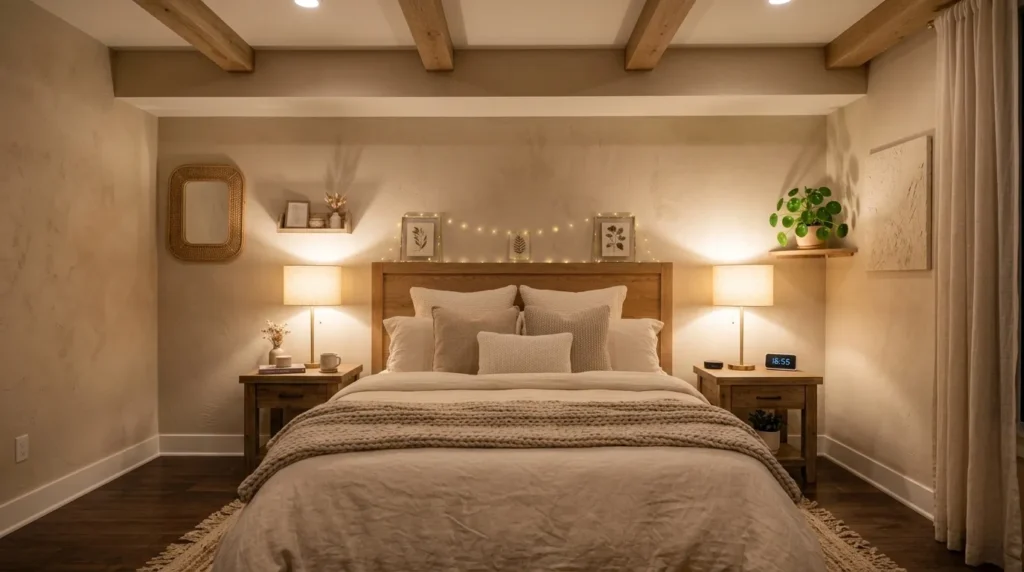
Lighting can completely change how neutral colors appear. Cool, harsh lighting can make beige and gray feel flat, while warm lighting can emphasize their softer qualities.
Multiple light sources also create more depth than relying on one overhead fixture.
I’ve found that bedside lamps are one of the easiest upgrades for creating a cozy bedroom atmosphere.
How To Style It
Use bedside lamps, floor lamps, wall lights, or subtle accent lighting where appropriate.
Choose warm-toned bulbs suitable for the fixtures and layer light at different heights.
5. Use an Area Rug
Quick Benefits
- Adds softness
- Defines the sleeping area
- Creates visual warmth
- Introduces texture
- Makes the room feel finished
Why It Works
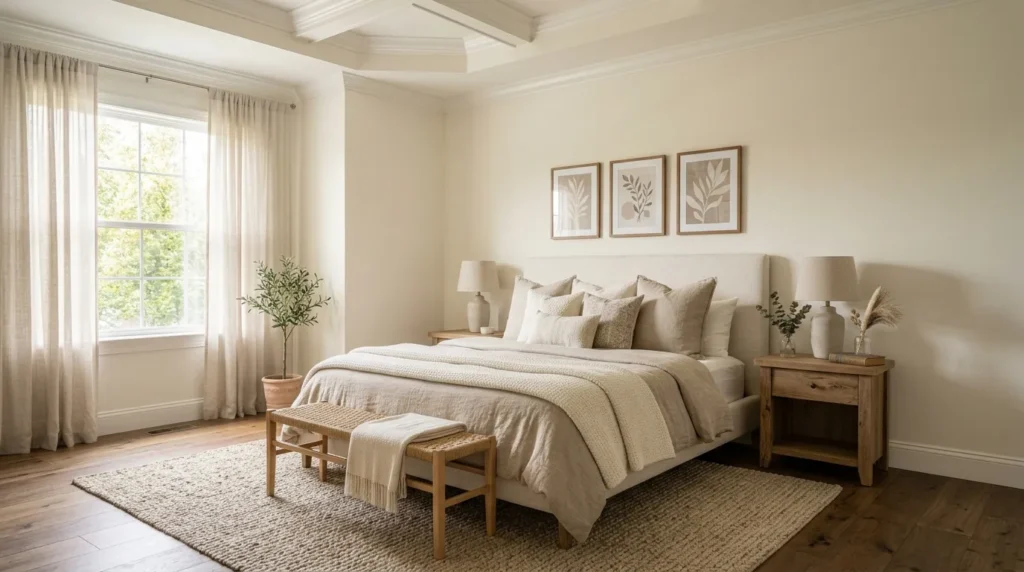
An area rug can make a neutral bedroom feel warmer and more complete while adding another layer of texture beneath the furniture.
A subtle cream, beige, taupe, or warm gray rug works especially well because it maintains the peaceful palette without introducing distracting color.
I’ve found that a textured rug can be more effective than a heavily patterned one when the goal is a calm aesthetic bedroom.
How To Style It
Choose a rug large enough to visually connect the bed and surrounding furniture.
Place it so that it extends beyond the sides of the bed when the room allows. For smaller bedrooms, a runner or smaller rug can still add softness without overwhelming the floor.
6. Add Organic Greenery
Quick Benefits
- Adds natural color
- Creates freshness
- Softens neutral décor
- Introduces organic shapes
- Makes the room feel alive
Why It Works
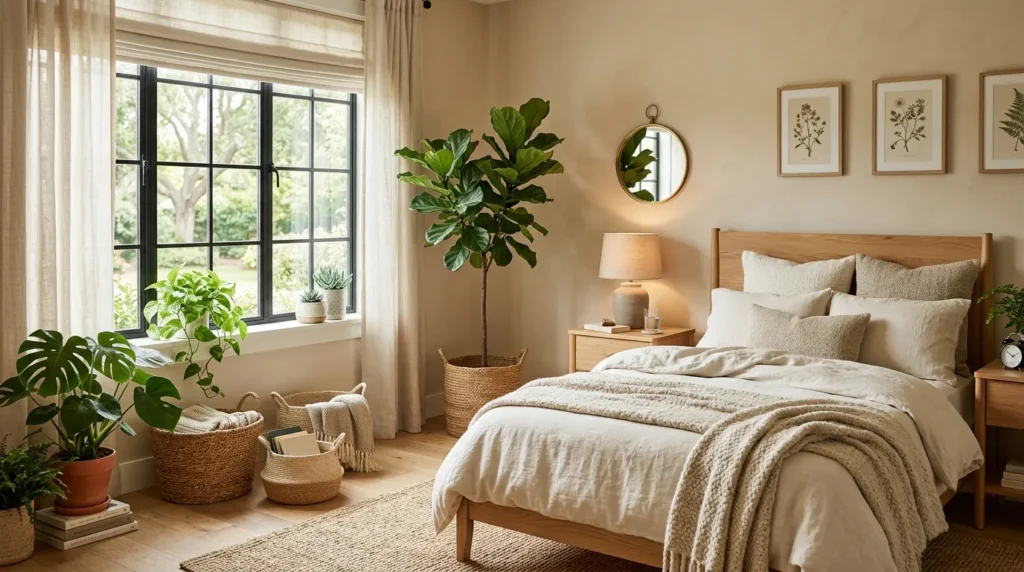
Neutral bedrooms benefit from small touches of nature. Plants introduce gentle green tones while adding organic shapes that contrast beautifully with straight furniture lines.
You don’t need a jungle of plants. One larger plant or a few carefully placed smaller ones can be enough.
In my experience, greenery works particularly well with warm neutrals because the natural colors complement wood, linen, and woven materials.
How To Style It
Choose plants that suit the available light and your preferred level of maintenance.
Place greenery near a window, on a nightstand, dresser, or in an empty corner where it can soften the room without blocking pathways.
7. Style a Neutral Gallery Wall
Quick Benefits
- Adds personality
- Fills blank walls
- Creates a focal point
- Keeps the palette cohesive
- Makes the bedroom feel curated
Why It Works
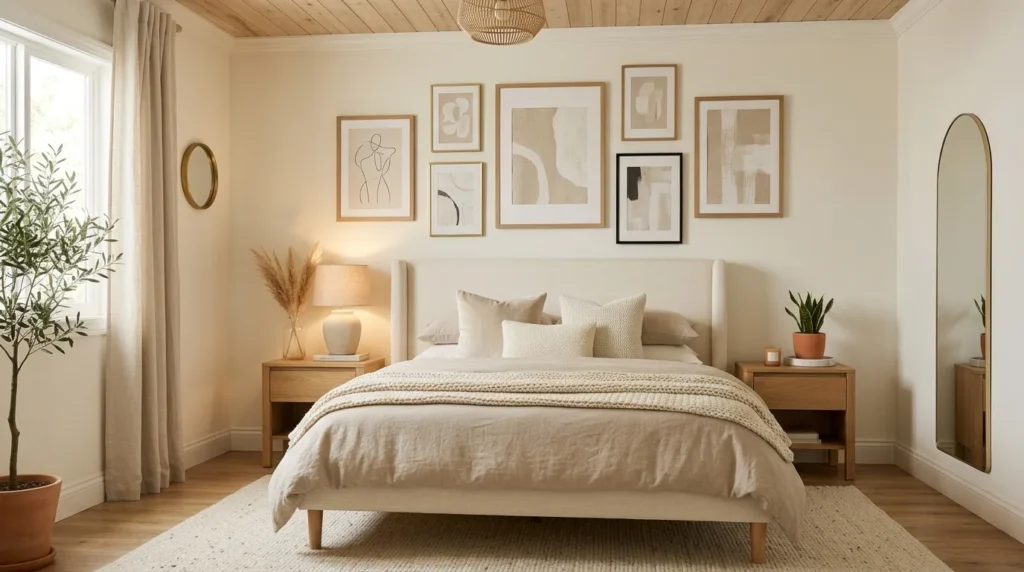
Artwork prevents a neutral bedroom from feeling overly plain. A gallery wall can introduce personality while maintaining the calming color palette.
Black-and-white photography, line drawings, abstract art, vintage-inspired prints, and muted botanical artwork can all work beautifully.
I’ve found that using different frame sizes creates interest while keeping the artwork within a controlled color family.
How To Style It
Choose artwork with complementary tones rather than trying to make every piece identical.
Use frames in one or two coordinated finishes, then arrange the pieces with consistent spacing.
8. Choose Minimal Furniture
Quick Benefits
- Keeps the room open
- Reduces visual clutter
- Makes small rooms feel larger
- Supports a calm aesthetic
- Improves functionality
Why It Works
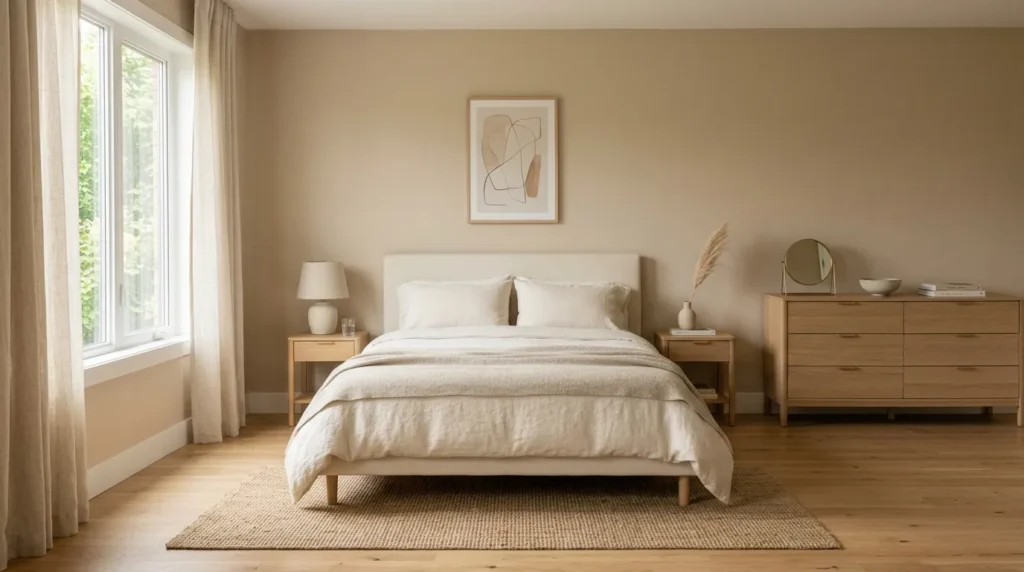
A neutral color palette looks especially effective when paired with intentional furniture choices. Too many pieces can make a peaceful bedroom feel crowded, regardless of how soft the colors are.
The goal is to keep the furniture necessary and proportionate to the room.
In my experience, a simple bed, two compact nightstands, a dresser, and one useful accent piece can be enough for many bedrooms.
How To Style It
Measure your bedroom before adding furniture and prioritize clear walking paths.
Choose pieces with simple silhouettes and avoid filling empty corners simply because there is room for another object.
9. Add Warm Metallic Accents
Quick Benefits
- Adds subtle elegance
- Creates contrast
- Elevates neutral décor
- Reflects light
- Adds visual interest
Why It Works
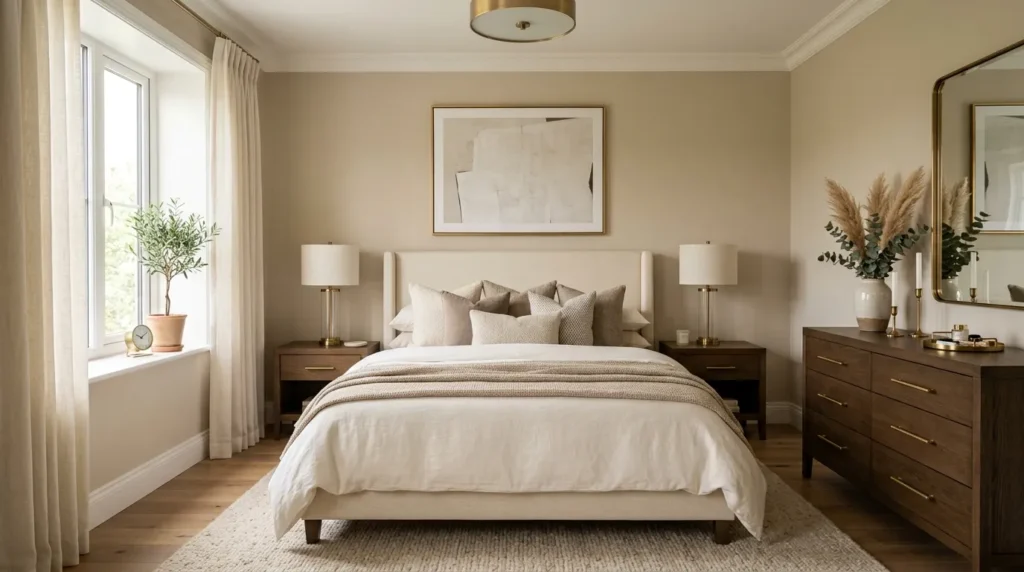
A few metallic details can give a neutral bedroom a refined finish. Brushed brass, muted gold, champagne, or aged bronze can work particularly well with warm beige and cream palettes.
The key is restraint. Too much shiny metal can make a calm bedroom feel overly formal.
I’ve found that repeating a small metallic finish in two or three locations is usually enough.
How To Style It
Introduce metallic accents through drawer pulls, lamp bases, picture frames, mirrors, or small decorative objects.
Choose one dominant metal finish and repeat it subtly rather than mixing too many competing finishes.
10. Create a Cozy Reading Corner
Quick Benefits
- Adds function
- Uses an empty corner
- Creates a relaxing retreat
- Adds personality
- Completes the room
Why It Works
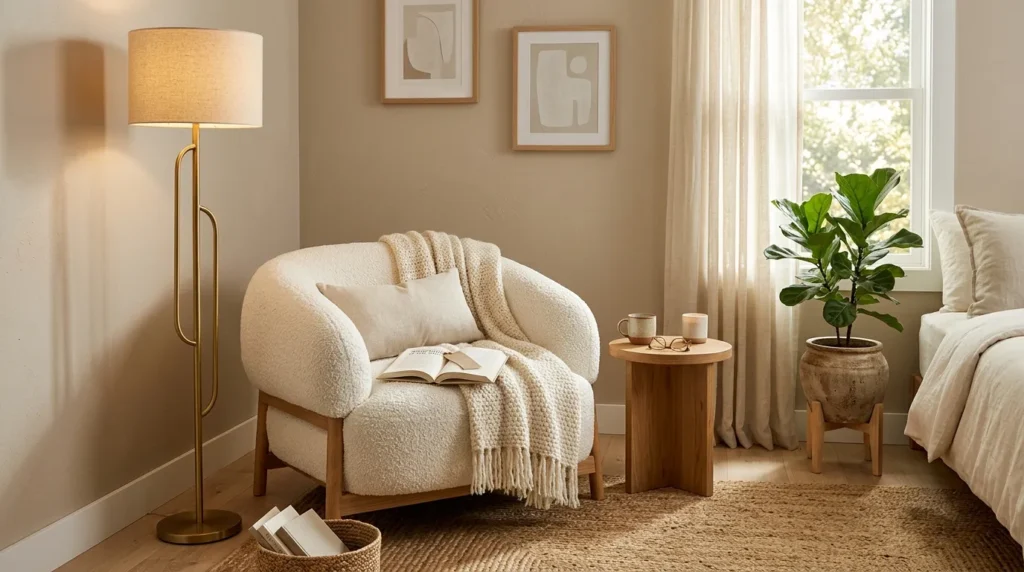
A small reading corner can make a bedroom feel more intentional while giving an unused area a purpose.
A comfortable chair, small side table, floor lamp, and soft throw can create a cozy retreat without requiring much space.
I’ve found that a neutral reading corner can also reinforce the bedroom’s overall aesthetic because it gives you another opportunity to layer textures.
How To Style It
Choose a chair that fits comfortably without restricting the room’s walking path.
Add a small side table and warm lamp, then finish with a textured throw or cushion in a complementary neutral shade.
Frequently Asked Questions
How do I make a neutral bedroom look aesthetic?
Focus on layering different neutral shades, textures, natural materials, soft lighting, simple furniture, and carefully selected accessories rather than relying on color alone.
What colors work best for a neutral bedroom?
Cream, ivory, beige, taupe, warm gray, greige, soft brown, and muted natural tones are versatile choices for a calming bedroom.
How do I keep a neutral bedroom from looking boring?
Use texture and subtle contrast. Combine linen, wool, wood, woven materials, ceramics, greenery, and different shades of neutral colors.
What color wood works with a neutral bedroom?
Warm natural wood tones generally pair beautifully with cream, beige, ivory, and taupe. Choose a wood tone that complements the warmth of your existing palette.
Should everything in a neutral bedroom match?
No. A collected look usually comes from coordinating rather than perfectly matching. Use related colors and materials while allowing subtle variations.
How can I make a small neutral bedroom feel larger?
Use appropriately scaled furniture, maintain clear walking paths, keep the palette light, use mirrors strategically, and avoid unnecessary decorative pieces.
Conclusion
A neutral bedroom can be one of the most relaxing and versatile spaces in a home. The key is creating depth without relying on bright colors.
Start with layered cream and ivory bedding, then introduce natural wood, varied textures, soft lighting, and a comfortable rug. Add greenery, artwork, subtle metallic details, and only the furniture you genuinely need.
The most beautiful neutral bedrooms aren’t completely colorless or perfectly matched. They use small differences in tone, texture, shape, and material to create a space that feels collected and personal.
With a thoughtful combination of warm neutrals and tactile materials, you can create an aesthetic bedroom that feels peaceful in the morning and wonderfully cozy at night.