
Does Fireplace Heat Actually Damage a TV Mounted on the Chimney Breast?
Determining if fireplace heat actually damages a TV mounted on the chimney breast is a common concern for homeowners looking to optimize their living room layout. While the aesthetic appeal of a fireplace-mounted screen is undeniable, the physical reality of rising heat presents a legitimate technical challenge for delicate electronic components. Understanding the thermal dynamics involved in this installation is essential to preventing premature hardware failure.
By evaluating temperature thresholds and airflow patterns, you can make an informed decision about whether your specific hearth setup poses a risk to your display. This article explores the technical realities of heat exposure and provides actionable advice for protecting your investment.
The Direct Answer: Yes, Heat Causes Damage

Does fireplace heat actually damage a TV mounted on the chimney breast The short answer is yes, constant exposure to elevated temperatures will significantly degrade the internal components of a television. Modern LED, OLED, and QLED screens rely on sensitive liquid crystals and complex circuit boards that are rated for specific operating temperature ranges.
When a fireplace is in use, it creates a heat plume that rises directly up the face of the chimney breast. If your television sits within this rising air path, it effectively acts as a heat sink, absorbing thermal energy far beyond its design specifications.
The primary point of failure is typically the electrolytic capacitors located on the power supply board. These components are temperature-sensitive and suffer from accelerated aging when subjected to consistent heat cycles. Beyond the internal circuitry, the plastic housing of the TV can become brittle, and the screen’s adhesive layers may begin to delaminate over time.
While you might not see immediate damage after a single evening of use, the cumulative effect of hundreds of hours of exposure will almost certainly shorten the lifespan of the device. Most manufacturers explicitly state that their products should not be installed above heat sources in their user manuals.
Understanding Thermal Convection Patterns
To understand why this happens, you must visualize how air moves around a fireplace. Heat does not just radiate outward; it follows the path of least resistance, which is typically upward along the surface of the wall. This phenomenon is known as convection.
As the air near the fireplace warms up, its density decreases, causing it to rise rapidly. If the TV is mounted flush against the chimney breast, it intercepts this stream of hot air before it can dissipate into the room.
This creates a localized environment where the temperature at the back of the TV is significantly higher than the ambient room temperature. Even if the room feels comfortable, the air directly behind the screen could be well over 100 degrees Fahrenheit.
This constant thermal bombardment forces the television’s internal cooling system to work harder than it was designed to. If the unit lacks adequate ventilation space, the heat becomes trapped, leading to thermal throttling or complete component failure.
The Role of Mantelpieces as Heat Deflectors
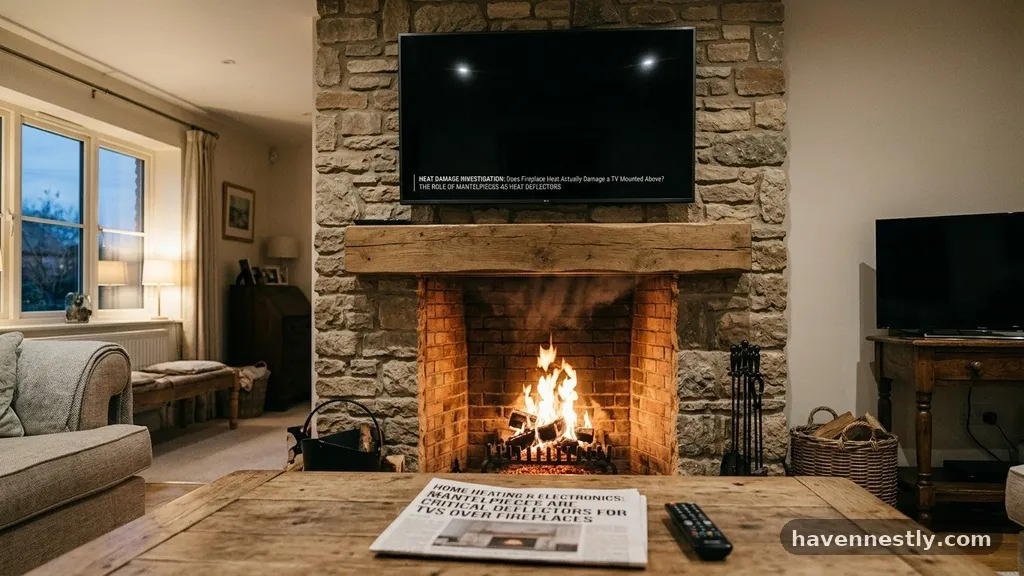
A common misconception is that any mantelpiece will effectively protect a television from rising heat. In reality, the effectiveness of a mantel depends entirely on its depth, position, and material.
A mantel is designed to act as a physical barrier that disrupts the rising convection current by pushing it outward into the room. For a mantel to provide meaningful protection, it usually needs to extend at least 6 to 10 inches from the wall.
If the mantel is too narrow, the heat plume will simply curl around the edge and continue to rise behind the TV. Furthermore, the vertical distance between the top of the fireplace opening and the bottom of the mantel is critical. If the gap is too small, the heat will bypass the mantel entirely.
You should also consider the material; a stone or metal mantel will hold heat differently than wood. Wood is a poor conductor of heat, which can be beneficial, but it must be installed with strict attention to building codes regarding combustible clearances.
Quantifying Safe Temperature Thresholds
Most consumer electronics are rated for operation in environments up to 100 or 105 degrees Fahrenheit. While this may seem generous, the air temperature directly above an active fireplace can easily exceed 130 degrees.
If you are serious about protecting your equipment, it is important to measure the actual conditions. You can use a digital infrared thermometer to check the temperature of the wall surface while the fireplace is running at its highest setting.
Typical Temperature Thresholds for Electronics
| Component | Optimal Operating Temp | Maximum Safe Temp |
|---|---|---|
| LCD/LED Panel | 60°F – 85°F | 100°F |
| Power Supply Board | 70°F – 95°F | 115°F |
| Plastic Housing | 60°F – 90°F | 120°F |
If your test indicates that the wall temperature consistently pushes toward the upper limits of these ranges, you should reconsider the mounting location. Relying on an air-conditioned room to cool the TV is often insufficient because the heat is hitting the back of the chassis directly. If you must proceed with the installation, you need to ensure that the clearances met by the mounting hardware allow for maximum airflow.
Evaluating Different Types of Fireplaces
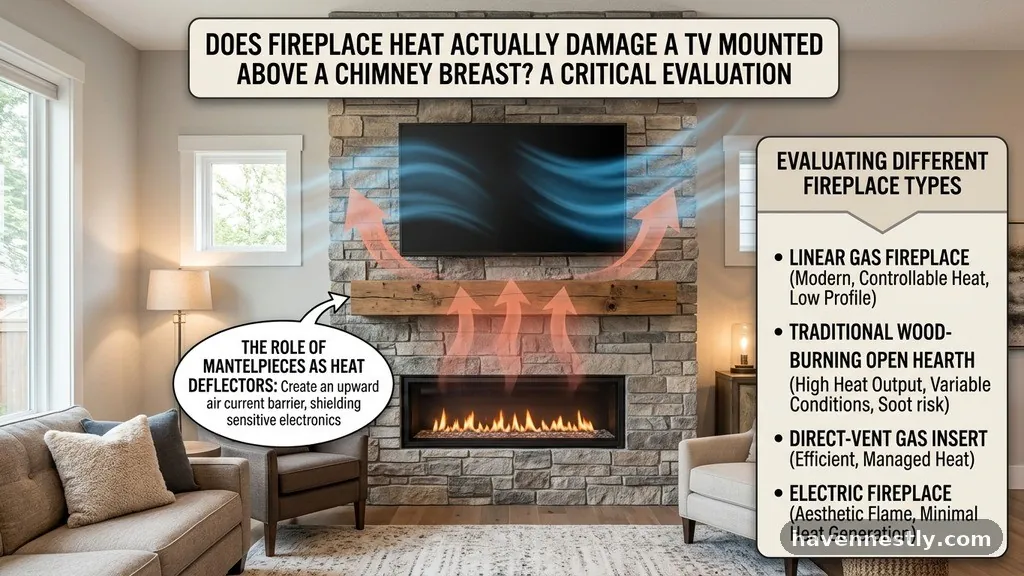
Not all fireplaces produce the same amount of heat, which significantly impacts the risk profile. A modern gas fireplace, for instance, often features a sealed glass front designed to radiate heat forward rather than venting it upward along the wall.
These units are generally safer for television mounting than traditional open-hearth wood-burning fireplaces. Wood-burning fireplaces are notorious for generating massive amounts of uncontrolled heat that rises up the chimney breast.
Electric fireplaces, on the other hand, are the safest option for this specific installation. Many electric models vent their heat from the bottom or the front, keeping the wall surface relatively cool. Before planning your installation, identify the specific type of heat output your fireplace generates.
If you have an old masonry fireplace, the heat distribution is likely inefficient and potentially dangerous for electronics. Always consult the manufacturer’s installation guidelines for your specific fireplace model to see if they provide clearance recommendations for overhead electronics.
Signs of Thermal Stress on Your Display
It is vital to monitor your television for early signs of heat-related damage. Because the degradation often happens gradually, you might not notice a sudden change until the unit fails completely.
One of the first indicators is the presence of “dirty screen effect” or localized discoloration in the corners of the panel. This often happens because the heat has affected the liquid crystal alignment or the backlight diffuser layers.
Another warning sign is the development of screen artifacts, such as flickering or strange color shifts that appear only after the TV has been running for an hour or more. If you hear the TV making unusual clicking sounds or if it unexpectedly shuts down, it is likely reaching its thermal limit.
In some cases, the plastic casing may warp or emit a faint, burnt-plastic smell. If you notice any of these symptoms, turn off the fireplace immediately and move the television to a cooler location.
Best Practices for Safe Mounting
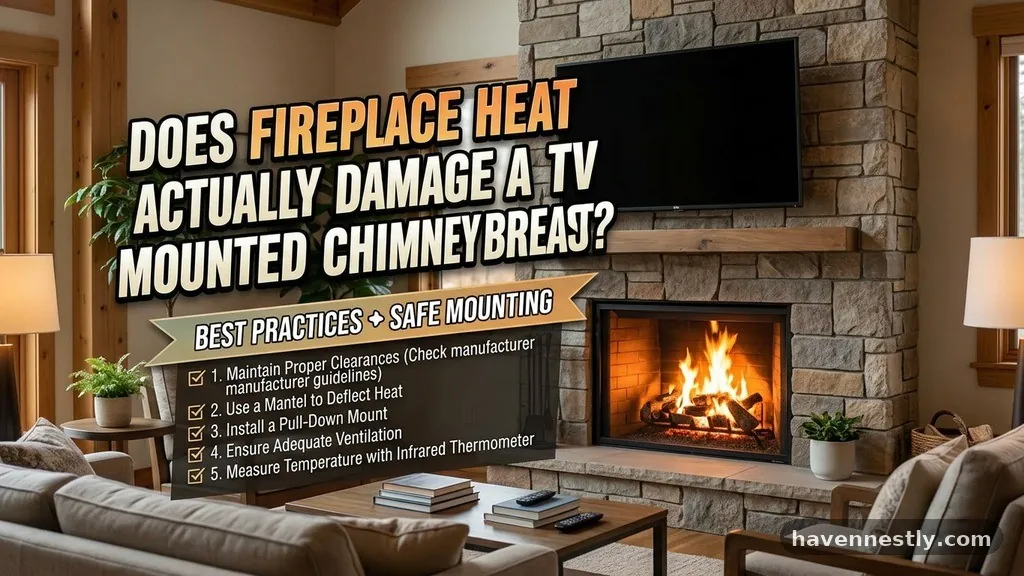
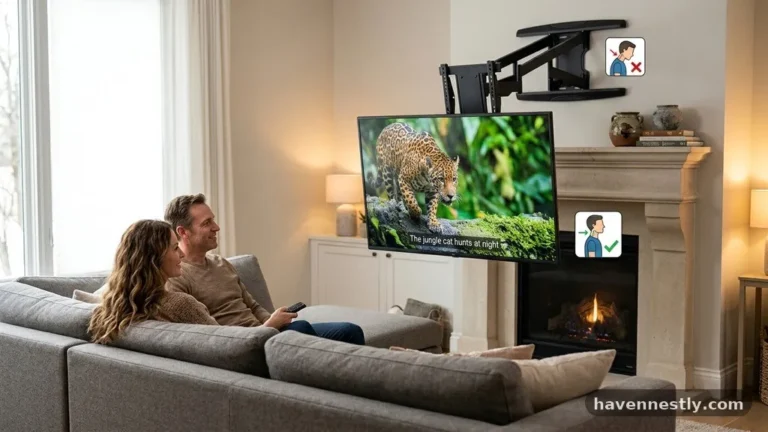
If you are determined to mount a display above a fireplace, there are several ways to minimize the risk of damage. The most effective method is to use a full-motion, articulating mount that allows you to pull the TV away from the wall when the fireplace is in use. This increases the distance between the heat source and the screen, allowing air to circulate behind the unit.
* Install a high-quality, deep mantel to deflect convection currents.
* Use a wall mount that allows for at least 6 to 12 inches of clearance from the surface.
* Consider installing a heat-resistant glass or metal deflector shield beneath the TV.
* Ensure the TV is mounted at a height that avoids the most intense heat zones.
* Regularly check the back of the TV for dust accumulation, which can trap heat.
Following these steps provides a margin of safety that can significantly extend the life of your hardware. However, remember that these are mitigation strategies rather than total solutions. The most reliable way to prevent damage is to maintain a distance between the heat and the electronics.
The Importance of Professional Installation
Installing a TV on a chimney breast involves more than just drilling holes into brick or stone. Many homeowners underestimate the structural challenges involved in mounting heavy equipment onto masonry. A professional installer will have the proper tools to drill into stone without cracking it and the expertise to ensure the mount is secured deeply enough to support the weight.
Furthermore, a professional can provide an objective assessment of the heat risk. They can help you determine if the specific setup in your home provides enough clearance for the TV. If the environment is deemed too hostile, a reputable installer will advise against the project.
They can also help with cable management, which is often difficult on a chimney breast. Hiding wires inside the wall or within a conduit requires careful planning to ensure you are not compromising the integrity of the fireplace structure.
Selecting the Right TV for Challenging Environments
Not all televisions are created equal when it comes to durability. If you are planning an installation in a high-heat area, you should look for models known for their robust build quality.
Some manufacturers design their commercial-grade displays to handle higher operating temperatures than standard consumer sets. These units often feature advanced cooling systems, such as active fans or heat sinks, which are designed to dissipate heat more effectively.
Avoid choosing ultra-thin OLED panels if you have concerns about heat, as these displays often have very thin chassis that lack space for internal cooling components. LED televisions with direct-lit backlighting can sometimes be more resilient, provided they have adequate ventilation.
Always check the warranty terms for your specific TV. Many manufacturers will void the warranty if the unit is installed in a location that does not meet their recommended environmental specifications, which often includes proximity to heat sources.
External Resources and Further Research
For those looking to dive deeper into the technical aspects of home theater safety, reputable organizations provide excellent guidance on installation standards. The National Fire Protection Association offers detailed information on the installation of chimneys and venting systems.
While their primary focus is fire safety, their standards for clearances provide a baseline for understanding how heat behaves in relation to structural elements. Following these guidelines ensures that your installation is not only safe for your TV but also safe for your home.
Frequently Asked Questions
Is it safe to mount a TV over a gas fireplace?
It depends on the specific model and the heat output. Gas fireplaces are generally safer than wood-burning ones, but they still produce significant heat. You must check the manufacturer’s manual for the fireplace to see if it lists a minimum clearance for TVs or other heat-sensitive items.
Will a heat shield actually work to protect my TV?
A heat shield can be effective if it is designed to redirect the airflow away from the back of the television. It needs to be made of a non-combustible material like metal or tempered glass and should be positioned to create a physical gap between the rising heat and the display.
What is the minimum distance a TV should be from a fireplace?
There is no single “magic number,” but most experts recommend at least 12 to 24 inches of vertical space between the top of the fireplace and the bottom of the TV. If you have a mantel, the distance can often be reduced, provided the mantel is deep enough to deflect the heat.
Can the heat cause the TV screen to turn yellow?
Yes, excessive heat can cause the internal layers of an LED or LCD panel to degrade, which may manifest as yellowing, discoloration, or dead pixels. This is a sign of permanent damage to the display panel and the internal electronics.
Does the type of mount I use make a difference?
Yes, a fixed mount is the worst option because it keeps the TV flush against the wall where heat accumulates. A full-motion mount is significantly better because it allows you to pull the TV forward or tilt it downward, which helps dissipate heat more efficiently.
Conclusion
Evaluating whether fireplace heat actually damages a TV mounted on the chimney breast is a necessary step before finalizing your home theater setup. While the visual appeal is strong, the technical risks to your hardware are genuine and should not be overlooked. Consistent exposure to high temperatures will inevitably lead to component degradation, shortened lifespans, and potential hardware failure.
By understanding the convection patterns, using effective heat deflectors, and ensuring adequate ventilation, you can mitigate these risks significantly. If your testing indicates that the area above your hearth remains consistently hot, the most prudent course of action is to choose a different wall for your display. Protecting your equipment requires a balanced approach that respects both the aesthetic goals of your living space and the physical needs of your technology.