Best Proportions for a 60-Inch vs 72-Inch Mantel on an 8-Foot Ceiling Wall
Selecting the right size for your hearth is a critical design choice, as finding the best Proportions for a 60-Inch vs 72-Inch Mantel on an 8-Foot Ceiling Wall requires balancing visual weight with strict safety standards. An 8-foot ceiling is a standard residential height, but it offers limited vertical real estate, meaning your choice of mantel width directly influences how spacious or cramped the room feels. Whether you are aiming for a minimalist look or a heavy, traditional aesthetic, the width of the shelf must relate to the firebox and the surrounding wall surface.
This article provides the technical and aesthetic clarity needed to make the right choice for your home.
The Verdict on Mantel Widths for 8-Foot Ceilings
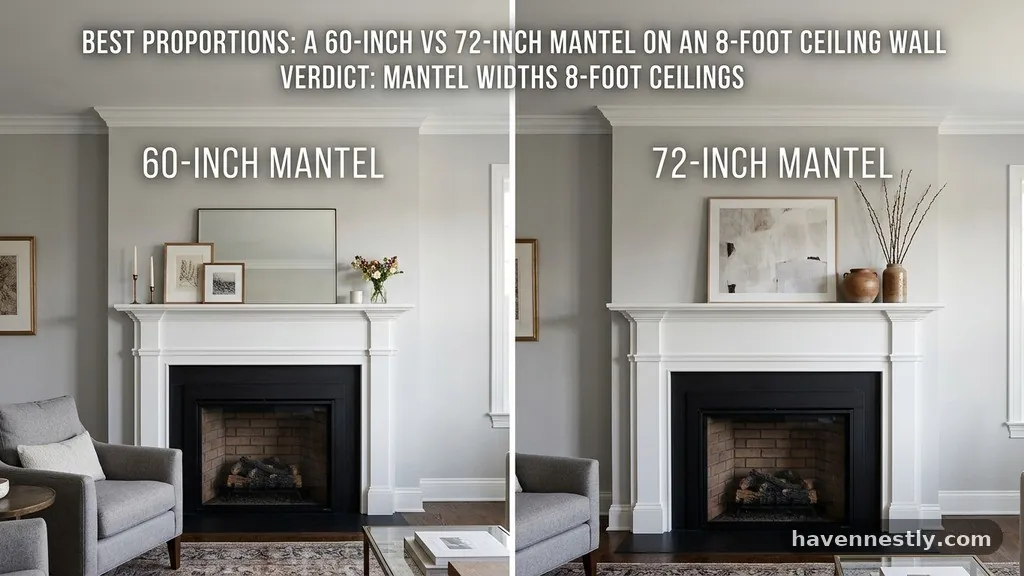
Conversely, a 72-inch mantel is better suited for wider, grander fireplace installations or rooms where the chimney breast is the primary focal point. If you use a 72-inch shelf on a standard 48-inch firebox, you risk the mantel looking disconnected or too heavy for the wall. For an 8-foot ceiling, the extra 12 inches of a 72-inch mantel can make the room feel slightly shorter if the placement is too high.
Always aim for a shelf that extends 4 to 6 inches beyond each side of the fireplace surround for the most natural appearance.
Understanding Visual Weight and Room Scale
Visual weight refers to how much “attention” an object demands in a room. A 72-inch mantel carries significantly more visual weight than a 60-inch piece, which can anchor a large living room but might dominate a smaller den. On an 8-foot ceiling, you have limited vertical space, so a wide, heavy mantel can push the eye downward, making the ceiling feel lower than it actually is.
If you prefer a light, airy design, the 60-inch mantel is almost always the safer bet. It allows for more wall art or mirrors above the shelf without creating a cluttered look. On the other hand, if your room features large windows or heavy crown molding, a 72-inch mantel provides the necessary heft to stand up to those other architectural elements.
You must consider the entire wall, not just the fireplace, when evaluating these dimensions.
Safety First: Minimum Clearance Requirements
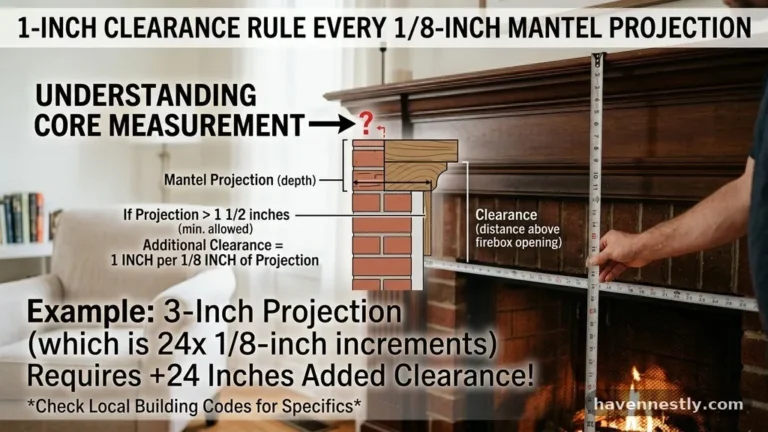
Combustible materials like wood mantels require a specific distance from the firebox opening to prevent accidental ignition. If you mount your mantel too low, you risk damage to the material and a significant fire hazard. Always consult your fireplace manual or local building codes to confirm the required clearance for your specific model.
Most manufacturers require at least 12 inches of clearance above the firebox opening, though this varies by heat output and material.
Measuring Your Firebox and Surround
Before purchasing, you must measure your fireplace accurately to ensure the mantel fits the space. Start by measuring the width of the firebox opening itself, then measure the width of the stone, tile, or brick surround. The ideal mantel width should be slightly wider than the surround to create a finished, intentional look.
| Fireplace Feature | Recommended 60-Inch Mantel | Recommended 72-Inch Mantel |
|---|---|---|
| Firebox Opening | 36 to 42 inches | 48 to 54 inches |
| Surround Width | 48 to 52 inches | 60 to 64 inches |
| Ideal Wall Space | 7+ feet wide | 9+ feet wide |
These figures serve as a baseline for achieving the best Proportions for a 60-Inch vs 72-Inch Mantel on an 8-Foot Ceiling Wall. If your surround is very wide, a 60-inch mantel might look undersized, creating a “pinched” appearance. Always use painter’s tape to mark the dimensions on your wall before committing to a final purchase.
Installing at the Correct Height
For an 8-foot ceiling, most designers recommend placing the mantel at a height between 50 and 58 inches from the floor. This position keeps the mantel at a comfortable eye level while leaving enough room above it for a television or a large piece of artwork.
If you mount the mantel too high, it becomes difficult to decorate and looks disconnected from the fireplace itself. If you mount it too low, it may interfere with the heat distribution or simply look out of place. When using a 72-inch mantel, you might consider mounting it slightly higher to account for its extra bulk, which can help maintain the sense of height in the room.
Material Considerations for Mantels
The material of your mantel affects how the dimensions are perceived by the eye.
A thick, chunky wood beam carries more visual weight than a sleek, thin marble shelf. If you opt for a heavy, rustic wood beam that is 72 inches wide, it will feel much larger than a 72-inch marble mantel.
* Natural wood: Provides warmth and fits rustic or traditional styles.
* Marble or stone: Offers a formal, clean look that works well in modern spaces.
* Cast stone: Allows for intricate detailing while maintaining a consistent color.
* Metal: Best for industrial or ultra-modern design aesthetics.
Each of these materials has different installation requirements, especially regarding weight. A 72-inch solid stone mantel will require significantly more structural support than a hollow wood box. Ensure your wall framing can handle the load before finalizing your design.
Decorating Above the Mantel
If you have a 72-inch mantel, you have a wider shelf to work with, allowing for larger decor items. However, be careful not to crowd the shelf, as this can make the fireplace look messy.
With a 60-inch mantel, you are limited to smaller groupings or a single, impactful piece of art. The goal is to create a focal point without making the wall feel top-heavy. Keep in mind that anything you place on the mantel must also comply with heat clearance guidelines if it is flammable.
Common Mistakes to Avoid
One of the most frequent errors is ignoring the surrounding architectural features.
If your fireplace is flanked by built-in bookshelves, the mantel should not extend into those units. Another mistake is failing to account for the thickness of the mantel shelf itself when calculating clearance.
Many homeowners also forget to account for the depth of the mantel. A very deep shelf can look great, but it might interfere with a television mounted above it. Always check the depth, not just the width and height, to ensure your furniture arrangement remains functional and safe.
Pros and Cons of a 60-Inch Mantel
It fits most homes perfectly and rarely overwhelms a room. Its primary benefit is versatility, as it works with almost any fireplace surround width.
The downside is that it can look small if your fireplace is particularly wide or if you have a massive wall to fill. If your living room is very large, a 60-inch mantel might disappear into the background. However, for an 8-foot ceiling, it is often the most balanced choice for maintaining a sense of proportion.
Pros and Cons of a 72-Inch Mantel
A 72-inch mantel is a statement piece.
It draws the eye and can make a fireplace feel like a grand, custom installation. It is ideal for wider fireboxes and rooms where you want to emphasize the fireplace as the primary architectural feature.
The drawback is the risk of visual imbalance. If the wall is not wide enough to support the extra length, the mantel will look like it is “floating” awkwardly. Additionally, it requires more wall space and can make an 8-foot room feel slightly more constrained if the mantel is too deep or heavy.
Frequently Asked Questions How high should I hang my mantel on an 8-foot ceiling?
Most interior designers suggest a height between 50 and 58 inches from the finished floor.
This provides a comfortable viewing angle and keeps the mantel in proportion with the rest of the room’s vertical space.
Does the width of the fireplace surround dictate the mantel width?
Yes, the mantel should ideally be wider than the surround. A good rule of thumb is to have the mantel extend 4 to 6 inches beyond each side of the fireplace surround to create a cohesive, finished look.
Can I install a 72-inch mantel on a small firebox?
You can, but it is risky from a design perspective. A 72-inch mantel on a 36-inch firebox will likely look disproportionate and oversized.
It is generally better to stick to a 60-inch mantel for smaller units to maintain visual harmony.
What is the safest way to mount a mantel?
Always use the mounting brackets provided by the manufacturer and ensure they are anchored into the wall studs. For masonry fireplaces, you may need masonry anchors or specialized hardware to ensure the shelf is secure and level.
Does the material change the recommended width?
Material affects visual weight, but the physical width should still be based on the firebox and surround. A heavier material like stone might look better at 60 inches to avoid feeling too “heavy,” while a lighter material like wood can handle 72 inches more easily.
Final Thoughts on Mantel Proportions
Finding the best Proportions for a 60-Inch vs 72-Inch Mantel on an 8-Foot Ceiling Wall is about balancing the physical dimensions of your hearth with the scale of the room.
A 60-inch mantel offers a safe, versatile, and classic look that rarely fails in standard residential settings. A 72-inch mantel serves as a bold focal point but demands a wider fireplace surround to look truly intentional.
By measuring your firebox, checking your local safety codes, and considering the visual weight of your chosen material, you can create a fireplace that feels perfectly suited to your home. Take the time to mark your walls with tape before drilling, and ensure your mantel installation reflects the care you put into your home’s overall design.