How High Should a TV Be Mounted Above a Wood Fireplace Mantel?
Determining exactly how high should a TV be mounted above a wood fireplace mantel is a common dilemma for homeowners looking to balance aesthetics with physical comfort. While interior design trends often favor placing screens above a hearth, practical ergonomics suggest that lower is usually better to prevent neck strain during long viewing sessions.
Achieving the right balance requires considering the heat output of your wood-burning unit, the distance from your seating area, and the physical limitations of your wall structure. By carefully assessing these factors, you can create a setup that remains functional for your family while protecting your expensive electronics from potential damage caused by rising temperatures.
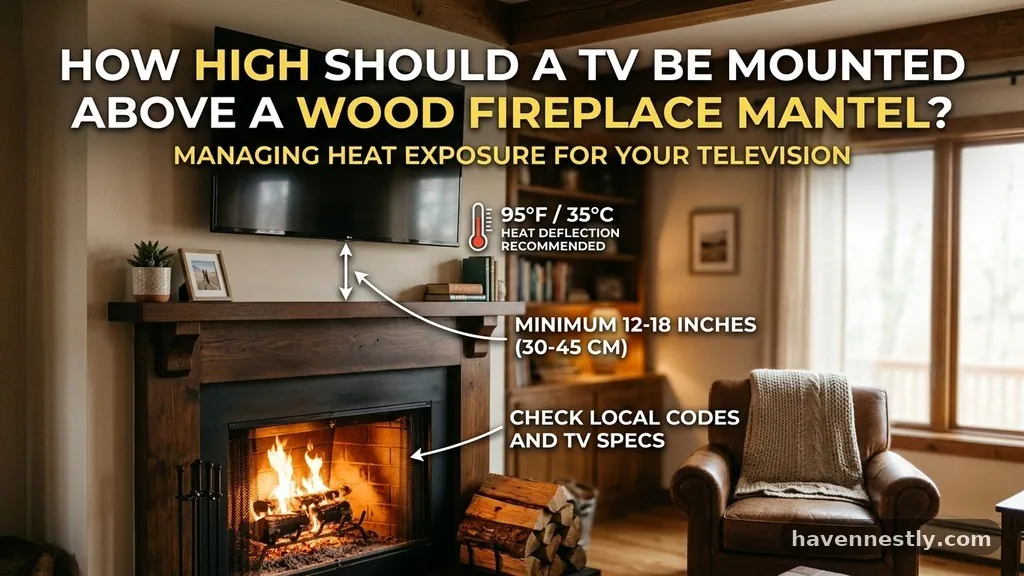
The ideal height for a television above a fireplace mantel is typically between 4 to 8 inches above the mantel shelf itself. This range allows for enough clearance to avoid physical contact with decor while keeping the screen low enough to maintain a natural line of sight from your sofa.
If you mount the TV significantly higher, you will likely experience “crick in the neck” syndrome, which occurs when viewers are forced to tilt their heads upward for extended periods. Always prioritize the eye level of seated viewers over the visual symmetry of the fireplace, as comfort should dictate the final placement of your display.
Managing Heat Exposure for Your Television
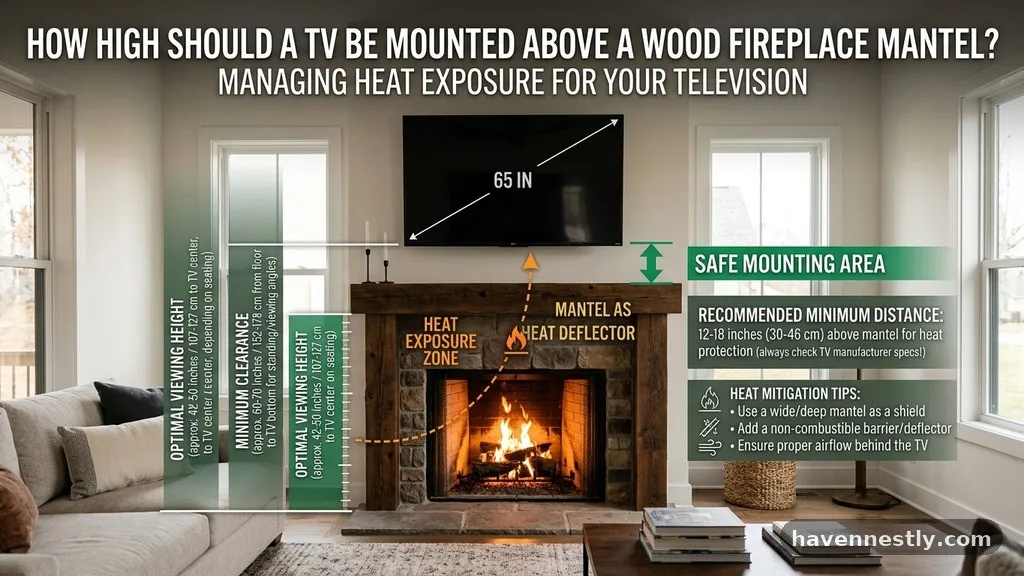
Wood fireplaces generate significant amounts of heat that can migrate upward and damage sensitive internal components of modern LED and OLED screens. Before you decide how high should a TV be mounted above a wood fireplace mantel, you must test the surface temperature of the wall area where the device will reside.
A simple way to do this is to place a thermometer on the wall during a fire to see if the temperature exceeds 90 to 100 degrees Fahrenheit. If the area feels excessively hot to the touch, you may need to reconsider your mounting location or install a heat shield to protect the equipment.
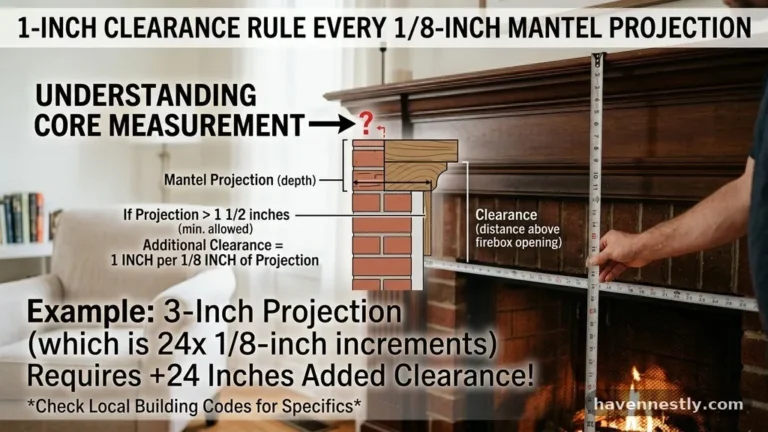
Heat shields are often made of metal or stone and are designed to deflect warm air away from the bottom of the television. These components are essential if your mantel is shallow or if your fireplace lacks a traditional hearth extension that helps dissipate heat.
Without a proper barrier, the constant exposure to high temperatures can cause pixels to fail, shorten the lifespan of the backlight, or even warp the plastic casing of the TV. Investing in a high-quality, non-combustible mantle or a dedicated deflector is a smart move for long-term hardware preservation.
Ergonomics and Viewing Angles
The most frequent mistake homeowners make is mounting a television too high, which forces a strained, upward-looking posture. When sitting on a standard couch, your eyes should ideally align with the lower third of the screen rather than the center.
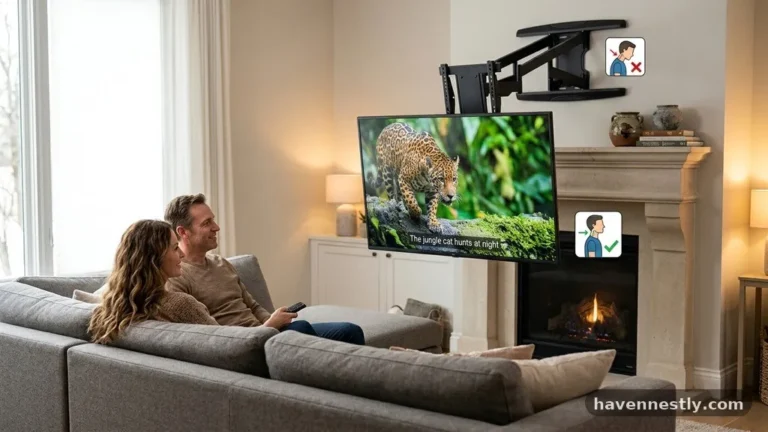
If you must mount the screen above a high mantel, look for a tilting wall mount that allows you to angle the display downward toward your seating area. This simple adjustment can significantly reduce eye and neck fatigue, making your living room a more comfortable space for movie nights.
Consider the distance between your primary seating position and the wall, as this changes how the height is perceived by the human eye. A TV that seems too high at a close range might feel perfectly fine if you are sitting 10 or 12 feet away.
Use the THX viewing distance guidelines to help determine if your chosen height will provide an immersive experience without requiring excessive head movement. Remember that the goal is to make the screen feel like a natural extension of the room rather than a painting hung near the ceiling.
Structural Considerations for Brick and Stone
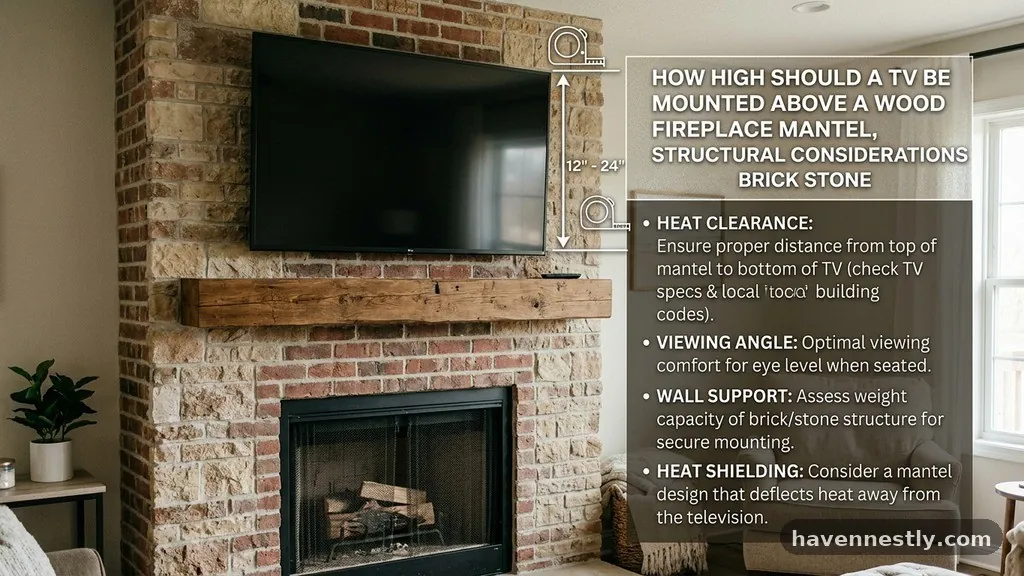
Mounting a heavy flat-screen television onto a brick or stone chimney requires specialized hardware and techniques that differ from standard drywall installations. You cannot simply use wood screws; you must employ masonry anchors or sleeve bolts to ensure the bracket remains secure.
Drilling into mortar joints is generally discouraged because the mortar may crumble under the weight of a large, heavy display. Instead, aim to drill directly into the center of the brick or stone blocks for maximum load-bearing capacity.
If your fireplace is constructed from irregular, rustic stone, you may face a significant challenge in creating a flat mounting surface. You might need to install a wooden mounting board or a custom-built frame that bridges the uneven texture of the stone.
This provides a stable, level base for your bracket and prevents the TV from wobbling. Always use a heavy-duty level during this process, as even a slight tilt will be magnified across the width of a 65-inch or 75-inch screen.
Managing Cables and Power Connections
Concealing cables when mounting a television above a fireplace is notoriously difficult because you cannot easily run wires through a solid masonry chimney. Many homeowners opt for surface-mounted cable channels painted to match the color of the brick or stone, which helps the wires blend into the background.
Alternatively, you might consider using a wireless media box or a soundbar that connects via Bluetooth to reduce the number of visible cords snaking down the wall. If you are planning a major renovation, you can consult with an electrician about installing a recessed power outlet behind the screen location.
Avoid the temptation to drape power cables across the front of the fireplace, as these can easily melt or catch fire if they come into contact with heat or stray embers. Always ensure that your cables are rated for the environment and are secured away from any potential heat sources.
If you use a cable management sleeve, make sure it is made of fire-resistant material to provide an extra layer of safety. Organization here is not just about aesthetics; it is a fundamental aspect of home fire prevention.
Choosing the Right Mounting Hardware
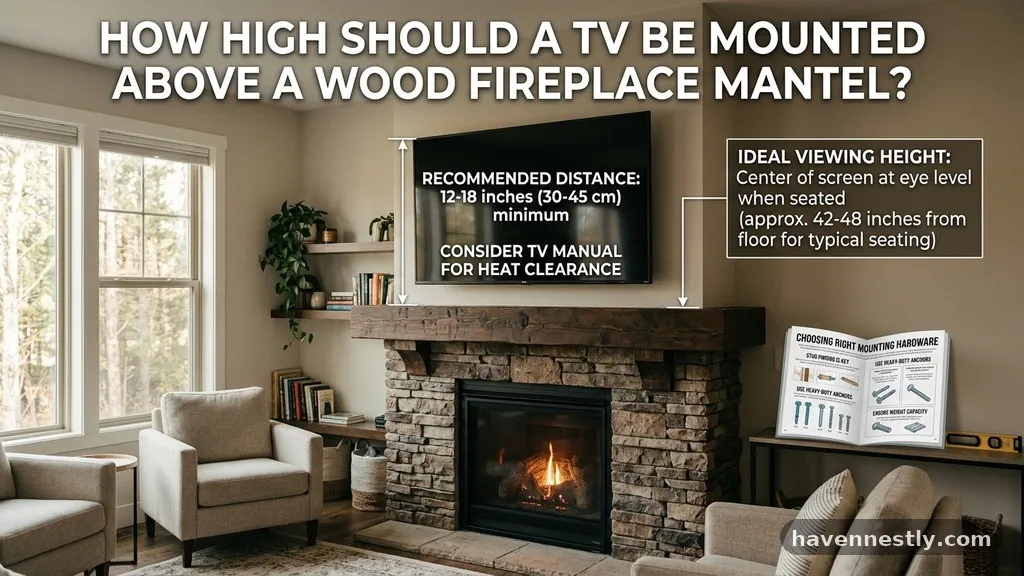
The type of mount you select will dictate how much flexibility you have when adjusting the height of your display. A fixed mount is the lowest profile option, but it offers zero room for error once the holes are drilled into your masonry.
A tilting mount is almost always recommended for over-fireplace installations because it accommodates the higher placement by allowing for a downward angle. Full-motion or articulating mounts are also available, but they place more torque on the wall and may not be suitable for older, delicate brick chimneys.
Make sure your mount is rated for the specific weight and VESA pattern of your television model. Check the manufacturer’s specifications on the box or the manual to ensure the bracket can handle the load safely.
If your fireplace is particularly wide, a mount that allows for horizontal adjustment can help you center the screen perfectly between the edges of the mantel. Never attempt to use a mount that is not specifically rated for the size of your display, as the consequences of a falling television can be severe.
Integrating Technology with Traditional Fireplaces
Modern smart TVs and soundbars often clash with the rustic aesthetic of a traditional wood-burning fireplace. You can mitigate this visual disruption by choosing a frame-style television that displays art when not in use.
This allows the screen to look like a piece of decor rather than a black box hanging in the center of your living space. Additionally, consider using a slim, low-profile soundbar mounted just below the screen to provide better audio without adding unnecessary bulk to the mantel area.
If you are concerned about the “black hole” effect of a large screen, consider integrating it into a gallery wall arrangement. By surrounding the TV with smaller framed photos or decorative items, you can draw the eye away from the screen when it is powered off.
This creates a more cohesive look that blends the modern technology with the organic feel of a wood-burning fireplace. Ensure that these decorative items are also heat-resistant and do not obstruct the ventilation ports of the television.
Safety Protocols for Fireplace Installations
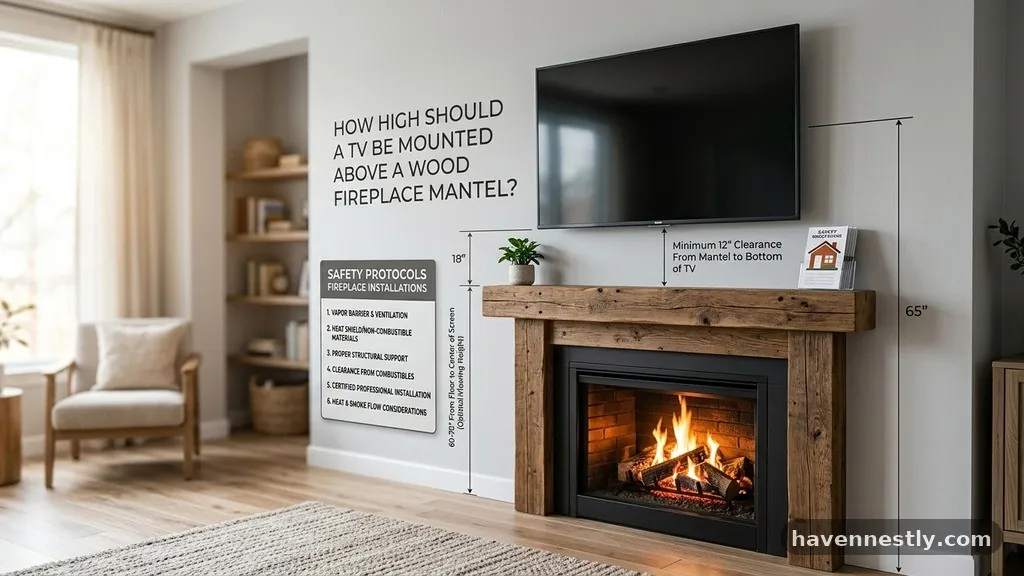
Safety must be the primary consideration whenever you combine electronics with an active fire source. Wood-burning fireplaces can throw sparks, and the heat rising from the firebox can be intense during the winter months.
Always ensure that there is a proper screen or glass door on your fireplace to prevent embers from hitting the bottom of your television or its power cables. If you notice any signs of soot buildup on the screen, clean it regularly with a dry microfiber cloth to prevent the particles from being drawn into the internal cooling fans.
Never store flammable materials, such as DVDs, books, or decorative paper, on the mantel shelf directly beneath the television. The heat rising from the fire can create a convection current that concentrates warmth around the base of the TV.
If you have a mantel that is made of wood, check it periodically for signs of charring or drying out. If the wood feels hot to the touch, you must add a thicker heat shield or install a dedicated blower system to move the hot air away from the structure.
Comparing Mounting Options
When deciding how to position your screen, it helps to compare the benefits of different mounting solutions. Each option offers a different trade-off between visual appeal, ergonomic comfort, and ease of installation.
| Mount Type | Best For | Key Benefit |
|---|---|---|
| Fixed Mount | Low-profile, minimalist look | Cheapest and easiest to install |
| Tilting Mount | Over-mantel installations | Reduces neck strain significantly |
| Articulating Mount | Flexible viewing angles | Allows screen to move away from heat |
| Recessed Box | Flush-mount aesthetics | Most seamless, professional look |
Common Challenges and Solutions
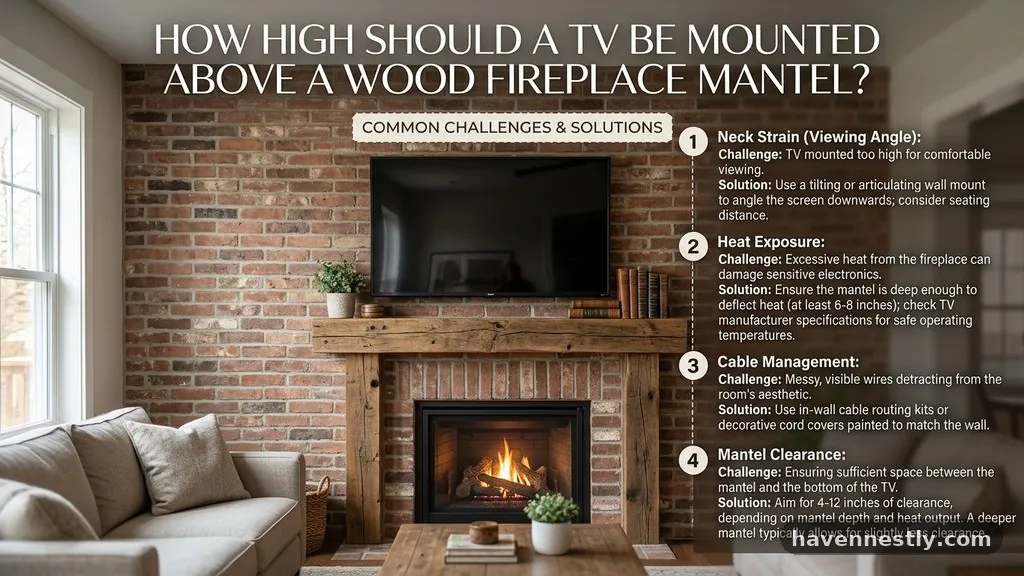
Installing a TV above a fireplace often leads to unexpected issues like glare or poor cable access. Glare from windows or interior lights can be particularly problematic when the screen is mounted higher than usual.
Consider installing light-filtering shades on nearby windows or using a matte-finish screen protector to minimize reflections. If you find the screen is too high, a motorized drop-down mount can physically lower the TV to eye level when you are ready to watch a movie.
Another common challenge is the lack of a nearby power outlet, which often requires running an extension cord across the floor or wall. Never use a standard household extension cord for a television, as these are not designed for permanent installation or the potential heat of a fireplace.
Instead, hire a professional to install a dedicated outlet in the brickwork or behind the wall. This is a safer, more permanent solution that avoids the hazards of exposed wiring and improves the overall look of your living area.
Frequently Asked Questions
How high is too high for a TV above a fireplace?
If the bottom of your television is more than 60 inches from the floor, it is generally considered too high for comfortable long-term viewing. Anything above this height forces the neck into an unnatural, extended position that leads to muscle fatigue.
Is it tacky to mount a TV above a wood fireplace?
Design opinions vary, but placing a TV above a fireplace is widely accepted in modern home design due to limited wall space in many living rooms. The key is to manage the cables and ensure the screen does not dominate the room when it is not in use.
Can you safely mount a TV over a wood-burning fireplace?
Yes, it is safe as long as you account for heat dissipation and use non-combustible materials for your mount and any decorative shielding. You must ensure the surface temperature behind the TV remains within the manufacturer’s recommended operating range.
What is the best way to hide cables on a brick fireplace?
The cleanest method is using color-matched surface-mounted raceways that blend into the mortar lines of the brick. For a more professional result, you can have an electrician route the cables behind the wall through a professional installation kit.
Should I use a special mount for a stone fireplace?
Yes, you should use a heavy-duty masonry mount that allows for adjustment, as stone surfaces are rarely perfectly flat. Always use high-quality concrete anchors that are rated for the weight of your specific display and the type of stone you have.
Professional Installation Considerations
While many homeowners enjoy tackling DIY projects, mounting a TV above a masonry fireplace is a task that often warrants professional expertise. A professional installer will have the specialized masonry drills, high-grade anchors, and experience to avoid damaging your chimney structure.
They can also assist with the complex task of hiding cables or installing electrical boxes in stone, which requires tools that most people do not have in their garage. Investing in professional help ensures that your expensive equipment is securely attached to the wall and that your home remains safe from fire hazards.
Professional installers will also be able to advise you on the best type of mount for your specific fireplace geometry. They can assess the heat output of your hearth and suggest the appropriate distance to ensure the longevity of your display.
By delegating this task, you gain peace of mind knowing that your TV is perfectly level and firmly anchored. This is a one-time expense that protects your investment and ensures that your living room remains both beautiful and functional for years to come.
In summary, the question of how high should a TV be mounted above a wood fireplace mantel involves a careful balance of ergonomics, heat management, and structural integrity. Aiming for a height that keeps the screen at or near your natural line of sight is essential for comfort, while installing heat shields and using proper masonry hardware ensures the safety of your electronics.
By taking the time to plan your installation, managing your cables effectively, and choosing the right mounting bracket, you can enjoy your favorite shows without compromising the aesthetic of your fireplace. If you are ever in doubt about the structural safety of your chimney, reach out to a professional to ensure your setup meets all necessary standards.