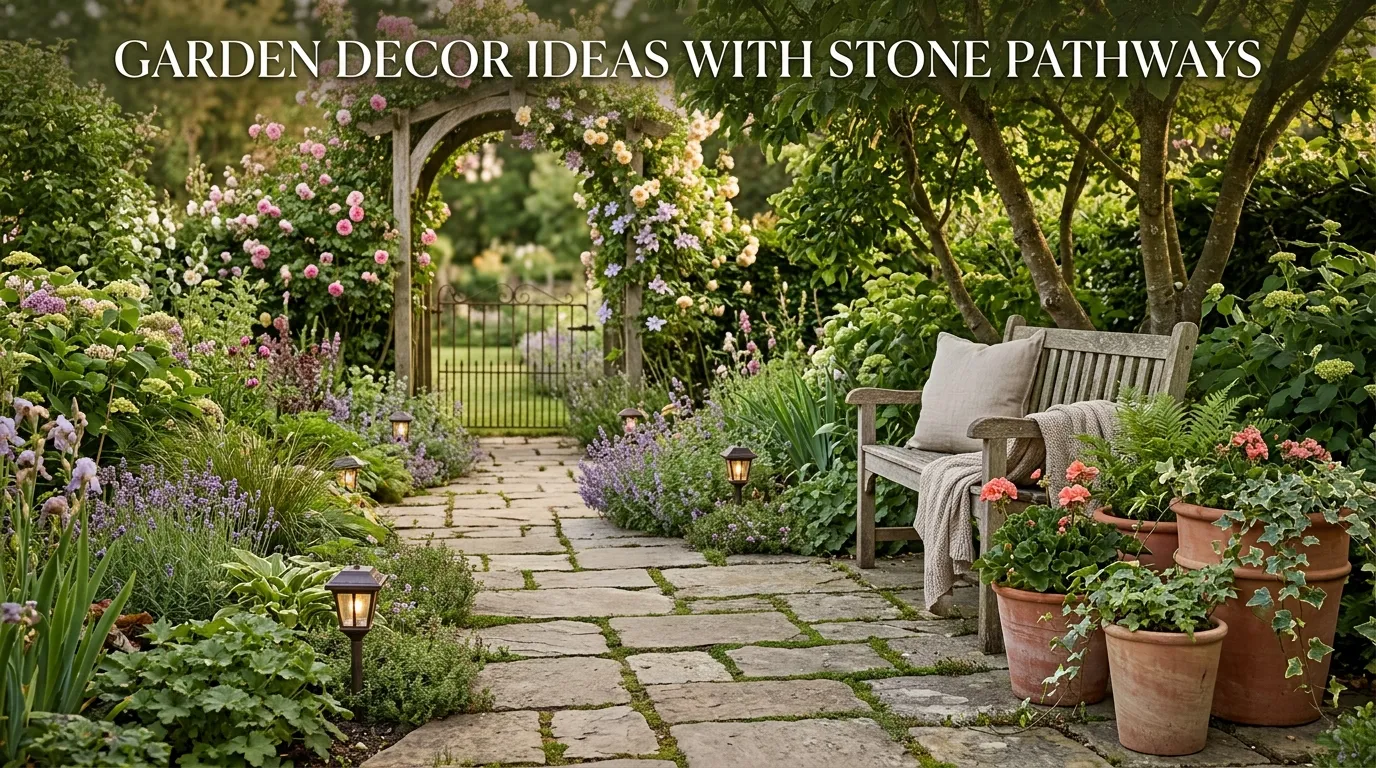
10 Garden Decor Ideas with Stone Pathways
Stone pathways are one of the most timeless features you can add to a garden. Beyond simply connecting different outdoor spaces, they bring structure, texture, and elegance while encouraging visitors to explore the landscape. Whether your garden is large or small, a thoughtfully designed pathway creates visual flow and instantly elevates the entire outdoor space.
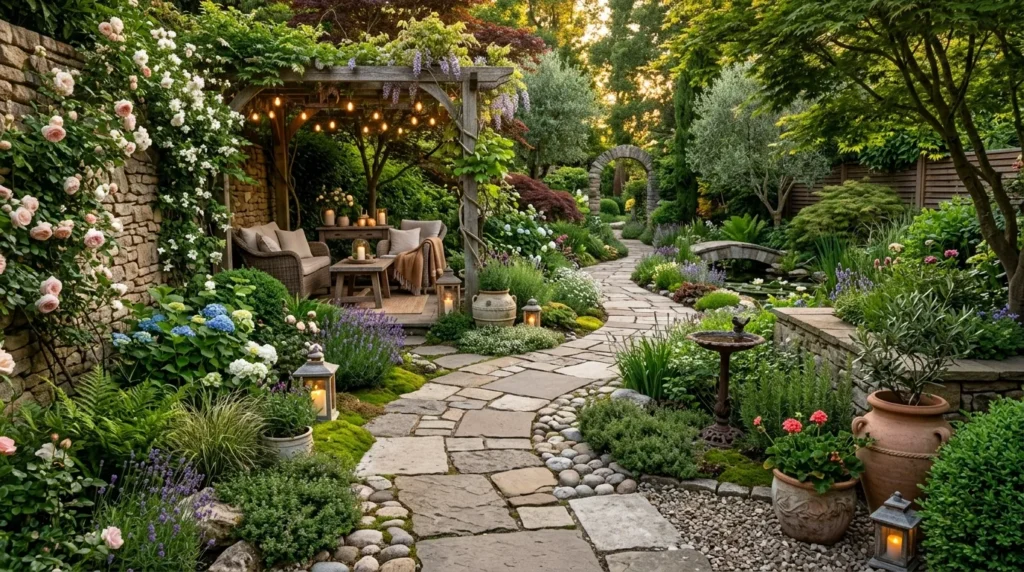
I’ve found that stone pathways make gardens feel professionally landscaped because they naturally guide movement while highlighting flower beds, seating areas, water features, and lush greenery. Materials like flagstone, slate, bluestone, and natural river rock blend beautifully with plants, making the landscape feel balanced and inviting.
The beauty of stone pathways is their versatility. They complement modern, cottage, rustic, Mediterranean, and contemporary garden styles while requiring very little maintenance. Combined with colorful flowers, warm outdoor lighting, and decorative accents, they become one of the most attractive features in any backyard.
These garden décor ideas with stone pathways will inspire you to create an outdoor space that’s functional, beautiful, and full of timeless charm.
Table of Contents
- Create a Curved Flagstone Path
- Add Flower Borders Along the Walkway
- Install Solar Path Lighting
- Decorate with Garden Benches
- Frame the Path with Decorative Gravel
- Incorporate Stepping Stone Paths
- Add Water Features Beside the Walkway
- Use Raised Planters Along the Path
- Create a Garden Archway Entrance
- Finish with Decorative Garden Accents
1. Create a Curved Flagstone Path
Quick Benefits
- Adds natural movement
- Creates elegant focal point
- Connects outdoor spaces
- Enhances curb appeal
- Complements every garden style
Why It Works
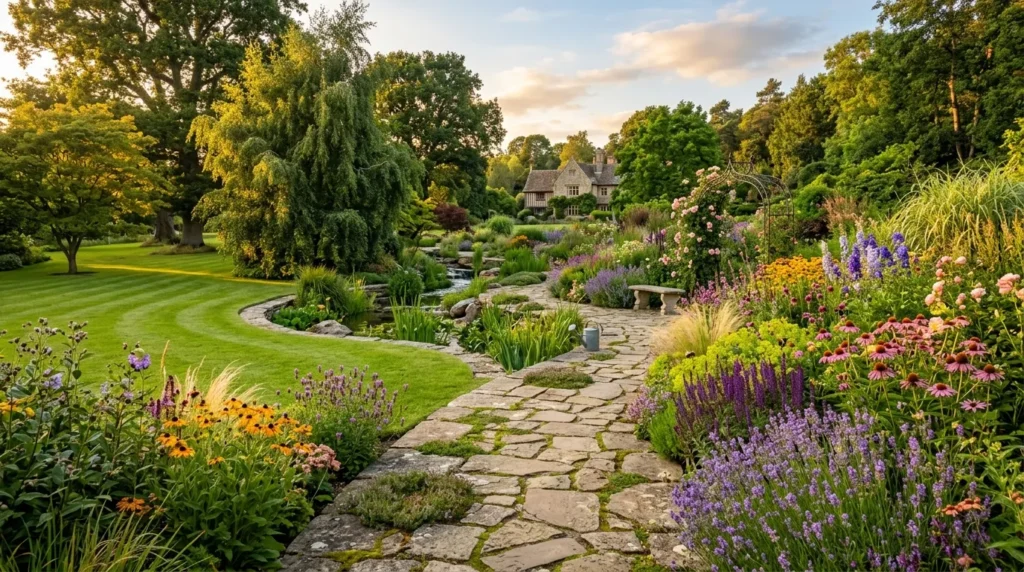
Curved flagstone pathways soften the landscape while encouraging visitors to explore the garden naturally. Unlike straight walkways, gentle curves create mystery by partially hiding what lies ahead, making even small gardens feel larger and more interesting.
I’ve found that flagstone provides one of the most timeless looks because its natural texture blends effortlessly with flowers, shrubs, and lawns while offering excellent durability.
How To Style It
Lay irregular flagstone pieces over compacted gravel and fill the joints with creeping thyme, moss, or fine gravel. Surround the pathway with flowering perennials and ornamental grasses for a lush appearance.
2. Add Flower Borders Along the Walkway
Quick Benefits
- Introduces vibrant color
- Attracts butterflies
- Softens stone edges
- Creates seasonal beauty
- Improves visual balance
Why It Works
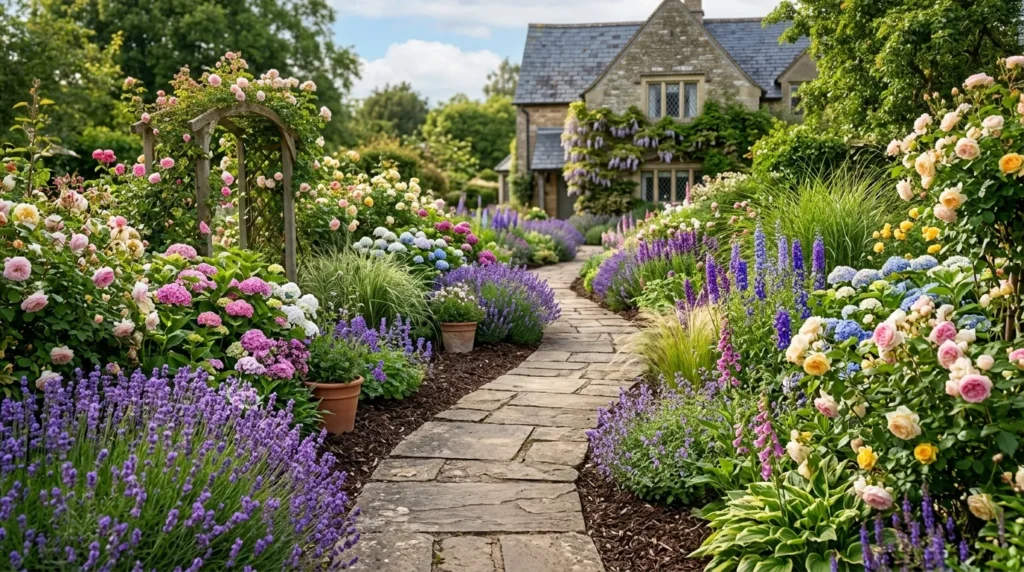
Colorful flower borders transform simple pathways into beautiful garden features. Layering flowers of different heights creates depth while making the walkway feel surrounded by natural beauty throughout the growing season.
I’ve found that repeating similar flower colors along the path creates a cohesive design that feels professionally landscaped rather than overly busy.
How To Style It
Plant lavender, coneflowers, salvia, roses, hydrangeas, black-eyed Susans, and ornamental grasses on both sides of the pathway. Finish with dark mulch for contrast.
3. Install Solar Path Lighting
Quick Benefits
- Improves nighttime safety
- Highlights landscaping
- Creates cozy ambiance
- Saves energy
- Extends outdoor enjoyment
Why It Works
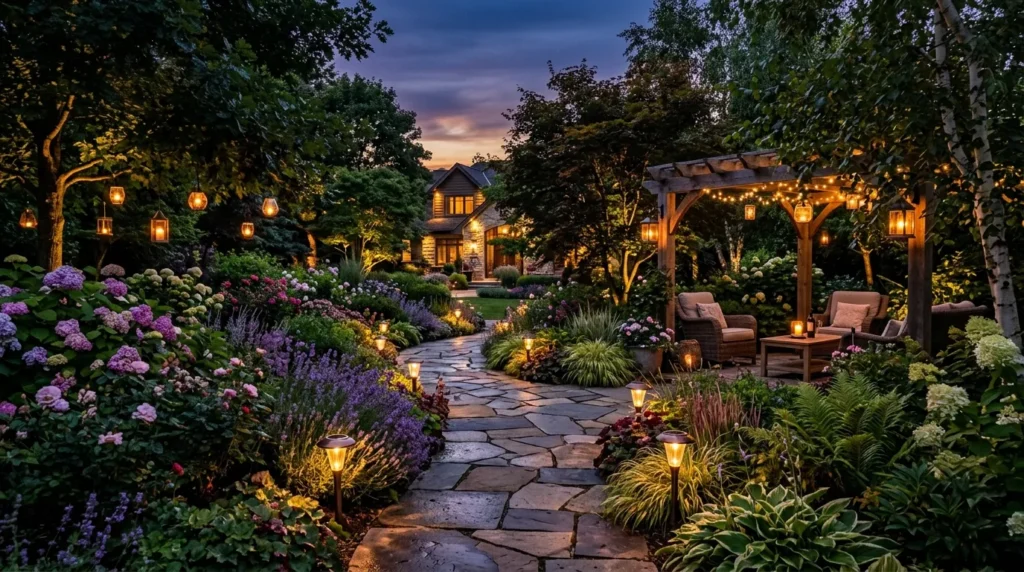
Solar pathway lights allow your garden to remain beautiful after sunset while increasing visibility and safety. Warm lighting highlights the texture of stone pathways and surrounding plants, creating a welcoming evening atmosphere.
I’ve found that subtle lighting produces a more luxurious appearance than overly bright fixtures. Soft illumination creates depth without overpowering the landscape.
How To Style It
Place warm white solar lights every six to eight feet along the pathway. Combine them with uplighting beneath trees and decorative lanterns near seating areas.
4. Decorate with Garden Benches
Quick Benefits
- Creates relaxing destination
- Adds decorative charm
- Encourages outdoor enjoyment
- Complements pathways
- Becomes a focal point
Why It Works
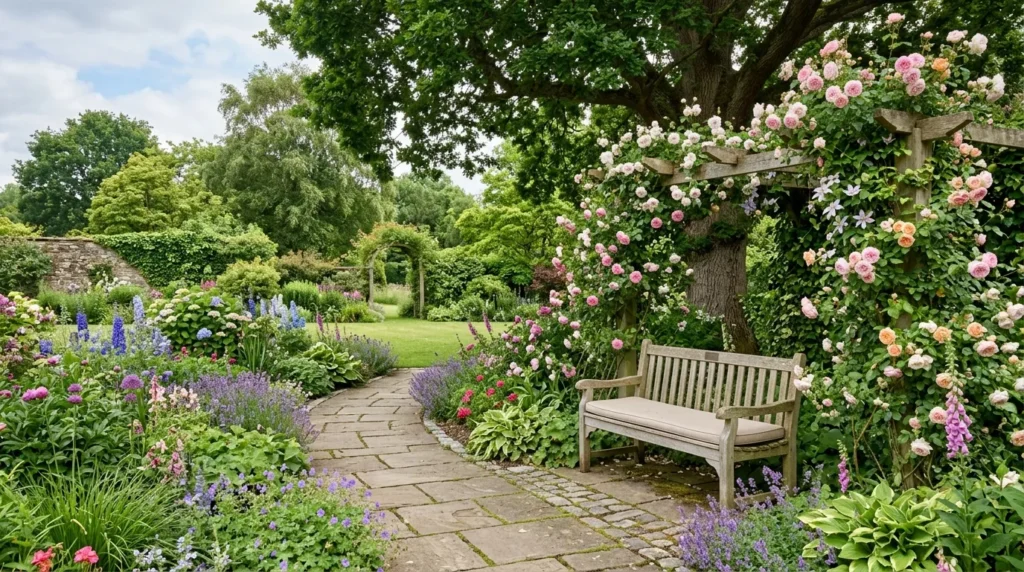
A garden bench positioned beside a stone pathway naturally invites people to stop and enjoy the surrounding landscape. It also creates a visual destination that gives the garden greater purpose and balance.
I’ve found that benches surrounded by flowers and greenery become some of the most photographed areas of any garden because they feel welcoming and peaceful.
How To Style It
Choose a wooden, wrought iron, or stone bench. Place it beneath a shade tree or beside colorful flower beds and decorate the surrounding area with potted plants and lanterns.
5. Frame the Path with Decorative Gravel
Quick Benefits
- Defines walkway edges
- Improves drainage
- Reduces weeds
- Adds natural texture
- Creates clean appearance
Why It Works
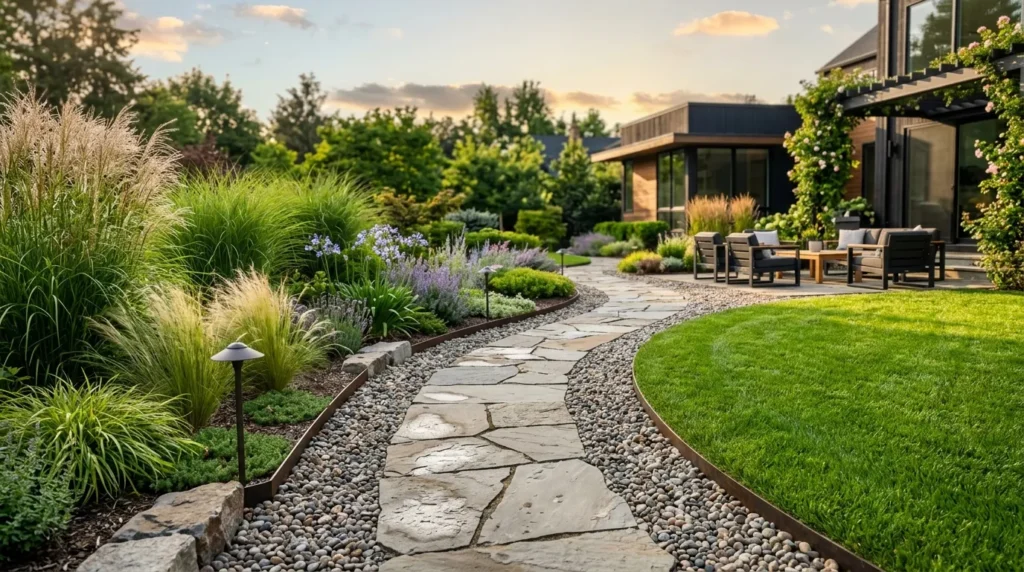
Decorative gravel creates crisp borders that make stone pathways stand out while helping rainwater drain efficiently. It also prevents grass from growing into the walkway and reduces ongoing maintenance.
I’ve found that contrasting gravel colors make natural stone look even more attractive while creating a polished, professionally designed landscape.
How To Style It
Use crushed granite, pea gravel, or river rock along the pathway edges. Combine with steel or stone edging to maintain clean, defined borders.
6. Incorporate Stepping Stone Paths
Quick Benefits
- Creates a natural garden look
- Adds visual interest
- Connects outdoor zones
- Blends with surrounding plants
- Works in gardens of any size
Why It Works
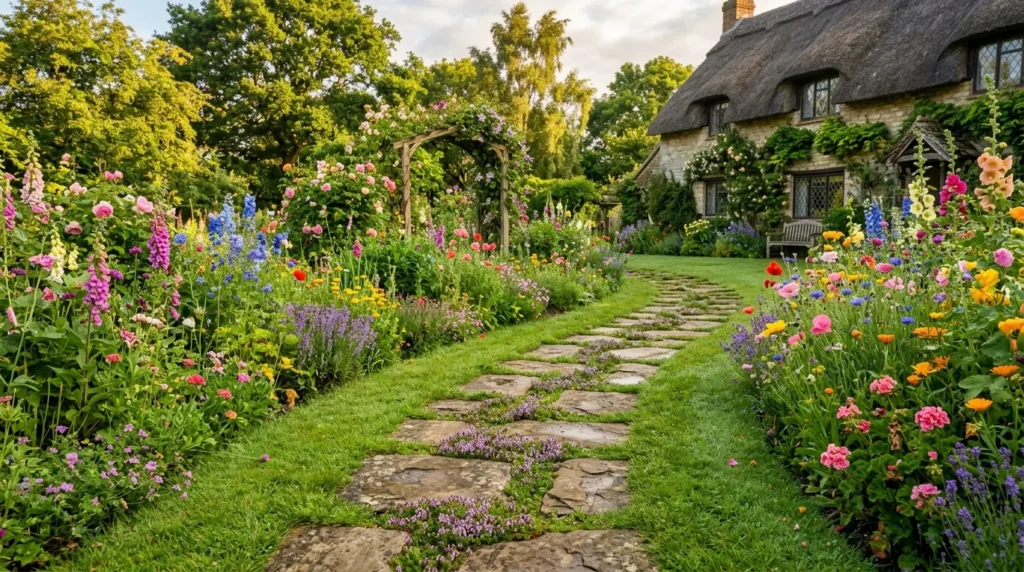
Stepping stone paths create a relaxed and organic feel that complements both formal and informal gardens. Unlike continuous paved walkways, spaced stones allow grass, moss, or ground covers to grow between them, creating a softer landscape that feels connected to nature.
I’ve found that stepping stones work especially well in cottage gardens and woodland landscapes because they encourage visitors to slow down and appreciate the surrounding flowers and greenery.
How To Style It
Place large natural stepping stones evenly across a lawn or gravel base. Fill the gaps with creeping thyme, Irish moss, dwarf mondo grass, or fine gravel for a lush, finished appearance.
7. Add Water Features Beside the Walkway
Quick Benefits
- Creates soothing sounds
- Adds luxury appeal
- Becomes a focal point
- Attracts birds and butterflies
- Enhances relaxation
Why It Works
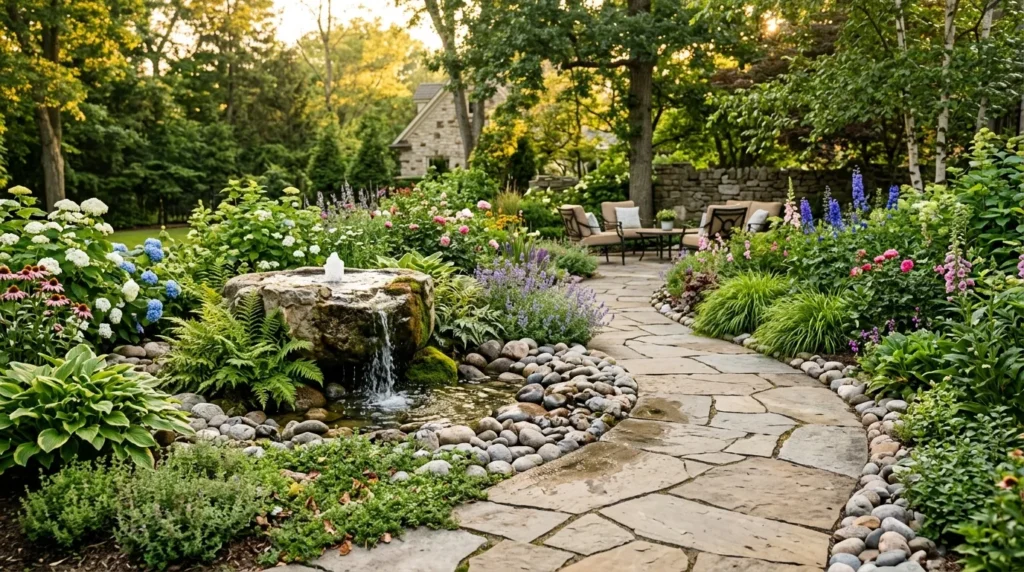
Water features bring movement and tranquility to a garden while complementing the timeless beauty of stone pathways. The gentle sound of flowing water creates a peaceful atmosphere and helps mask nearby traffic or neighborhood noise.
I’ve found that even a small bubbling fountain can dramatically elevate a garden’s overall ambiance without requiring a large amount of space.
How To Style It
Install a stone fountain, small pond, bubbling rock, or cascading waterfall beside the pathway. Surround it with river rocks, ferns, hostas, ornamental grasses, and flowering perennials.
8. Use Raised Planters Along the Path
Quick Benefits
- Adds height and dimension
- Organizes planting areas
- Creates architectural interest
- Makes maintenance easier
- Enhances curb appeal
Why It Works
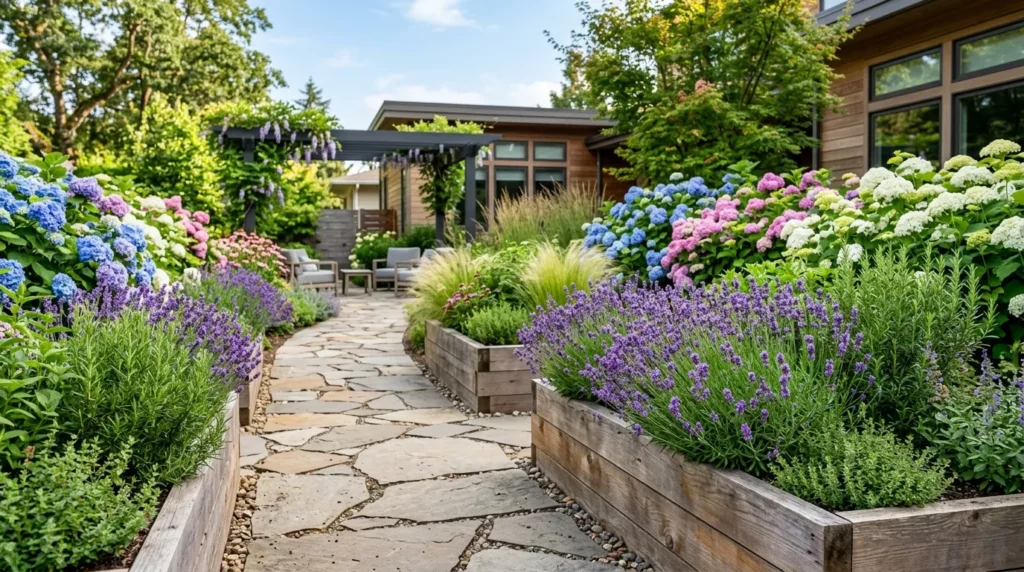
Raised planters introduce structure while framing stone pathways with colorful flowers and greenery. They help organize the garden into defined sections while creating beautiful layered landscaping.
I’ve found that raised stone or cedar planters give gardens a professionally designed appearance while allowing flowers and herbs to stand out beautifully.
How To Style It
Build raised planters from natural stone, cedar, or corten steel. Fill them with lavender, rosemary, hydrangeas, seasonal flowers, ornamental grasses, or herbs for year-round interest.
9. Create a Garden Archway Entrance
Quick Benefits
- Creates dramatic entrance
- Frames the pathway beautifully
- Supports climbing plants
- Adds vertical interest
- Increases garden charm
Why It Works
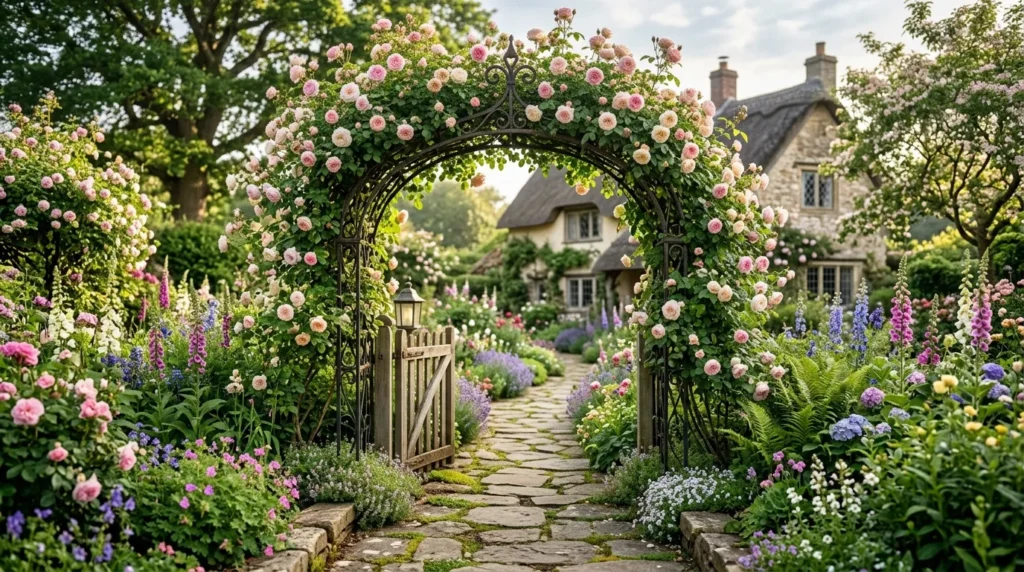
A decorative archway naturally draws attention to the beginning of a pathway while adding height and elegance to the landscape. Covered with flowering vines, it creates a magical entrance that makes the garden feel more immersive.
I’ve found that archways instantly become one of the most memorable features in a garden because they combine architectural structure with natural beauty.
How To Style It
Install a wooden or wrought iron arch over the beginning of the pathway. Train climbing roses, jasmine, clematis, or wisteria to grow across the structure for a lush, romantic appearance.
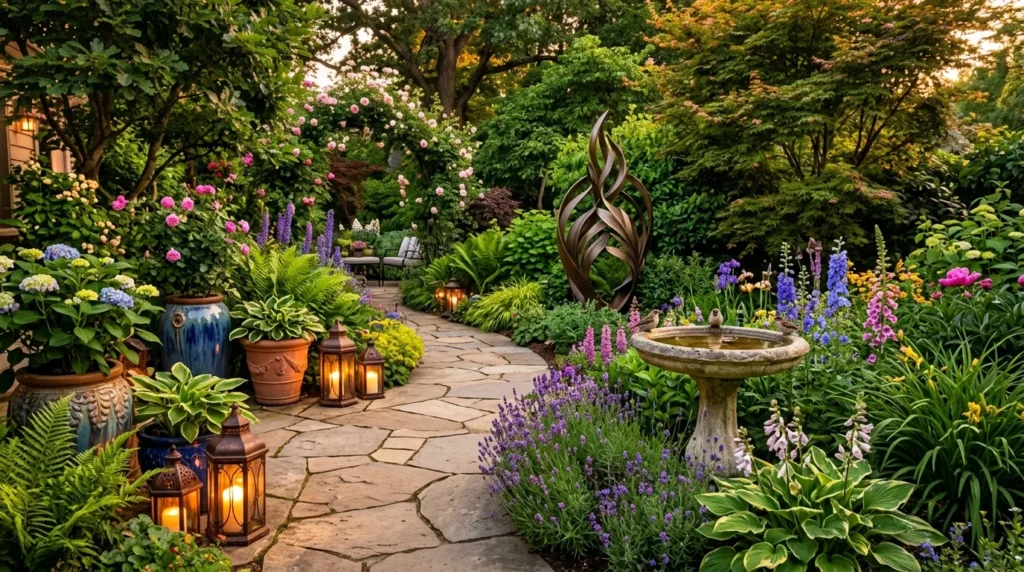
10. Finish with Decorative Garden Accents
Quick Benefits
- Personalizes the landscape
- Completes the design
- Adds seasonal interest
- Enhances visual appeal
- Creates welcoming atmosphere
Why It Works
Decorative accents provide the finishing touches that make a garden feel thoughtfully designed. Carefully selected accessories complement the natural beauty of stone pathways without making the landscape feel cluttered.
I’ve found that a few high-quality decorative pieces create a much stronger impression than filling the garden with numerous ornaments.
How To Style It
Decorate with ceramic planters, lanterns, birdbaths, sculptures, outdoor urns, decorative pots, and weather-resistant garden art. Keep the color palette coordinated for a timeless look.
Frequently Asked Questions
What type of stone is best for garden pathways?
Flagstone, bluestone, slate, limestone, and natural stepping stones are all durable, attractive options that complement a wide range of garden styles.
How wide should a garden pathway be?
Most garden pathways should be between 36 and 48 inches wide for comfortable walking, while secondary paths can be slightly narrower.
What can I plant between stepping stones?
Creeping thyme, Irish moss, creeping Jenny, dwarf mondo grass, and moss are popular choices because they tolerate light foot traffic and soften the appearance of the path.
How do I make a stone pathway look more attractive?
Add flower borders, landscape lighting, decorative gravel, raised planters, water features, and garden benches to create a layered, professionally landscaped appearance.
Are stone pathways low maintenance?
Yes. Properly installed stone pathways require very little maintenance beyond occasional sweeping, weed removal, and replenishing gravel or joint filler when needed.
Conclusion
Stone pathways are more than simple walkways—they’re the foundation of a beautiful garden design. They guide movement, define outdoor spaces, and add timeless character while connecting every part of the landscape.
Whether you choose elegant flagstone, natural stepping stones, decorative gravel borders, or pathways framed by colorful flowers, each design element contributes to a welcoming and functional outdoor retreat. Layering plants, lighting, water features, and decorative accents creates a cohesive landscape that remains beautiful throughout every season.
With thoughtful planning and quality materials, a stone pathway can become the centerpiece of a garden you’ll enjoy for years to come.
Related Articles
- 10 Backyard Landscape Design Ideas for Corner Lots
- 10 DIY Fire Pit Ideas That Impress Guests
- 10 Outdoor Garden Lighting Ideas
- 10 Front Yard Landscaping Ideas
- 10 Modern Backyard Ideas