Can You Put a Wood Floating Mantel on a Gas Fireplace Without Heat Deflectors?
Deciding whether you can put a wood floating mantel on a gas fireplace without heat deflectors depends entirely on the specific clearance requirements set by your fireplace manufacturer. While the aesthetic appeal of a natural wood element is undeniable, safety must remain the primary concern when dealing with high-heat appliances. Understanding the nuances of heat radiation and material combustion is essential before you begin your project.
If you are questioning whether you can put a wood floating mantel on a gas fireplace without heat deflectors, the short answer is that you generally cannot if your installation falls within the manufacturer’s restricted zone. Ignoring these specific safety guidelines risks fire hazards and potential damage to your property.
The Direct Answer: Safety Requirements

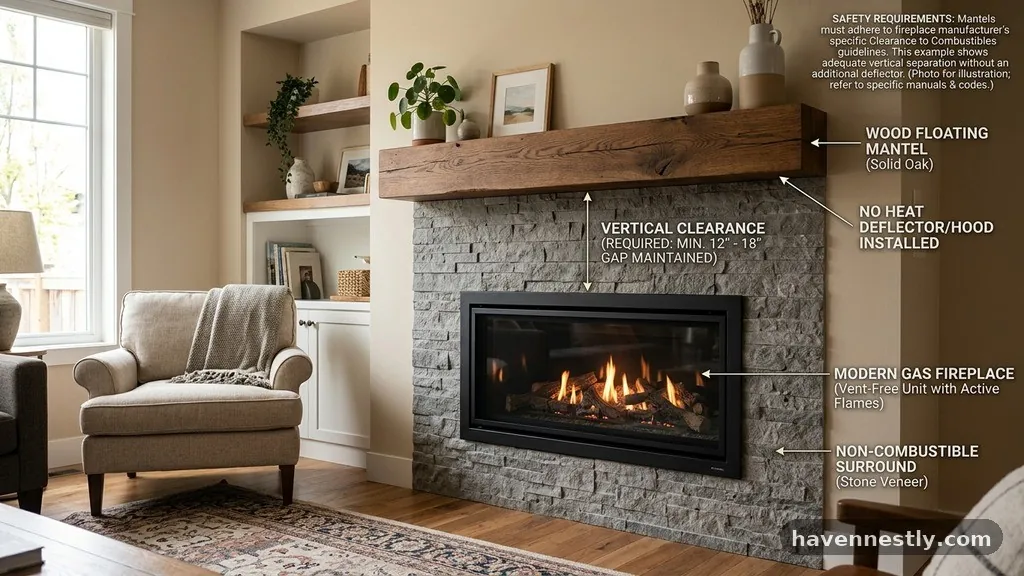
You should not install a wood floating mantel within the restricted heat zone of a gas fireplace without following the manufacturer’s specific clearance instructions. Most gas fireplace manuals explicitly state the minimum distance required between the top of the firebox opening and any combustible material, such as a wood mantel.
If your desired mantel placement falls within this range, you are typically required to use a non-combustible material or a specifically rated heat deflector. Ignoring these distances can lead to the wood drying out, warping, or eventually igniting over time.
Many homeowners assume that because gas fireplaces have glass fronts, they do not produce enough heat to affect a mantel. This is a dangerous misconception, as the heat radiating from the glass and the convection currents rising from the unit can reach temperatures well above the ignition point of wood.
Even if the fireplace does not appear hot to the touch, the constant exposure to heat will slowly degrade the integrity of the wood fibers. Always check your specific unit’s installation manual for the exact “clearance to combustibles” measurement.
Understanding Manufacturer Clearances
Every gas fireplace is tested and certified by the manufacturer to meet strict safety standards. These certifications are based on the unit’s heat output and the design of the firebox.
The manual will contain a diagram or a table specifying the minimum height and depth a mantle can be placed above the unit. These measurements are not suggestions; they are legal requirements for a safe installation.
Failure to follow these guidelines can void your homeowner’s insurance policy in the event of a fire. If you choose to ignore the manufacturer’s warnings, you are effectively accepting the risk of structural damage.
When you are looking at the technical specifications, pay close attention to the difference between a “combustible” mantel and a “non-combustible” one. If you must have a wood mantel in a restricted area, you will almost certainly need a certified heat deflector or a protective shield to redirect the airflow.
The Physics of Heat Radiation
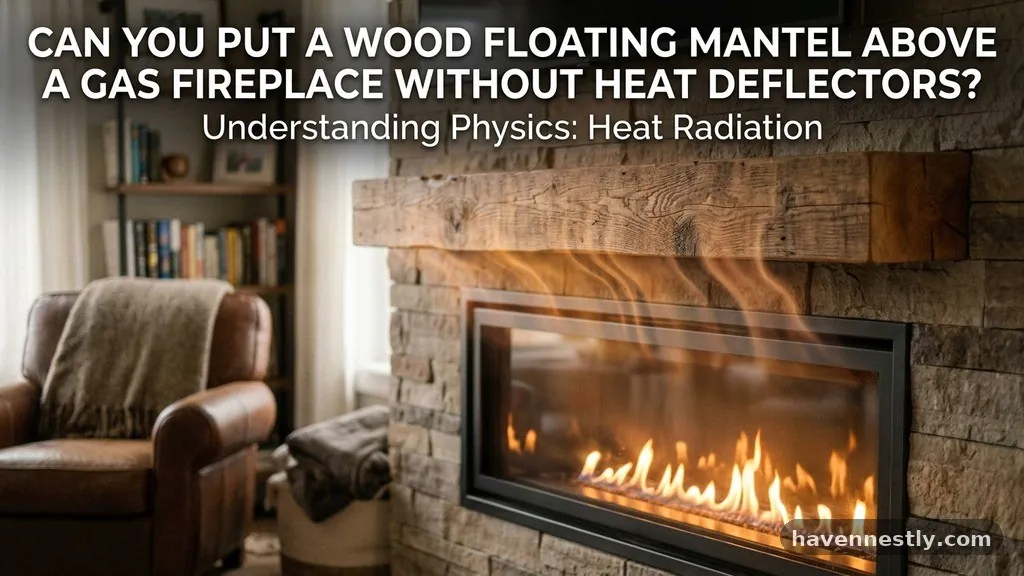
Gas fireplaces generate heat through a combination of radiation and convection. Radiation travels in a straight line from the glass front of the fireplace, heating any object in its path.
Convection creates a plume of hot air that rises directly up the wall above the fireplace, which is exactly where a floating mantel is typically mounted. This upward draft is often the most dangerous factor for wooden mantels.
Because the air is constantly moving, it carries heat upward and deposits it onto the underside of the mantel. If the mantel is too close, it acts as a shelf that traps this hot air.
This creates a high-temperature pocket that can cause the finish on your wood to bubble or peel. Over a long enough period, this heat soak can lead to pyrolysis, a chemical decomposition that lowers the temperature at which wood will ignite.
Non-Combustible Alternatives
If your desired design requires a mantel closer to the fireplace than the manufacturer allows, you should consider using non-combustible materials. Stone, concrete, and metal are excellent alternatives that can mimic the look of wood or provide a modern industrial aesthetic. You can find high-quality faux-wood beams made from lightweight, fire-resistant materials that look like real timber but are completely safe for high-heat environments.
These materials are designed to withstand the intense heat radiated by gas logs without degrading. Using non-combustible materials allows you to place the mantel much closer to the firebox opening, which is often necessary for tighter design layouts. Many homeowners find that these alternatives offer a more durable, long-term solution that requires significantly less maintenance than natural wood.
The Role of Heat Deflectors
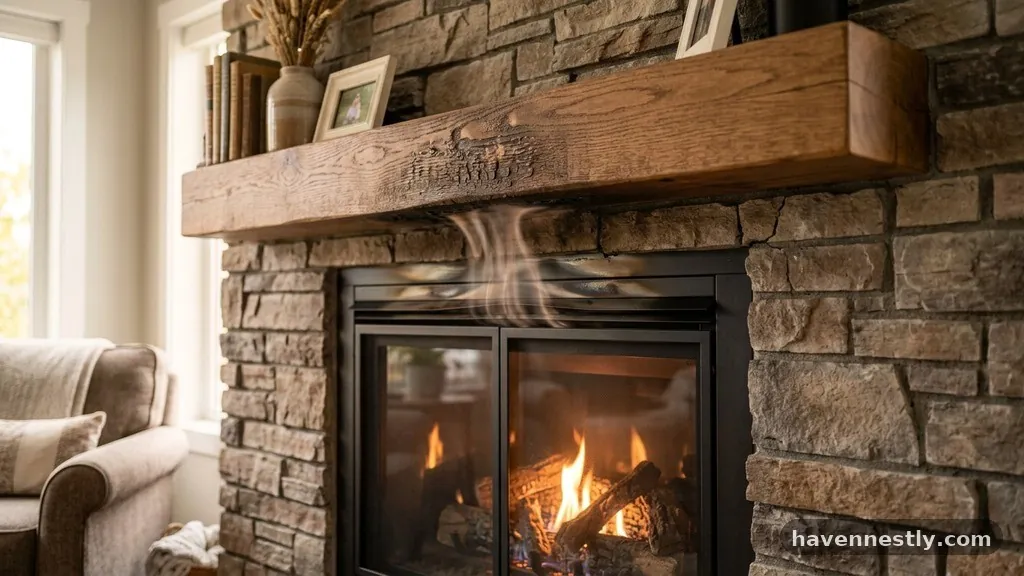
A heat deflector is a specialized piece of hardware designed to redirect hot air away from the mantel and out into the room. They are usually made of metal and are installed along the top edge of the fireplace opening. By creating a small air gap or a physical barrier, they prevent the concentrated plume of heat from hitting the underside of your mantel.
Not all fireplaces are compatible with universal heat deflectors, so it is vital to verify compatibility with your specific model. Some manufacturers sell proprietary deflectors that are tested and approved for their units.
If you use a third-party deflector, you must ensure it does not interfere with the air intake or exhaust systems of the fireplace. Improperly installed deflectors can cause the fireplace to overheat internally, leading to sensor failures or automatic shut-offs.
Assessing the Risk of Wood
Wood is an organic material that reacts to changes in temperature and humidity. When you place it near a heat source, it loses moisture, which causes it to shrink, crack, or warp.
Even if the wood does not reach the point of ignition, the aesthetic damage can happen quite quickly. A floating mantel that has become brittle or cracked due to heat exposure is a sign that your installation is unsafe.
To minimize the risk if you are determined to use wood, consider using a dense, kiln-dried hardwood that has been properly sealed. However, even the best wood will struggle to withstand constant, direct heat over several years.
If you notice any discoloration, charring, or a “burnt” smell when the fireplace is running, you should remove the mantel immediately. Safety should always take precedence over the visual style of your living room.
Installation Best Practices
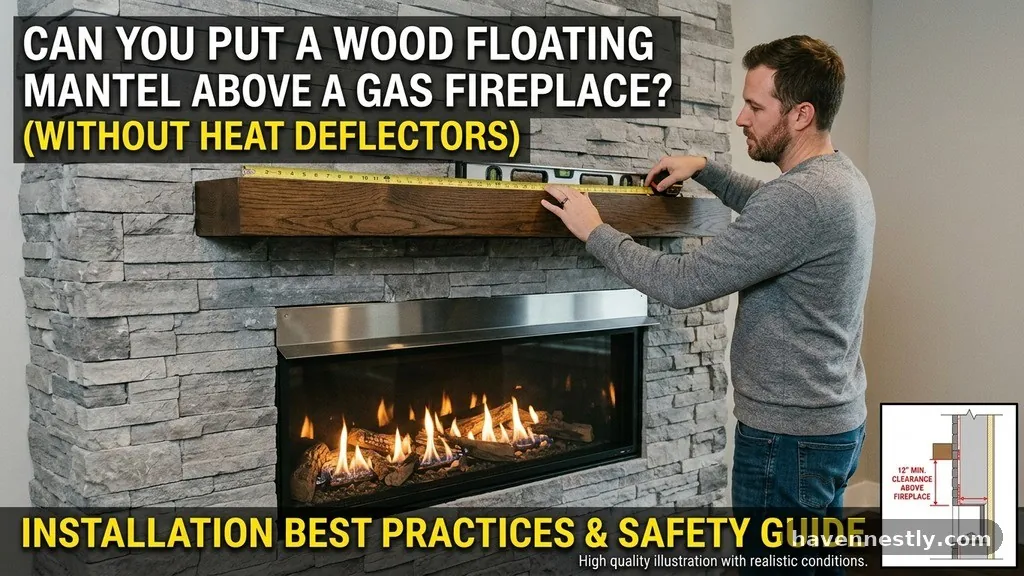
If you have confirmed that your mantel placement meets the manufacturer’s clearance requirements, you must still ensure a high-quality installation. A floating mantel is only as safe as the structural support behind it. Because these mantels are often heavy, they require solid blocking within the wall to prevent them from sagging or pulling away.
When installing, use heat-resistant fasteners and ensure that the gap between the mantel and the wall is sealed if necessary. If you are mounting the mantel onto a non-combustible surround like stone or tile, ensure the anchors are rated for that specific material. A loose or poorly secured mantel is not just an eyesore; it is a potential hazard if it falls during use.
Comparison of Installation Methods
Choosing the right approach depends on your fireplace model and the materials you select for your mantel.
| Method | Material | Heat Deflector Required | Safety Level |
|---|---|---|---|
| Standard Wood | Kiln-dried Timber | Often Mandatory | Moderate |
| Non-Combustible | Stone/Concrete | Usually Optional | High |
| Faux-Wood | Fire-rated Composite | Sometimes Needed | High |
| Metal Mantel | Steel/Aluminum | Rarely Needed | Very High |
Common Mistakes to Avoid
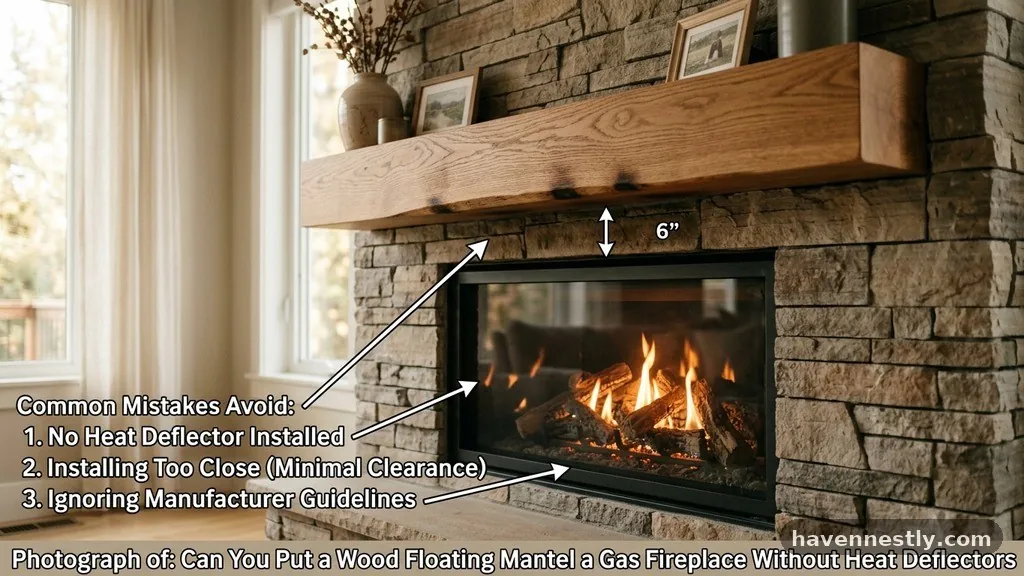
Many DIYers make the mistake of measuring from the top of the firebox instead of the actual heat discharge point. Some fireplaces have vents or louvers above the opening that push heat out at a specific angle; failing to account for these vents is a common oversight.
Another frequent error is ignoring the depth of the mantel. A deeper mantel will sit further out into the heat flow, meaning it often requires more clearance than a shallow one.
Always read the manual for the “projection” requirements, which define how far a mantel can stick out based on its height. If you add decorative trim or molding to the mantel, you must treat that as part of the total depth.
These small additions can change the clearance requirements significantly. When in doubt, always err on the side of caution and provide more space than the minimum requirement.
Maintenance and Monitoring
Once your mantel is installed, your work is not finished. You should periodically check the condition of the wood, especially after the first few times you run the fireplace in the winter season.
Look for signs of heat stress, such as drying of the wood grain or loosening of the mounting hardware. You can find more detailed safety guidelines on the National Fire Protection Association website regarding heating appliance safety.
If you have a digital thermometer, you can measure the surface temperature of the mantel while the fireplace is at its maximum heat setting. If the temperature exceeds 160 degrees Fahrenheit, you should consider adding a heat deflector or increasing the clearance. Monitoring the temperature is an excellent way to gain peace of mind and ensure your home remains safe.
Frequently Asked Questions
How do I know if my mantel is too close?
The best way to know is to consult your fireplace’s original installation manual. If you no longer have it, search for the model number, which is usually located on a metal plate near the burner or under the access panel. If the surface of the mantel feels hot to the touch while the fireplace is running, it is likely too close.
Can I use a heat-resistant paint to protect the wood?
Heat-resistant paint can help protect the finish, but it does not prevent the wood underneath from drying out or undergoing pyrolysis. It is a cosmetic fix rather than a structural safety solution. Relying on paint to make a combustible material safe in a high-heat zone is not recommended.
Does a stone surround change the clearance requirements?
Sometimes, a non-combustible surround can change how heat is distributed, but it does not automatically change the manufacturer’s clearance requirements. Always follow the guidelines for the fireplace unit itself, regardless of what you put on the wall surrounding it. The fireplace’s internal heat management system is the primary factor.
What is the minimum distance for a wood mantel?
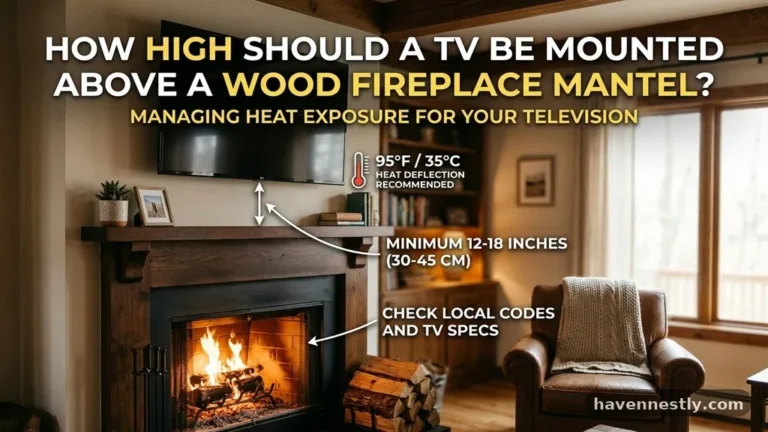
There is no universal “safe” distance, as every fireplace has a different heat output and design. Some units might allow a mantel at 6 inches, while others might require 12 or 18 inches. You must check the specific manual for your unit to find the exact clearance requirement.
Is shiplap around a fireplace safe?
Shiplap is a combustible material, so it is subject to the same clearance rules as a wood mantel. If you are installing shiplap, you must ensure it does not enter the prohibited zone defined by the fireplace manufacturer. If you want a shiplap look in a high-heat area, consider using a fire-rated fiber cement board that mimics the appearance of wood.
Conclusion
Installing a wood floating mantel on a gas fireplace requires strict adherence to safety protocols to prevent fire hazards. You can put a wood floating mantel on a gas fireplace without heat deflectors only if your installation respects the specific, manufacturer-provided clearance measurements. If those clearances cannot be met, you must use non-combustible materials or incorporate a certified heat deflector to protect your home.
By prioritizing these technical requirements over aesthetics, you ensure that your fireplace remains a beautiful and safe centerpiece for your living space. Always verify your model’s manual before drilling into your wall, and when in doubt, consult a professional installer to confirm your setup meets all local building codes.