How to Build a Recessed Wall Niche Above a Fireplace to Keep the TV Cool
Building a recessed wall niche above a fireplace to keep the TV cool is an effective way to protect your electronics from rising heat while creating a clean, modern aesthetic. When you mount a television directly onto a chimney breast, the thermal energy rising from the fire can significantly shorten the lifespan of sensitive internal components. By carving out a dedicated, insulated cavity, you create a thermal buffer that redirects heat away from the chassis.
This project requires careful planning regarding wall structure, fire safety codes, and ventilation strategies to ensure your home remains both functional and stylish. You will learn how to design, frame, and finish this installation properly.
Understanding the Mechanics of Heat Damage
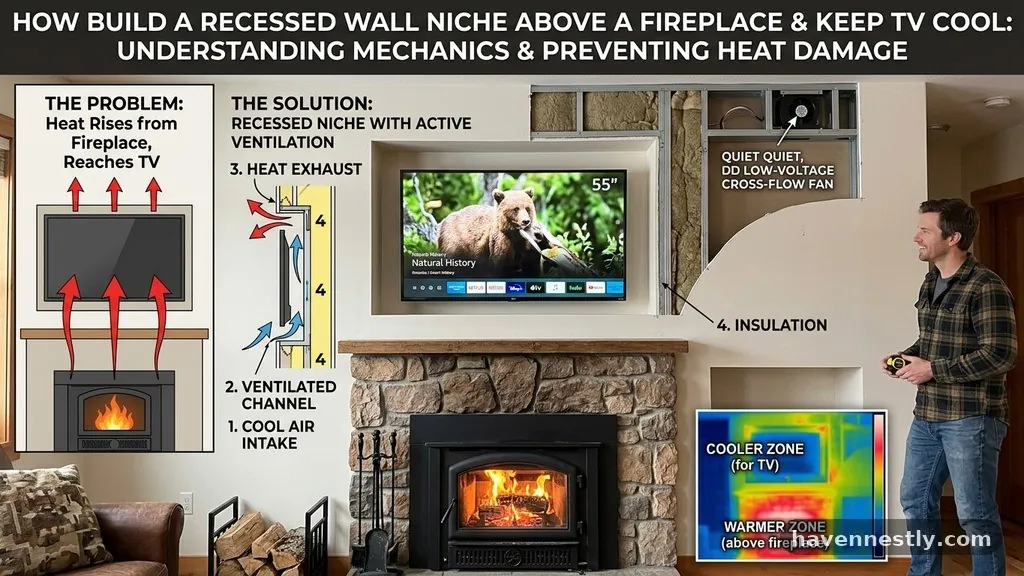
Heat is the primary enemy of liquid crystal displays and organic light-emitting diode panels. When a television is mounted flush against a hot wall, the ambient temperature behind the screen rises rapidly during fireplace use. This excess heat can cause internal capacitors to fail prematurely and may even lead to permanent screen discoloration.
Most manufacturers specify an operating temperature range that rarely exceeds 95 degrees Fahrenheit for extended periods. A fireplace, especially a wood-burning or gas unit, can push the surface temperature of the wall above it well beyond this threshold. By building a recessed wall niche, you create a physical barrier that separates the electronic housing from the conductive heat of the masonry.
The depth of the recess is critical to this cooling strategy. A standard wall cavity might be only 3.5 inches deep, but a custom niche can be extended to provide several inches of clearance behind the unit.
This extra space allows for natural convection currents to move air behind the screen. When designing your layout, prioritize depth to ensure that the television does not sit flush against the back of the niche.
Assessing Your Wall Structure
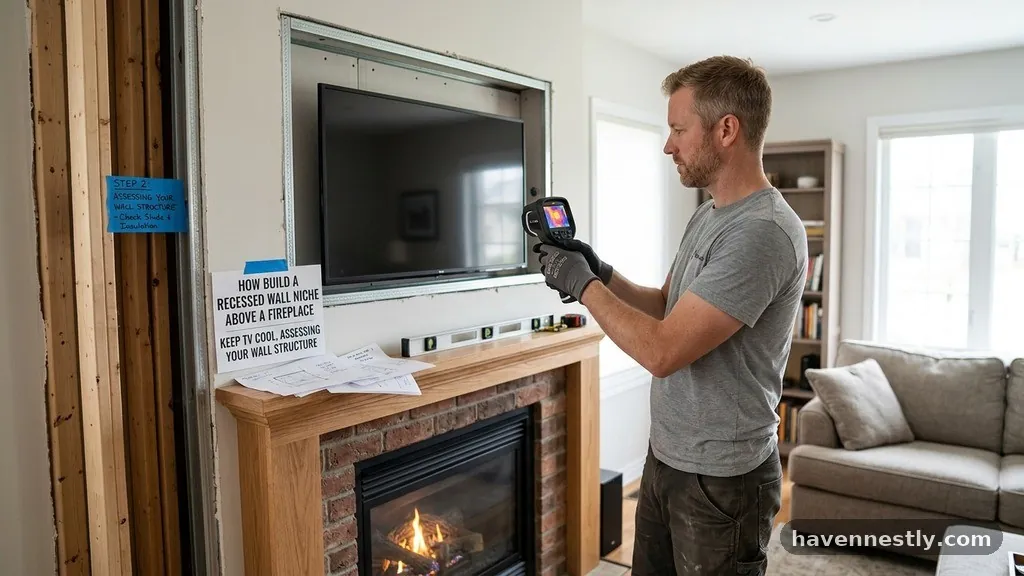
Before you cut into any wall, you must determine if it is load-bearing or if it contains critical infrastructure. Exterior walls often contain insulation, while interior walls might house electrical wiring or plumbing lines. You should use a high-quality stud finder to map the vertical framing members before making any initial cuts.
If your fireplace is built into a masonry chimney, you cannot simply cut into the brick or stone. In this scenario, you must build a secondary stud wall—often called a furred-out wall—in front of the masonry. This creates the necessary space for the niche without compromising the integrity of the chimney structure.
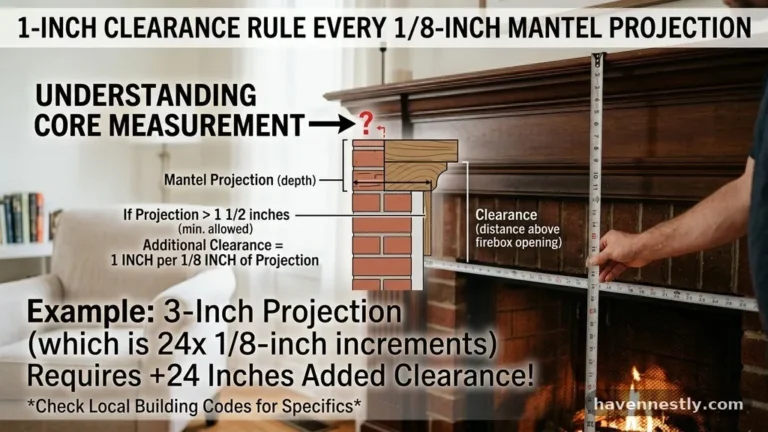
Always verify the type of fireplace you have before proceeding. Gas fireplaces often have specific clearance requirements mandated by the manufacturer that you must not violate.
Consult the National Fire Protection Association guidelines regarding chimney and vent clearances to ensure your project meets safety standards. If you are unsure about the wall composition, hire a structural engineer to inspect the area.
Planning the Niche Dimensions
The size of your niche should account for both the physical dimensions of your television and the necessary airflow gaps. Aim for at least 3 to 4 inches of clearance on the top, sides, and bottom of the unit. This buffer ensures that the TV can breathe, preventing the buildup of hot air inside the enclosure.
Consider the mounting hardware during this phase. If you intend to use an articulating arm, the niche must be deep enough to accommodate the retracted position of the mount. You should also ensure the mounting surface within the niche is reinforced with extra plywood or structural blocking.
Keep the overall proportions of the room in mind when determining the size of the box. A niche that is significantly larger than the screen can look unfinished, while a tight fit makes maintenance difficult. Sketch your design on the wall using painter’s tape to visualize how the installation will sit above your mantle.
Framing the Recess
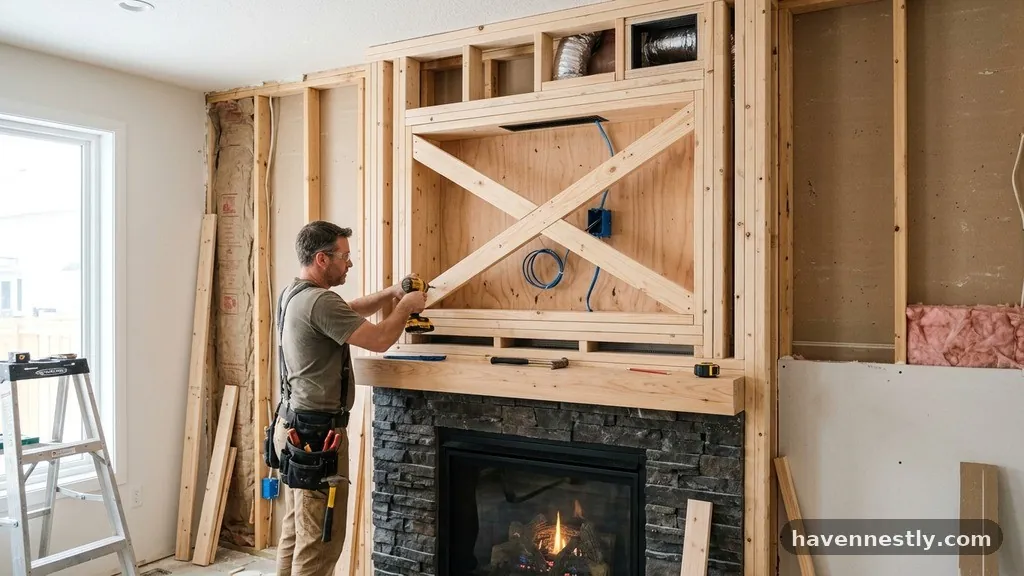
Once you have marked your dimensions, you will need to cut the drywall and construct the frame. Use pressure-treated lumber if the wall is in direct contact with masonry, as this prevents moisture-related rot. Build a header across the top of the opening to support the drywall above the niche.
You must install vertical cripple studs to frame the sides of the box. Ensure every piece of lumber is perfectly plumb and level, as even a slight misalignment will be noticeable once the television is installed. If you are framing into an existing wall, you will likely need to relocate any electrical outlets or low-voltage wires that currently run through the path of the new niche.
Secure the frame to the existing wall studs using heavy-duty framing screws. Do not rely on drywall screws for structural support; they lack the shear strength required for this application. Once the frame is complete, check it for squareness by measuring diagonally from corner to corner.
Insulation and Fire Safety
Insulation is not just about temperature control; it is a vital fire safety component. Line the back and sides of your new niche with fire-rated mineral wool insulation. This material is non-combustible and provides an excellent thermal barrier between the fireplace heat and your electronic equipment.
Avoid standard fiberglass batts if the niche is close to the firebox, as they may not provide sufficient heat resistance. Mineral wool is denser and more effective at blocking heat transfer. Secure the insulation to the back of the niche using mechanical fasteners or fire-rated adhesive.
Ensure that all electrical wiring inside the niche is routed through appropriate conduits. Never leave loose cables touching the back of the fireplace wall, as they can become brittle and crack over time. If you are adding new outlets, use metal boxes rather than plastic to further enhance the fire-resistant properties of the installation.
Managing Airflow and Ventilation
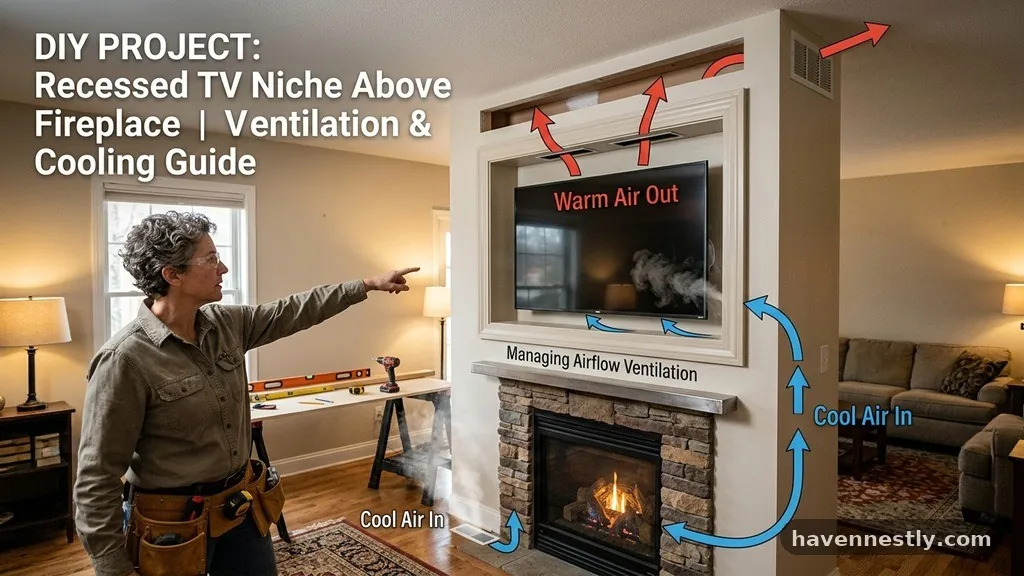
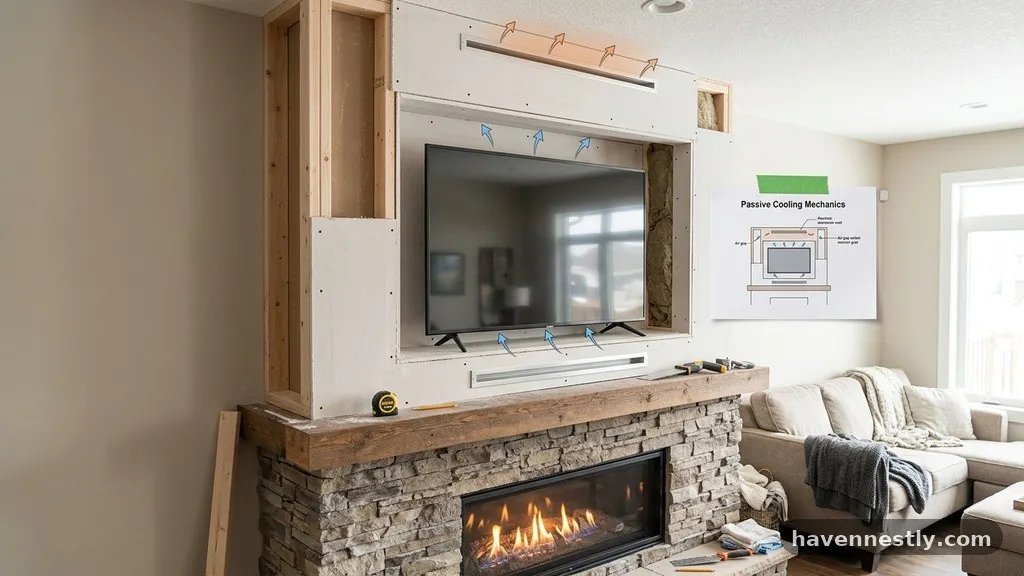
Even with a well-insulated niche, heat can get trapped in the upper corners. To solve this, consider installing a low-profile vent at the top of the niche. This allows hot air to escape into the room rather than swirling behind the television.
You can also use small, quiet USB-powered fans to actively move air out of the niche. These fans can be connected to the television’s USB port, meaning they only run when the TV is powered on. This is a highly effective way to keep the internal temperature of the electronics within a safe, stable range.
Keep the bottom of the niche open or add a small intake vent to encourage cool air to enter from the bottom. This creates a natural chimney effect, pulling cool air from the room and pushing warm air out the top. A well-ventilated niche can drop the operating temperature of a TV by 10 to 15 degrees.
Choosing Finishing Materials
The finish of your niche should complement the surrounding wall or the fireplace mantle. Common choices include drywall painted to match the wall, wood trim, or even tile. If you choose wood, ensure it is treated with a fire-retardant finish, especially if it sits close to the heat source.
When using tile, select a high-heat adhesive and grout. Stone or ceramic tile is an excellent choice for this application because it is inherently heat-resistant. If the fireplace is a focal point of the room, consider using a contrasting material for the niche to make it look intentional rather than like an afterthought.
Clean edges are essential for a professional look. Use corner beads for drywall edges to ensure sharp, crisp lines. If you are using wood trim, mitre the corners carefully for a seamless transition between the niche and the wall.
Installing the Television Mount
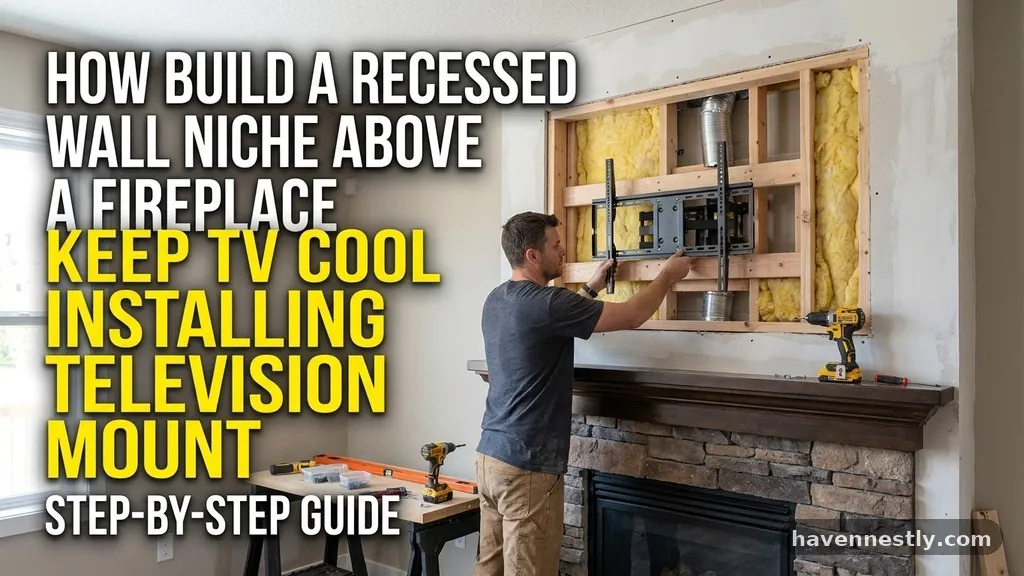
The final step is installing the mount within the recessed space. Because the wall is now a custom construction, you have the advantage of knowing exactly where the reinforced backing studs are located. Use lag bolts to secure the mount directly into the structural members you installed during the framing phase.
Test the range of motion of the mount before mounting the screen. If it is an articulating mount, ensure that it clears the sides of the niche throughout its entire range of motion. You don’t want the television to bind or scrape against the finished edges.
Once the mount is secure, organize your cables using in-wall cable management kits. These kits keep your HDMI and power cords hidden behind the wall, contributing to the clean look you are trying to achieve. Use cable ties to bundle the cords, preventing them from interfering with the airflow behind the screen.
Key Considerations for Success
| Component | Material Recommendation | Purpose |
|---|---|---|
| Wall Framing | 2×4 or 2×6 Lumber | Structural support |
| Insulation | Mineral Wool | Thermal barrier |
| Electrical | Metal Junction Boxes | Fire safety/code compliance |
| Finishing | Fire-rated Drywall | Aesthetic/Safety |
Planning your project requires attention to detail. You must reconcile the desire for a sleek aesthetic with the reality of heat management. By following these steps, you can create a space that looks great and protects your investment.
- Measure your television dimensions carefully before finalizing the niche size.
- Always consult local building codes before modifying wall structures.
- Use fire-rated materials for all components inside the wall cavity.
- Install passive or active ventilation to prevent hot air stagnation.
- Ensure all electrical components are installed by a qualified professional if you are unsure of your skills.
Frequently Asked Questions
Is it safe to mount a TV above a fireplace?
It is safe only if you manage the heat properly. Most manufacturers warn against placing electronics in areas with excessive heat. Building a recessed niche with proper insulation and ventilation is the standard way to mitigate these risks.
How deep should the niche be for a TV?
A depth of 6 to 8 inches is usually ideal. This allows room for the mount, the cables, and a significant air gap behind the television for cooling. Check your specific mount’s depth requirements before framing.
Can I use wood inside the niche?
You can use wood for trim, but ensure it is treated with fire-retardant products. Avoid placing raw, untreated wood in areas that will be subjected to high temperatures from the fireplace. Always prioritize non-combustible materials like metal or mineral wool for the internal structure.
Do I need to hire an electrician for this?
If you need to move or add outlets to power the TV inside the niche, it is highly recommended to hire a licensed electrician. Electrical work must comply with local safety codes to prevent fire hazards. Improperly wired outlets are a leading cause of house fires.
What is the best way to hide the cables?
Use an in-wall cable management kit designed for flat-panel TVs. These kits typically include a power cord extension and a recessed box for HDMI cables. They allow you to run everything behind the wall for a clean, professional finish.
Conclusion
Building a recessed wall niche above a fireplace to keep the TV cool is a rewarding project that balances form and function. By creating a dedicated, insulated, and ventilated space, you protect your electronics from the damaging effects of heat while achieving a modern, built-in look for your living room. The key to success lies in proper structural framing, the use of heat-resistant materials, and careful attention to airflow.
Take the time to plan your dimensions and consult with professionals if you have any doubts about electrical or structural changes. With the right approach, you can enjoy your favorite shows without worrying about the integrity of your television. If you have questions about specific materials or local codes, feel free to reach out for further clarification on your renovation journey.