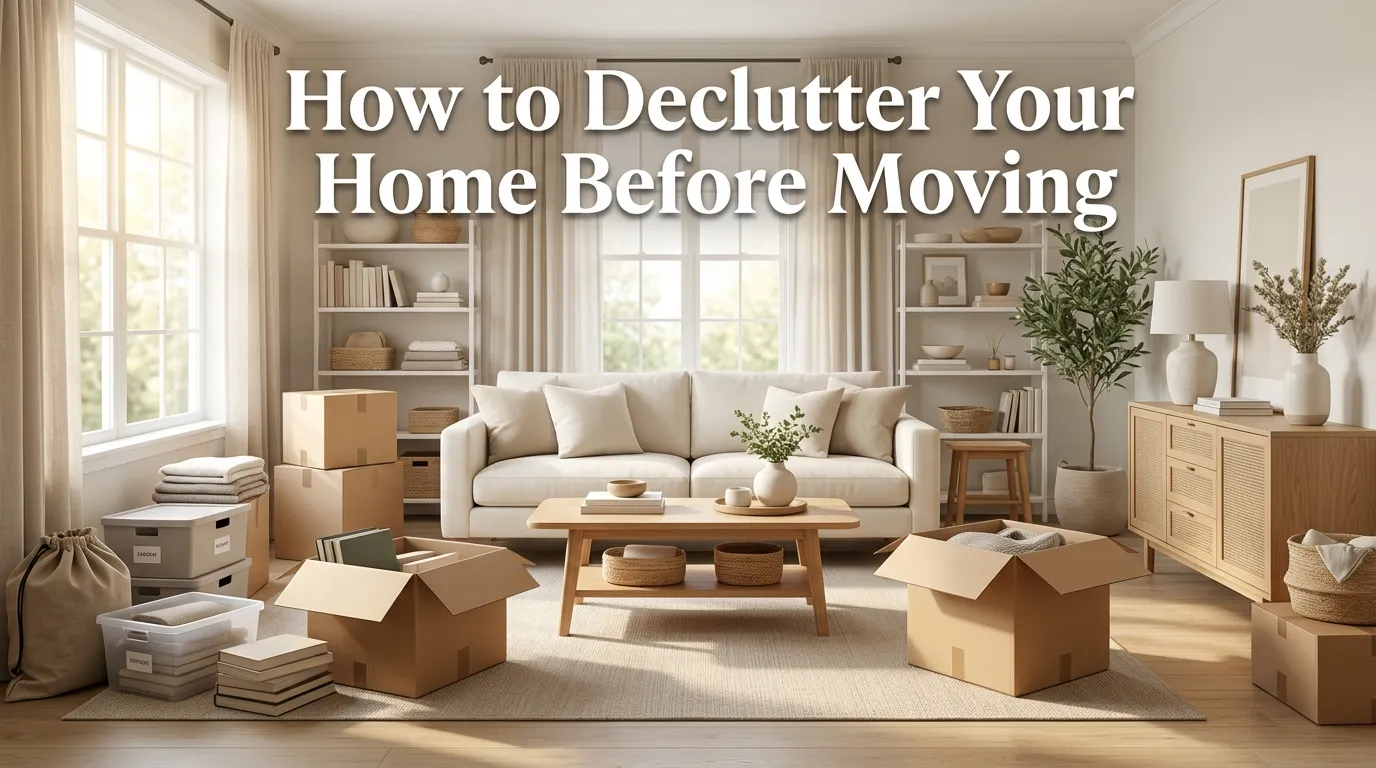
How to Declutter Your Home Before Moving
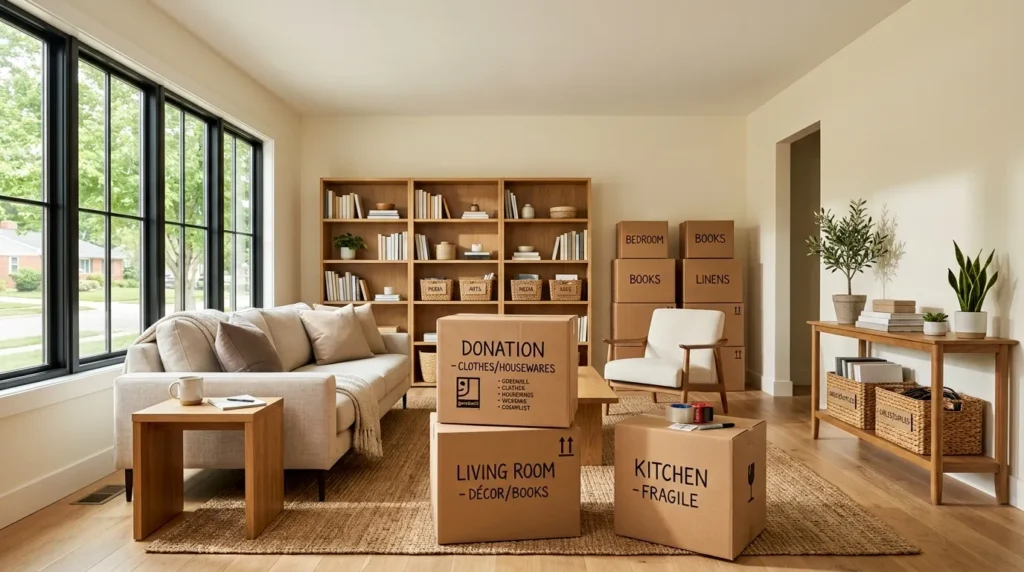
Moving to a new home can be exciting, but packing everything you own can quickly make the process feel overwhelming. One of the best ways to make moving easier is to declutter before you start filling boxes.
Instead of paying to move items you no longer use, love, or need, take the opportunity to decide what genuinely deserves a place in your next home.
Decluttering before a move is different from ordinary home organization. You’re making decisions with a deadline, and every item you keep eventually has to be packed, transported, unpacked, and stored again.
In my experience, the biggest mistake is waiting until everything is already packed. Once items are inside boxes, it’s much harder to evaluate what you actually need.
A better approach is to work through the house systematically. Start with obvious clutter, then move into categories that require more thought, such as sentimental items, duplicate kitchen tools, clothing, paperwork, and décor.
You don’t have to create a perfectly minimalist home. The goal is simply to make your next move lighter and your new home easier to organize.
These practical steps can help you declutter room by room, reduce unnecessary packing, and arrive at your new home with belongings you genuinely want to keep.
Table of Contents
- Start With a Moving Plan
- Declutter One Room
- Sort Into Four Categories
- Remove Duplicates
- Edit Your Closet
- Simplify the Kitchen
- Reduce Home Décor
- Handle Sentimental Items
- Clear Storage Areas
- Create a Final Donation Box
1. Start With a Moving Plan
Quick Benefits
- Prevents overwhelm
- Creates structure
- Saves time
- Makes decisions easier
- Keeps progress visible
Why It Works
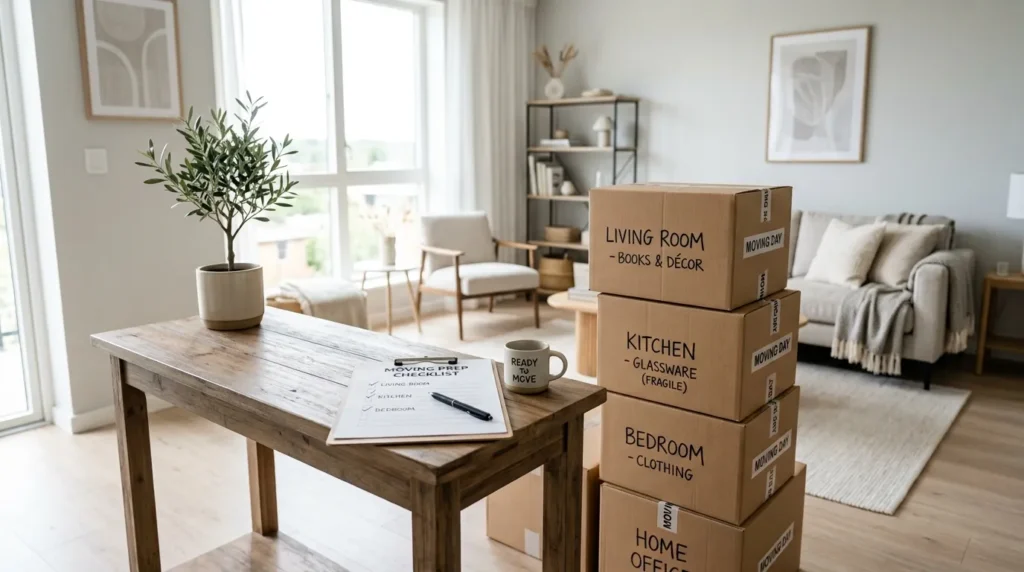
Decluttering becomes much easier when you have a clear system instead of randomly moving from room to room.
Before beginning, make a simple list of the areas that need attention and estimate which ones will take the most time.
I’ve found that starting with easier categories creates momentum before tackling emotionally difficult belongings.
How To Style It
Create a room-by-room checklist and work through one area at a time.
Set aside boxes or bags for items leaving the house so donations and unwanted belongings don’t slowly find their way back into closets.
2. Declutter One Room
Quick Benefits
- Creates visible progress
- Reduces distractions
- Makes sorting easier
- Prevents repeated decisions
- Builds momentum
Why It Works
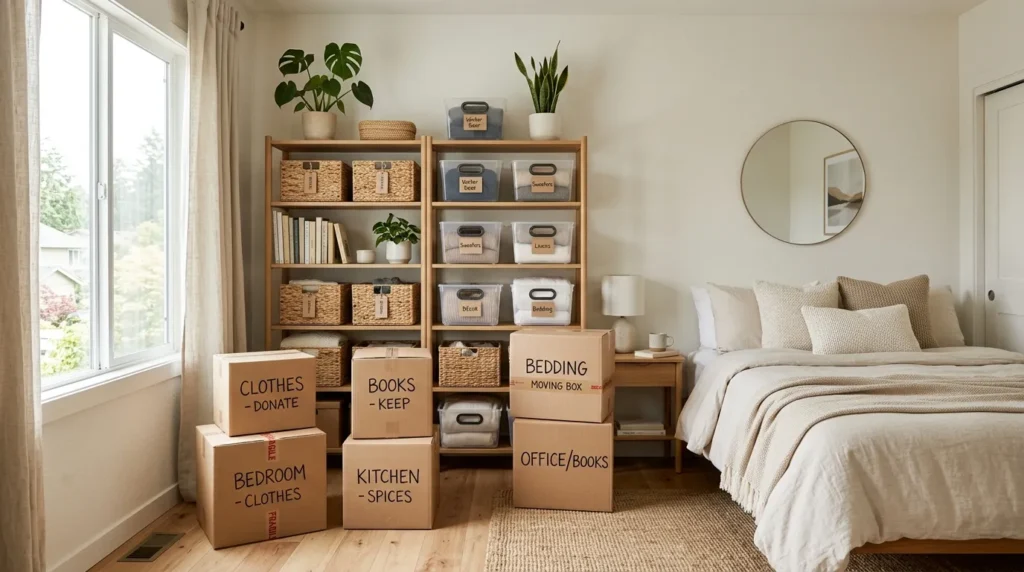
Trying to declutter an entire home simultaneously can quickly become exhausting. Completing one room gives you a clear beginning and ending point.
A finished room also creates visible proof that the process is working.
In my experience, completing smaller spaces such as bathrooms, closets, or entryways can provide an encouraging early win.
How To Style It
Choose one room and remove everything that obviously doesn’t belong.
Work through drawers, shelves, closets, and cabinets systematically before moving to another area.
3. Sort Into Four Categories
Quick Benefits
- Simplifies decisions
- Speeds up sorting
- Prevents indecision
- Creates organization
- Makes packing easier
Why It Works
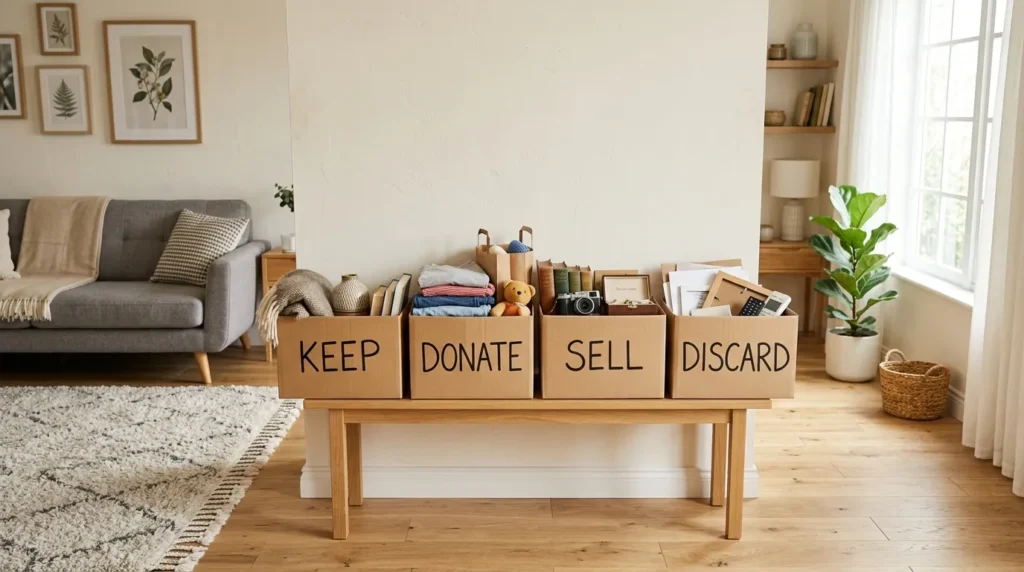
A simple sorting system keeps decluttering from becoming an endless process. Four useful categories are keep, donate, sell, and discard.
Each item should have a clear destination rather than being placed into a vague “maybe” pile.
I’ve found that limiting the number of categories helps prevent decision fatigue.
How To Style It
Use clearly labeled boxes, bags, or designated areas for each category.
If you’re unsure about an item, set it aside temporarily and return to it after finishing the easier decisions.
4. Remove Duplicates
Quick Benefits
- Frees storage
- Reduces packing
- Saves space
- Makes organizing easier
- Eliminates unnecessary clutter
Why It Works
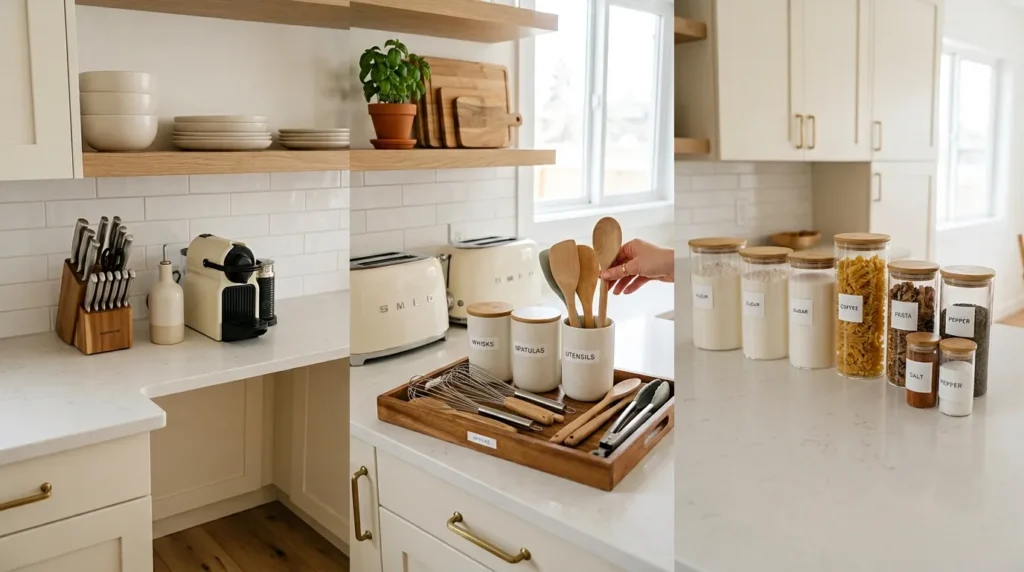
Moving is a great time to discover how many duplicate items have accumulated. Extra kitchen utensils, multiple storage containers, duplicate tools, spare décor, and similar belongings can quickly fill boxes.
You probably don’t need five versions of something you rarely use.
I’ve found that duplicates are often among the easiest items to let go of.
How To Style It
Gather similar items together instead of evaluating them individually.
Keep the best-quality or most frequently used version and donate or responsibly discard the rest when appropriate.
5. Edit Your Closet
Quick Benefits
- Reduces packing
- Creates easier organization
- Reveals unused clothing
- Saves closet space
- Makes unpacking simpler
Why It Works
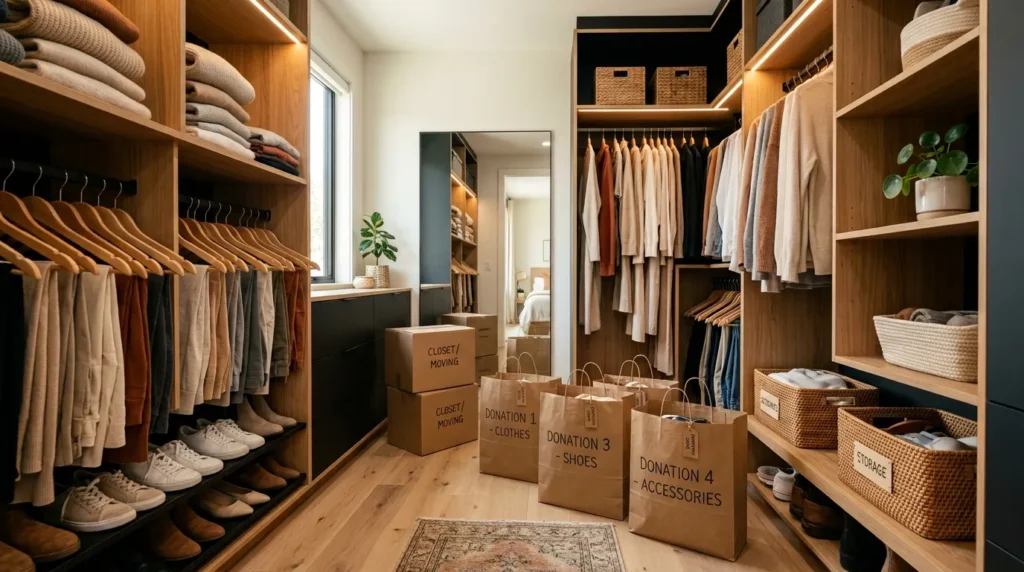
Clothing can take up an enormous amount of moving space, particularly when pieces haven’t been worn in years.
Moving gives you a natural opportunity to reconsider clothes that no longer fit your lifestyle, preferences, or current needs.
I’ve found that focusing on what you actually wear is more useful than trying to predict whether you’ll someday need every item.
How To Style It
Create separate groups for everyday clothing, special occasions, seasonal items, and pieces you no longer wear.
Donate clean, usable clothing according to local donation guidelines and dispose of damaged items responsibly.
6. Simplify the Kitchen
Quick Benefits
- Reduces packing
- Frees cabinet space
- Eliminates duplicates
- Makes unpacking easier
- Creates a more functional kitchen
Why It Works
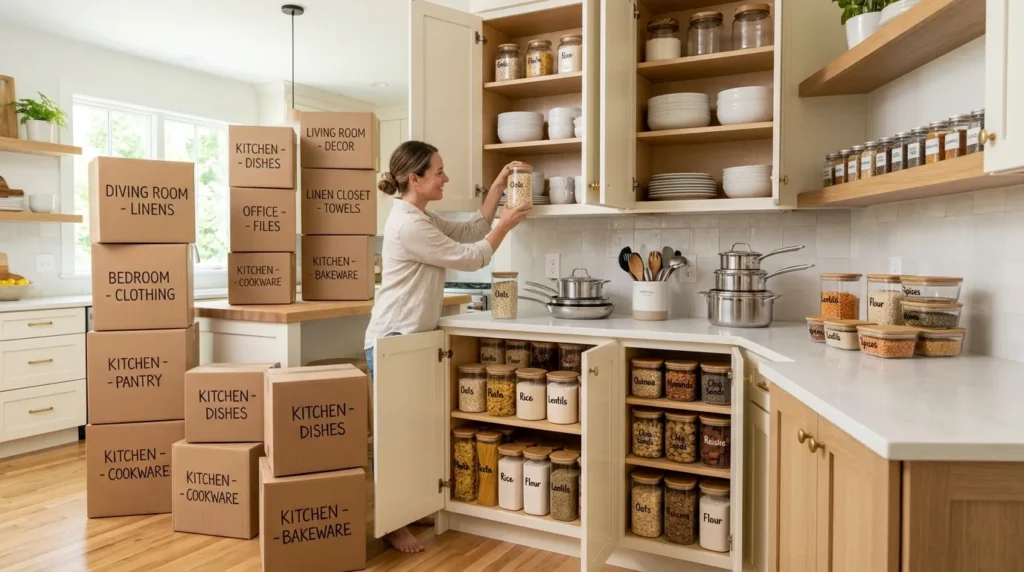
The kitchen is often one of the most time-consuming rooms to pack because cabinets and drawers can contain years of accumulated items. Moving is a great opportunity to decide which tools, dishes, appliances, and containers actually deserve space in your new kitchen.
Start with duplicates and rarely used gadgets. If you have several versions of the same utensil or appliance, keep the one you use most.
In my experience, food storage containers are another category that becomes much easier to declutter when you match containers with their lids and remove damaged or incomplete pieces.
How To Style It
Empty one cabinet or drawer at a time and group similar items together.
Keep frequently used cookware and dishes, then evaluate specialty items individually. Check expiration dates on pantry goods and avoid packing items you realistically won’t use.
7. Reduce Home Décor
Quick Benefits
- Creates lighter boxes
- Simplifies decorating
- Reduces visual clutter
- Saves storage space
- Makes the new home easier to style
Why It Works
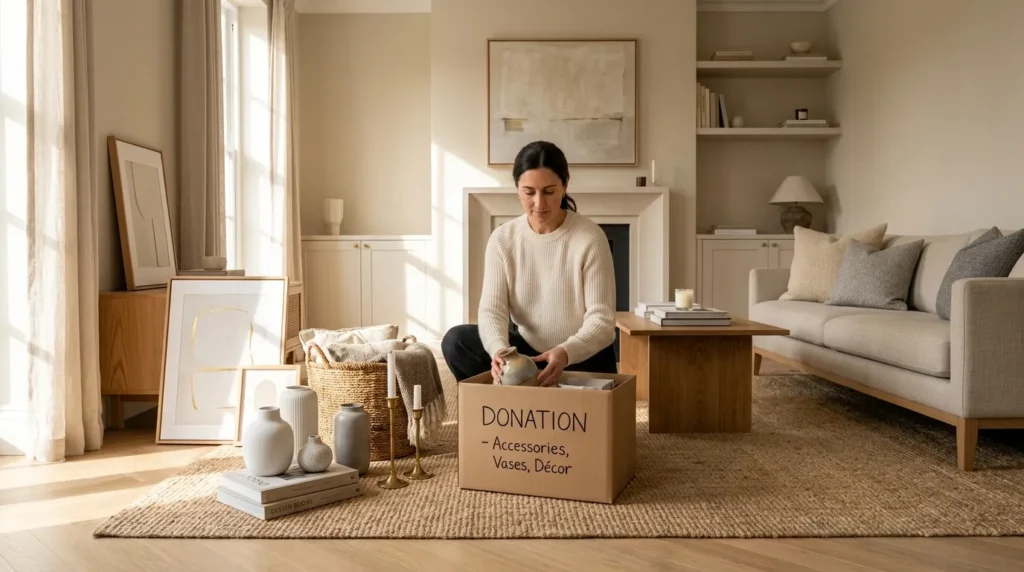
Decorative items can accumulate gradually because individual pieces seem small and harmless. But when you’re preparing for a move, dozens of vases, frames, candles, pillows, baskets, and seasonal decorations can become a surprising amount of volume.
A new home may also have different architecture, colors, and available surfaces, so not every decorative item will necessarily work in the new space.
I’ve found that choosing favorite pieces rather than trying to move every accessory makes decorating the new home much more enjoyable.
How To Style It
Create a collection of your favorite décor and evaluate everything else.
Consider whether each piece fits your current style, has sentimental value, or serves a useful purpose. Donate or sell appropriate items that no longer make sense for your home.
8. Handle Sentimental Items
Quick Benefits
- Prevents emotional overwhelm
- Protects meaningful belongings
- Reduces unnecessary storage
- Creates intentional collections
- Makes decisions easier
Why It Works
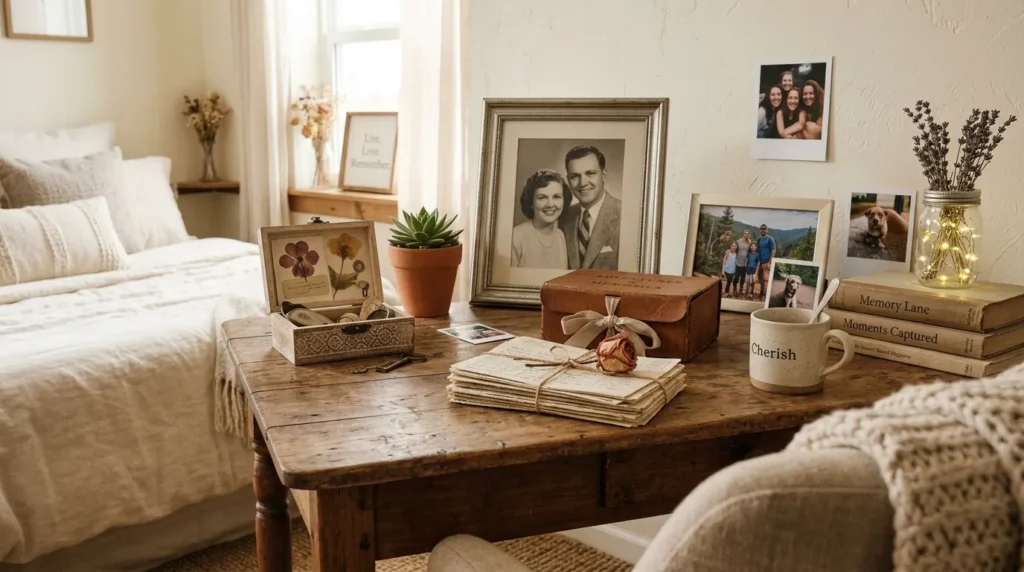
Sentimental belongings can be much harder to declutter than ordinary household items. The goal isn’t to eliminate meaningful memories. It’s to preserve the memories that matter without allowing every object to become permanent storage.
Photographs, letters, childhood belongings, gifts, and inherited items may all deserve different decisions.
In my experience, asking why an item is meaningful can make the process easier. Sometimes the memory can be preserved through a photograph even when the physical object isn’t practical to keep.
How To Style It
Create one clearly defined sentimental collection rather than allowing meaningful items to spread throughout the house.
For especially important objects, consider whether they can be displayed, safely stored, or documented digitally.
9. Clear Storage Areas
Quick Benefits
- Reduces hidden clutter
- Makes packing easier
- Reveals forgotten belongings
- Creates useful storage
- Prevents unnecessary moving
Why It Works
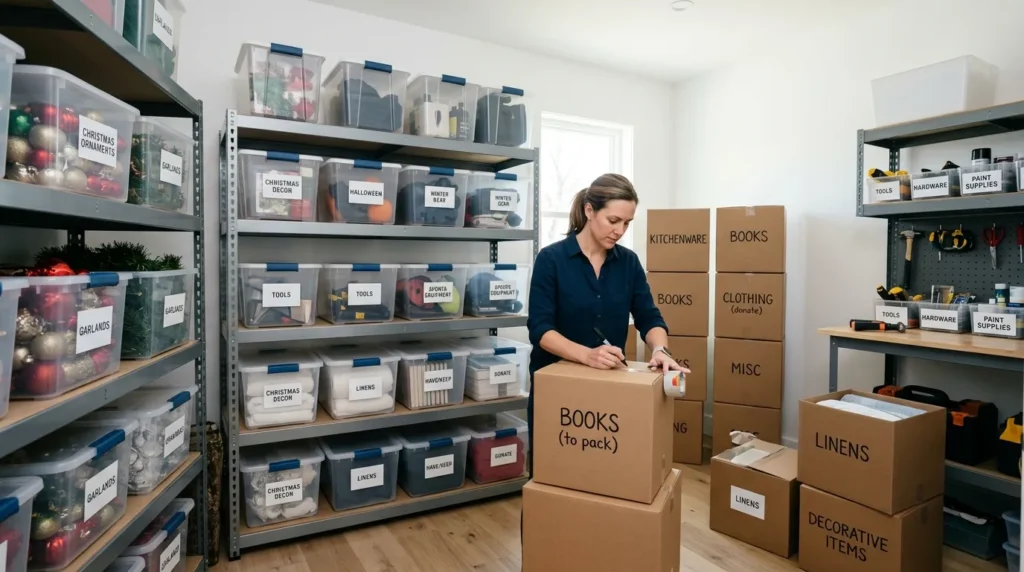
Garages, attics, basements, closets, sheds, and storage cabinets often contain items that haven’t been touched in years.
Because these spaces are less visible, they’re easy to ignore until moving day. Unfortunately, they’re also some of the most time-consuming areas to pack.
I’ve found that storage spaces often reveal the biggest opportunities for decluttering because forgotten items are easier to evaluate objectively.
How To Style It
Work through storage areas early rather than leaving them until the final week.
Group seasonal decorations, tools, sports equipment, hobby supplies, and miscellaneous items separately. Ask whether each category deserves the space and moving effort.
10. Create a Final Donation Box
Quick Benefits
- Catches last-minute clutter
- Keeps decluttering active
- Simplifies final packing
- Prevents unnecessary items from returning
- Creates a clean finish
Why It Works
Decluttering rarely ends the moment you finish a room. As you pack, clean, and organize, you’ll continue discovering things you no longer want.
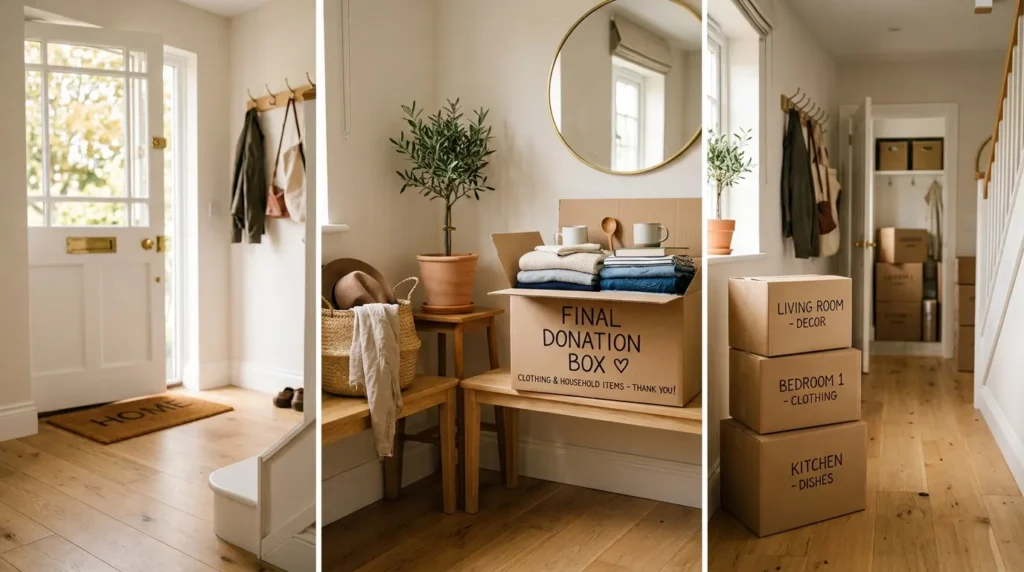
A designated final donation box gives those items somewhere to go immediately instead of being placed back into another moving box.
I’ve found this simple habit particularly useful during the final stages of a move.
How To Style It
Keep one clearly labeled box or bag accessible until moving day.
Whenever you discover an item that no longer belongs in your new home, place it directly into the donation container. Arrange pickup or drop-off according to your local options before the move when possible.
Frequently Asked Questions
When should I start decluttering before a move?
Ideally, begin as soon as you know you’re moving. Starting several weeks before packing gives you time to make thoughtful decisions instead of rushing through everything.
What should I get rid of before moving?
Start with obvious categories such as duplicates, broken items, unused clothing, expired products, unwanted décor, and belongings you haven’t used in a long time.
Should I sell or donate unwanted items?
It depends on the item’s condition, value, and how much time you have. Selling can make sense for valuable items, while donating may be more practical for everyday belongings in good condition.
How do I declutter sentimental belongings?
Keep the items that genuinely carry meaning and consider photographing or digitizing less important physical memories. Creating one dedicated memory collection can also prevent sentimental belongings from spreading throughout the house.
How can I avoid packing things I don’t need?
Declutter before packing each room and create separate destinations for items you will keep, donate, sell, or discard. Don’t pack an item simply because it is already sitting in a box.
What room should I declutter first?
Start with a manageable room or category that contains obvious clutter. Bathrooms, closets, storage areas, and duplicate household items can provide quick progress before you tackle more emotional categories.
Conclusion
Decluttering before a move can save more than packing space. It can reduce the amount of work required before, during, and after moving day.
The most effective approach is to work systematically. Choose one room or category at a time, sort belongings into clear groups, remove duplicates, simplify clothing and kitchen items, and evaluate décor and storage areas carefully.
Don’t feel pressured to create a perfectly minimalist home. The goal is simply to avoid transporting belongings that no longer serve you.
When moving day arrives, you’ll have fewer boxes, fewer decisions, and a much easier unpacking process. Most importantly, your new home can begin with belongings that genuinely fit the way you live now.